

The August Wilson Theatre — Broadway Guide
The only Broadway theater named for a playwright — seating, accessibility, history, and what to know before your night on West 52nd Street.
The August Wilson Theatre is a Broadway house at 245 West 52nd Street that has been operating under several identities since it opened in 1925 — as the Guild Theatre, then the Virginia Theatre, and since 2005 as the August Wilson Theatre, named for the Pulitzer Prize–winning playwright whose ten-play American Century Cycle stands as one of the most significant bodies of work in American dramatic history. It is currently home to Dog Day Afternoon, scheduled through June 28, 2026.
This guide covers what the theater is like as a room, how to think about seating, what the name itself means and why it matters, what accessibility looks like in practice, where the theater sits in the district, and how to plan a full evening around a visit to West 52nd Street.
What Kind of Broadway House This Is
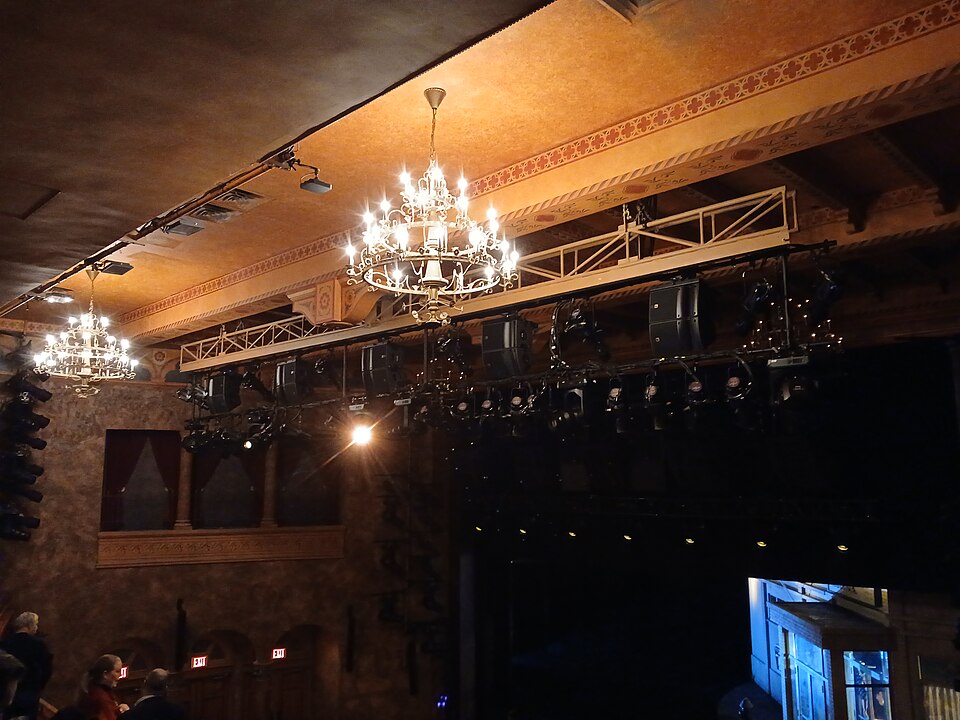
The August Wilson Theatre is one of Broadway’s larger houses — a substantial room that can accommodate major productions across multiple levels and supports the kind of theatrical scale that a smaller playhouse cannot. It sits above the mid-sized range of the district, with a capacity that places it among the houses best suited to large-ensemble musicals and ambitious dramatic productions rather than intimate plays or chamber works.
The room has architectural distinction that predates all three of its names. The original 1925 design gave the house proportions and an interior that have remained broadly intact through the various ownership and identity changes of the intervening century. Arriving at the theater is arriving at a room with genuine presence — not the ornate Baroque elaboration of an Al Hirschfeld or a Shubert, but the particular quality that comes from a well-designed working theater that has been in continuous use for a hundred years.
The August Wilson is best suited to productions that benefit from scale — shows with presence, ambition, and something to fill the room with. It is not the right house for an intimate two-person play in the way that the Booth or the Hayes is, and the productions that have worked best here tend to be ones that use the theater’s size rather than working against it. The current production, Dog Day Afternoon, is a major dramatic work that requires exactly that kind of room.
Why This Theater’s Name Matters
Broadway theaters are almost universally named for producers, theater owners, philanthropists, or the institutions that operate them. The Shubert theaters carry the Shubert name. The Nederlander theaters carry the Nederlander name. Individual theaters are named for the people who built them, funded them, or ran them — the business side of the art form rather than the creative side.
The August Wilson Theatre is a genuine exception. August Wilson was a playwright — nothing more and nothing less. He did not produce Broadway shows, manage theaters, or finance theatrical real estate. What he did was write ten plays, one for each decade of the twentieth century, each one documenting a chapter of Black American life with a depth, specificity, and language that the American theater had not previously achieved at that scale. Naming a Broadway theater for him in 2005 — two months before his death — was a statement about what kind of contribution to the art form the industry considered worth permanent recognition.
August Wilson’s American Century Cycle consists of ten plays — one set in each decade of the twentieth century — tracing the experience of Black Americans from the aftermath of Reconstruction through the century’s end. The cycle includes Fences (for which he won the Pulitzer Prize for Drama in 1987), The Piano Lesson (a second Pulitzer in 1990), Joe Turner’s Come and Gone, Two Trains Running, Seven Guitars, and five others. It is, taken as a whole, one of the most ambitious projects in the history of American drama — and the theater that carries his name on West 52nd Street is the most visible acknowledgment of that ambition’s significance.
For visitors to the theater who know Wilson’s work — and particularly for those who have seen or are planning to see productions of his plays — the name on the marquee is not just a historical fact. It is an ongoing statement about whose voices Broadway considers worth honoring permanently. That is worth knowing before you walk through the door, regardless of what show is currently running inside.
The spring 2026 season includes Joe Turner’s Come and Gone at the Ethel Barrymore Theatre — the same play that premiered on Broadway in 1988, returning in a major revival with Taraji P. Henson and Cedric the Entertainer. For visitors who want to understand what the August Wilson Theatre’s name represents, seeing one of his plays in the same season is the most direct way to encounter that work live.
Seating Guide — How to Think About Best Seats
Seat choice at the August Wilson depends primarily on whether you want closeness to the performance or a fuller view of the stage picture — the same fundamental trade-off at most Broadway houses, applied here to a room of substantial size where the distance between orchestra and mezzanine is meaningful.
The strongest seats for most productions. Direct sightlines, close to the performance, maximum immersion. Center orchestra rows D–L are the target area. At a larger house, the quality of center orchestra seats relative to side orchestra is more pronounced — staying center matters here.
Far side orchestra seats at a larger house can have significantly angled sightlines to the opposite side of the stage. The further left or right you go, the more of the stage picture you lose. Center-adjacent side seats are acceptable; extreme side positions are a real compromise at a house this wide.
Further from the stage than the premium zone but still within the orchestra level. For a larger house, rear orchestra rows can feel noticeably distant. Good value if budget matters; less ideal if close-range performance detail is the priority.
Front mezzanine center provides an elevated view of the full stage picture — particularly valuable for productions with elaborate staging that uses the full stage width. Rows A–C center mezzanine are a reliable choice and often better value than equivalent orchestra seats.
The most affordable seats in the house and the furthest from the stage. Works for productions with large-scale staging that reads well at distance. Less suitable for shows where intimate performance detail — a close dramatic play, for example — is the primary draw.
For most productions at a larger house like the August Wilson, front mezzanine center rows A–B offer the best combination of sightlines, full stage view, and price. You see everything simultaneously rather than being inside part of it — which for ambitious productions is often the stronger vantage point.
Verify current seating configuration on the official venue or ticketing page before booking. Production-specific staging can affect which sections work best, and the house configuration may vary between productions. If you are booking for Dog Day Afternoon specifically, check current seating reviews close to your visit date for production-specific guidance.
Accessibility — What to Know Before You Go
The August Wilson Theatre provides accessibility provisions across several categories. Understanding what is available — and where — before you arrive is worth the advance planning.
Accessibility details, device availability, and seating provisions can change between productions and over time. Always verify current information directly with the box office or the official venue accessibility page before finalizing plans where accessibility is a primary consideration for your visit.
Where the August Wilson Theatre Is
The August Wilson Theatre sits on West 52nd Street between Broadway and Eighth Avenue — in the northern Theater District, above the main cluster of 44th and 45th Street houses and convenient for visitors staying anywhere in Midtown. Hell’s Kitchen is immediately west, which makes pre-show dining logistics favorable.
The northern Theater District position is an advantage for pre-show dining — Hell’s Kitchen’s restaurant density begins immediately west of the theater, and the 52nd Street location puts you within easy walking distance of the neighborhood’s strongest pre-theater options. The 50th Street 1 train is the most direct subway connection for this specific theater. See the guide to getting to a Broadway show for full routing details and the parking near Broadway guide for garage options near this part of 52nd Street.
A Hundred Years on West 52nd Street — Theater History
The theater at 245 West 52nd Street has operated under three distinct identities since it opened in 1925, each reflecting a different chapter of American theatrical culture. The building itself has remained in continuous use throughout — one of the longer uninterrupted operating records in the Broadway district.
The Theatre Guild’s founding identity is worth noting for historical context. The Guild was responsible for some of the most important productions in early twentieth-century American theater — including the original productions of major works by Eugene O’Neill and the introduction of Bertolt Brecht to American audiences — and the theater on West 52nd Street was built as their permanent home. That origin in serious artistic ambition connects, across nearly a century, to the theater’s current identity as the house named for one of the American theater’s most artistically serious writers.
Current Show — Dog Day Afternoon
The August Wilson Theatre is currently home to Dog Day Afternoon, a Broadway production scheduled through June 28, 2026. Many visitors arrive on this theater page because they are attending the current production and want to understand the room before they go. The seating guide above is the most directly useful section for those visitors.
Verify the current show, performance schedule, and end date on the official August Wilson Theatre or production site before booking, as programming and scheduling can change.
Plan the Night Around the August Wilson Theatre
The August Wilson’s position on West 52nd Street makes it particularly well-suited to a Hell’s Kitchen dinner before the show. The neighborhood begins practically at the theater’s doorstep and offers the strongest concentration of reliable pre-theater dining in the Broadway area at this northern end of the district.
Getting there
The 50th Street 1 train stop is two blocks south of the theater — walk north on Broadway or 8th Avenue to reach 52nd Street. The 49th Street N/Q/R/W is also within comfortable walking distance. Times Square connects to nearly every line in the system and is a short walk south. If driving, midtown garages are available nearby — book in advance for weekend performances. See the guide to getting to a Broadway show for full routing details.
Dinner before the show
Hell’s Kitchen — running west from 8th Avenue and filling the blocks around 9th Avenue — has the widest range of reliable pre-theater options near the August Wilson at every price point. All used to theater-crowd timing and 6:30pm reservations. The restaurants near Broadway guide covers specific picks and the pre-show dining guide covers timing strategy for different show runtimes.
Hotels and overnight stays
The Theater District and Hell’s Kitchen have strong hotel options within walking distance of the August Wilson Theatre at most price points. See the hotels near Broadway guide for the best-positioned options. The Theater District neighborhood guide provides a full orientation to the surrounding area.
Frequently Asked Questions
The August Wilson Theatre is at 245 West 52nd Street in Manhattan, between Broadway and Eighth Avenue in the northern Theater District. The nearest subway is the 50th Street 1 train, two blocks south. Hell’s Kitchen is immediately west, making it well-positioned for pre-show dining.
The August Wilson Theatre is currently home to Dog Day Afternoon, scheduled through June 28, 2026. Verify the current show and performance schedule on the official venue site before booking, as programming can change.
The theater was renamed in 2005 for August Wilson, the Pulitzer Prize–winning playwright whose American Century Cycle — ten plays documenting Black American life decade by decade through the twentieth century — stands as one of the most significant bodies of work in American dramatic history. Wilson is the only playwright to have a major Broadway theater named for him. The renaming happened two months before his death in October 2005. The naming section of this guide covers the significance of that distinction in more detail.
For most productions, center orchestra rows D–L are the premium zone — close to the stage with direct sightlines. Front mezzanine center rows A–C are a strong value alternative that gives you a fuller view of the complete stage picture. At a larger house like the August Wilson, staying center matters more than at a compact theater — far side orchestra seats can have significantly angled sightlines. See the full seating guide section above for more detail on how to think about specific sections.
The theater offers wheelchair accessible seating, aisle transfer seating, companion seating, and vision and hearing accessible options, as well as assistive listening devices. Contact the box office before booking to confirm current provisions, exact seating locations, and any arrangements that require advance notice. Verify current accessibility details on the official venue page before attending, particularly if accessibility is a primary consideration.
The theater opened in 1925 as the Guild Theatre, built for the Theatre Guild producing organization. It was later known as the ANTA Theatre and then the Virginia Theatre before being renamed the August Wilson Theatre in 2005. The building has been in continuous operation as a Broadway house throughout all of its identity changes.
Yes — it is a substantial Broadway house with genuine character and a hundred years of history, which gives a first-time visitor the authentic experience of what a major Broadway theater looks and feels like. The larger size means no seat feels intimate in the way a smaller house would, but it also means the productions it hosts tend to be major ones that reward the scale of the room. For first-timers seeing Dog Day Afternoon or another significant production at the August Wilson, the theater itself is part of the occasion.
The August Wilson Theatre in Brief
The August Wilson Theatre is a substantial Broadway house with a century of continuous operation, three distinct identities, and a current name that carries more meaning than most Broadway theater namings do. It is the only theater in the district named for a playwright — a statement about whose contributions to the American theater industry the industry itself considers worth permanent recognition. For visitors who know August Wilson’s work, that name on the marquee is not incidental. For those who do not yet know it, this season’s production of Joe Turner’s Come and Gone at the Ethel Barrymore is the most direct way to encounter what the name represents.
For current show information, verify the program on the official venue site. For broader Broadway planning, the Broadway hub, Broadway theaters guide, and Theater District neighborhood guide are the right starting points.