

Joe Turner’s Come and Gone on Broadway
August Wilson’s landmark American drama returned to the stage where it premiered — with Taraji P. Henson, Cedric the Entertainer, and a cast that made this limited run one of the season’s most significant.
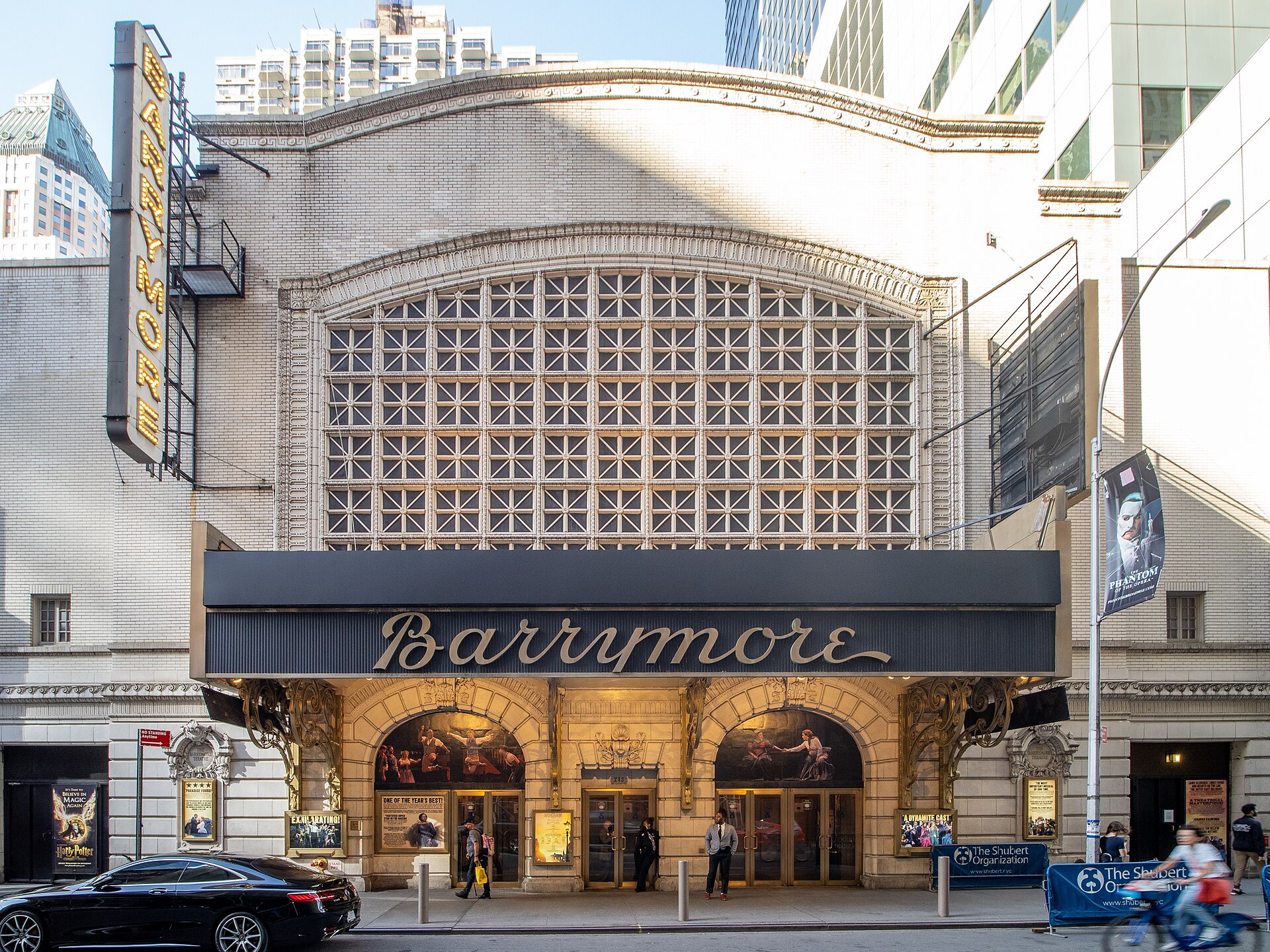
Joe Turner’s Come and Gone is one of August Wilson’s most important plays — the second work in his American Century Cycle, a ten-play sequence mapping Black American life decade by decade through the twentieth century. Set in a Pittsburgh boardinghouse in 1911, it follows the arrival of Herald Loomis and his daughter into the household of Seth and Bertha Holly, and the disruption that follows. This Broadway revival, directed by Debbie Allen and starring Taraji P. Henson and Cedric the Entertainer, played at the Ethel Barrymore Theatre from April 25 through July 26, 2026 — the same stage where the play had its Broadway premiere in 1988.
This page is kept as a record of the production and a resource for anyone researching the revival, the cast, or August Wilson’s work generally. It is a play, not a musical — language-driven, character-dense, and emotionally substantial. Here is what the production was, who it was built for, and what the Ethel Barrymore Theatre is like for anyone planning a future visit there.
Why Joe Turner’s Come and Gone Mattered This Season
August Wilson wrote ten plays — one for each decade of the twentieth century — tracing the experience of Black Americans from the aftermath of Reconstruction through the century’s end. Joe Turner’s Come and Gone, set in 1911, is among the earliest and most elemental of them. It deals with the Great Migration before it had that name, with men and women finding their way north carrying histories that don’t travel easily, looking for what Wilson called their song — the thing that makes them who they are. The play is rooted in blues, in ritual, in the specific weight of what was lost in the South and what has not yet been found in the North.
Returning it to the Barrymore was not incidental. The Ethel Barrymore Theatre is where this play opened on Broadway in 1988, and bringing it back to that room — with a cast of this caliber — gave the revival a weight that a different theater would not have carried in the same way. That history was part of what the run offered.
Pittsburgh, 1911. Seth and Bertha Holly run a boardinghouse that serves the stream of men and women arriving from the South. Into this household comes Herald Loomis — a former sharecropper who spent seven years held illegally by Joe Turner, a Tennessee man who pressed Black men into labor against their will — and his young daughter Zonia, whom he is searching for even as he searches for himself. What he carries into the Holly house, and what the others there carry, is the engine of the play. Wilson does not resolve these people neatly. He lets them be fully who they are.
Director Debbie Allen brought her own significant standing to this production. Known primarily for her work in film, television, and dance, her direction of this Wilson revival was a major creative event in its own right. The combination of Wilson’s text, Allen’s vision, and a cast that included actors of genuine screen and stage stature gave this revival its particular claim on the spring and summer 2026 season.
What the Experience Was Like
Joe Turner’s Come and Gone is a play that works through accumulation rather than momentum. It does not have the propulsive narrative drive of a thriller or the musical energy of a score-driven show. What it has is something harder to describe and more lasting: the feeling of being inside a fully realized world, watching people whose lives carry more history than they can hold, and seeing that history gradually surface in the room.
Wilson’s dialogue is not naturalistic in the usual sense. It has a heightened, almost musical quality — speeches that build, rhythms that carry emotional content in addition to information. This was not a play where you could tune out for a few minutes and catch up. It rewarded sustained attention in the way that genuinely well-written work does: the more present you were, the more you received.
Joe Turner’s Come and Gone was not a comfortable evening in the conventional sense. It asked audiences to sit with grief, with displacement, with the specific historical weight of what was done to a people and what it costs to survive it. It was not punishing to watch — Wilson’s plays always contain humor, warmth, and life alongside the pain — but it was serious, and it landed differently from most Broadway productions. The conversation afterward tended to be the kind that stays with you.
The two-and-a-half-hour runtime with one fifteen-minute intermission was well-paced for the material. The first act built the world and the characters; the second act allowed the tensions that had been accumulating to resolve — or, as is Wilson’s habit, to transform into something that was not quite resolution but truer to how these things actually end.
Who Joe Turner’s Come and Gone Was Best For
This production served a specific audience extremely well, and for that audience, it was among the strongest options of the spring and summer 2026 season. This breakdown is left here for anyone researching the revival, or gauging whether a future August Wilson production might be worth their time.
For visitors who come to the theater for the writing and the performances — who want to be inside a fully realized world for two and a half hours — this was the season’s most complete delivery of that experience.
A major August Wilson revival with this cast and direction doesn’t come along every season. For visitors who’d seen the musicals and wanted something with more historical and literary weight, this was the obvious choice.
For anyone who knows Wilson’s work — Fences, The Piano Lesson, Two Trains Running — this revival mattered on its own terms. For newcomers to Wilson, it was a strong entry point into the cycle.
For visitors drawn to theater that engages directly with American history, migration, identity, and the specific experience of Black Americans in the early twentieth century, this was the season’s most substantive option.
For visitors who already knew they responded to serious, language-driven plays, this could have been a powerful first Broadway experience. For anyone still finding their footing, the first-time visitor guide covers the current season’s range of options.
The production carried a content advisory for mature language, racial slurs, and depictions of violence, with age guidance of 12 and up and no admission for children under 5. For families with younger children or visitors looking for a celebratory, comedy-forward, or spectacle-driven night, the current Broadway shows guide has better-matched options.
The Cast and Why This Revival Mattered
August Wilson revivals are not routine events. His plays require actors who can carry the specific weight of his language — not just deliver lines, but inhabit a register that is simultaneously naturalistic and heightened, grounded in character and open to something larger. The cast assembled for this production was built for that demand.
- Taraji P. HensonBertha Holly
- Cedric the EntertainerSeth Holly
- Joshua BooneHerald Loomis
- Ruben Santiago-HudsonBynum Walker
- Bradley StrykerRutherford Selig
- Tripp TaylorJeremy Furlow
Ruben Santiago-Hudson’s presence in this production deserved particular attention. He is one of the foremost interpreters of Wilson’s work in American theater — a Tony Award winner for his performance in Wilson’s Seven Guitars — and his casting here as Bynum Walker, the play’s spiritual center, was not incidental. It was a considered artistic choice that significantly elevated the production’s credibility as a serious Wilson revival.
Taraji P. Henson (marking her Broadway debut) and Cedric the Entertainer brought major screen recognition to roles that require real stage craft. Joshua Boone carried the weight of Herald Loomis — the play’s most demanding role, a man whose trauma and spiritual desolation needed to be felt as physical presence. Debbie Allen’s direction held all of this together. The production earned five Tony Award nominations.
The return to the Barrymore — where this play first appeared on Broadway in 1988 — was a genuine historical resonance, not a marketing note. For anyone who understands what that means for Wilson’s legacy and for American theater, it made this particular production of this particular play in this particular theater a genuinely singular event.
The Run, In Brief
The production carried mature content and language, including racial slurs and depictions of violence. Late seating was not permitted, in keeping with the Ethel Barrymore’s standard policy for its productions.
The Ethel Barrymore does not permit late seating
This is a standing policy at the Barrymore, not specific to this production — worth knowing if you’re planning a visit for whatever is currently booked at this theater. Arriving after curtain means waiting until intermission at the earliest. See the pre-show dining guide for timing advice and the restaurants near Broadway guide for options close to the theater.
A two-and-a-half-hour play with a 15-minute intermission suited pre-show dinner well
The Ethel Barrymore is on West 47th Street, close to Hell’s Kitchen and the full Theater District dining cluster — both neighborhoods practiced at theater-crowd timing. That general logistics picture holds for whatever plays the Barrymore next.
The play carried language and content that warranted a heads-up for groups
For anyone attending with someone unfamiliar with Wilson’s work, the content advisory — mature language, racial slurs, depictions of violence — reflected material handled with seriousness and craft, but present and direct throughout.
The Ethel Barrymore Theatre, For Future Visits
The Ethel Barrymore Theatre sits on West 47th Street in the heart of the Theater District, within easy walking distance of Hell’s Kitchen to the west and a short walk from Times Square and its subway connections. The neighborhood is practiced at handling theater crowds and has strong dining options at every price point — useful to know whether or not this specific production is what brings you there.
Getting there
The N, Q, R, W trains stop at 49th Street, a short walk from the Barrymore. Times Square, a few minutes’ walk, connects to nearly every line in the system. If you’re driving in, Theater District parking garages are available nearby but fill quickly on performance nights — booking in advance is worth the effort. Our guide to getting to a Broadway show covers subway routing, timing from different parts of the city, and the best parking options near this part of 47th Street.
Dinner before a show at the Barrymore
Given the no-late-seating policy, pre-show dinner with a firm end time is the right approach at this theater generally. Leave enough time to walk over, find your seats, and settle in before curtain. Hell’s Kitchen has the strongest concentration of reliable pre-theater options in this part of the Theater District. See the restaurants near Broadway guide for specific picks and the pre-show dining guide for advice on reservations and pacing.
After a show
A late drink or a relaxed post-show dinner works well in this part of town — the Theater District and Hell’s Kitchen both stay lively well past 10pm. If you’re visiting from out of town, our hotels near Broadway guide covers the best-positioned options near the Barrymore. For a full orientation to the neighborhood, the Theater District neighborhood guide is the right starting point.
Frequently Asked Questions
Joe Turner’s Come and Gone is set in a Pittsburgh boardinghouse in 1911, during the early years of the Great Migration northward. The boardinghouse is run by Seth and Bertha Holly, and the play follows the people who pass through it — particularly Herald Loomis, who arrives with his young daughter after spending seven years illegally held as a laborer by Joe Turner in Tennessee. The play is about displacement, identity, and the search for what August Wilson called one’s song — the thing that makes a person who they are. It is the second play in Wilson’s American Century Cycle, a ten-play sequence covering each decade of Black American life in the twentieth century.
No. It is a straight play — a drama written by August Wilson with no songs or choreographed musical numbers. The play has a musical quality in the sense that Wilson’s language is rhythmic and heightened, but it is not a musical in any theatrical sense.
The principal cast included Taraji P. Henson as Bertha Holly, Cedric the Entertainer as Seth Holly, Joshua Boone as Herald Loomis, and Ruben Santiago-Hudson as Bynum Walker. The production was directed by Debbie Allen and received five Tony Award nominations.
The runtime was approximately 2 hours and 30 minutes, including one intermission of approximately 15 minutes.
The production was recommended for ages 12 and up. Children under 5 were not permitted. The content advisory included mature language, racial slurs, and depictions of violence, all handled with seriousness but present throughout.
Joe Turner’s Come and Gone played at the Ethel Barrymore Theatre, 243 West 47th Street in Manhattan, from April 25 through its final performance on July 26, 2026 — the same theater where the play had its original Broadway premiere in 1988. The production has closed. See our current Broadway shows guide for what’s playing now.
For the right person, yes. Visitors who already know they respond to serious, language-driven drama and want a genuinely important American play as their introduction to Broadway would have found this a powerful choice. For anyone still finding their footing, a musical or a more immediately accessible play tends to serve a first-timer better — the first-time visitor guide can help you decide among what’s currently on.
The Bottom Line on Joe Turner’s Come and Gone
Joe Turner’s Come and Gone is one of the most important American plays of the twentieth century, and this revival — directed by Debbie Allen, with Taraji P. Henson, Cedric the Entertainer, Joshua Boone, and Ruben Santiago-Hudson, returning to the Barrymore where it first appeared on Broadway in 1988 — was a genuinely significant theatrical event, earning five Tony nominations along the way.
The run closed July 26, 2026 after a full engagement at the Ethel Barrymore Theatre. For visitors who want the current season’s strongest serious drama, or who are tracking what August Wilson revival might come next, our Broadway shows guide is the place to check what’s on now.
For help planning a night at the Ethel Barrymore for whatever’s playing there next, the pre-show dining guide and the Theater District neighborhood guide are the right places to start.
Joe Turner’s Come and Gone closed July 26, 2026 after a full run at the Ethel Barrymore with Taraji P. Henson and Cedric the Entertainer. Looking for what’s on now?
See Current Broadway Shows →Joe Turner’s at a Glance
- Closed July 26, 2026
- Theater Ethel Barrymore · 243 W 47th St
- Runtime 2 hrs 30 min · one intermission
- Type Play — not a musical
- Ages Recommended 12+ · under 5 not permitted
- Recognition 5 Tony Award nominations
- Was Best For Serious drama, Wilson fans, repeat visitors
More Broadway Plays
Tickets, Seats & Planning
Before & After a Broadway Show
“Wilson’s plays don’t explain themselves. They ask you to be present in the room with people whose lives carry more history than they can say. That’s the whole point.”
Plan the Full Broadway Night
From choosing the right show and arriving on time to dinner before the curtain, getting to the Ethel Barrymore, and planning the rest of the evening — everything that makes a Broadway night at this level actually work.
Broadway Shows Guide
Current productions organized by visitor type, what’s closing, and what’s new — the starting point for choosing what to see this season.
Browse Shows →Other Shows to Book Now
Broadway Resources Hub
Ticket timing, seating, rush and lottery, visitor guides — everything that shapes a smart Broadway trip for any kind of visitor.
All Resources →Ethel Barrymore Theatre Guide
Where this play premiered in 1988 and where it played its 2026 revival — seating, best sections, sight lines, and what the Barrymore is like inside.
Barrymore Guide →