

Best Pre-Theater Restaurants in NYC — Where to Eat Before a Broadway Show
The right dinner before a Broadway show isn’t just about food — it’s about timing, neighborhood, and how the whole evening fits together.
Where to eat before a Broadway show comes down to timing, neighborhood and the kind of evening you want. This guide covers the best pre-theater restaurants in NYC, from Restaurant Row to Hell’s Kitchen, with pre-theater dinner timing, prix fixe menus and picks by occasion. Two 2026 changes matter: Barbetta closed in February, and Sardi’s is closed for renovation until its expected fall reopening.
Pre-theater dinner is one of the most reliably underplanned parts of a Broadway night. Most visitors decide where to eat too late, book a table too close to curtain, or default to whatever restaurant is most visible from the theater entrance — which is rarely the right choice. The result is a meal that feels rushed, overpriced, or both, which is exactly the wrong note to start an evening you paid good money for.
This guide covers how to think about pre-theater dining in New York — the areas that work, the timing that actually gives you enough room to enjoy dinner, the types of restaurants that suit different kinds of evenings, and the specific neighborhoods around Broadway where the best options are concentrated. It’s organized for real decisions, not a ranked list of restaurants that may or may not still exist when you visit.
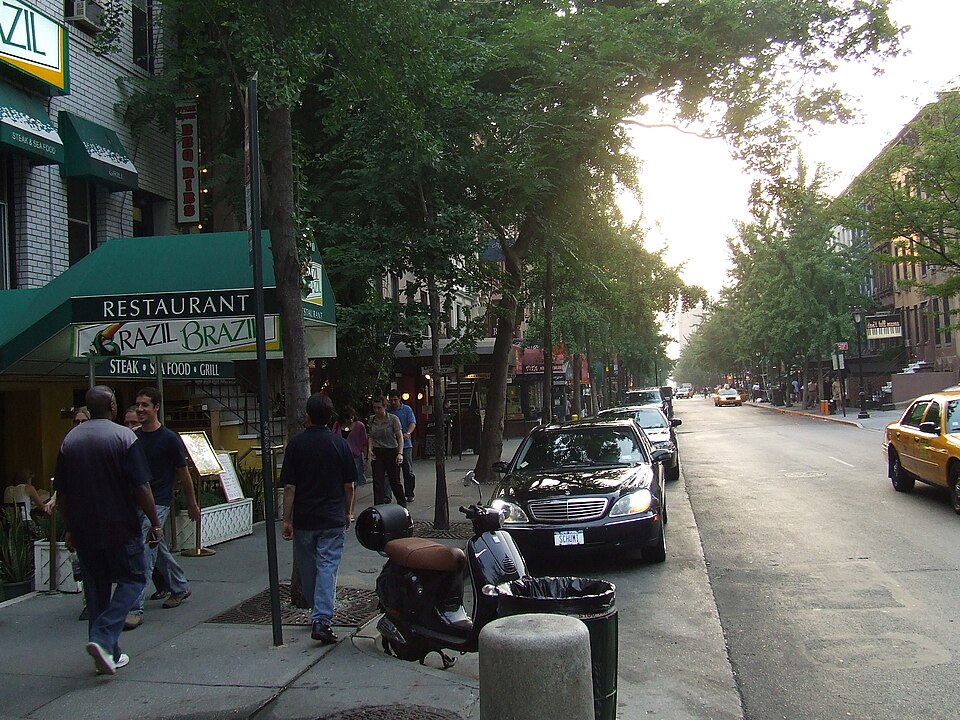
What Makes a Good Pre-Theater Dinner
A pre-theater dinner has different requirements than a regular dinner out, and restaurants that understand this are meaningfully better than ones that don’t. The core challenge is a hard deadline: the curtain goes up at a fixed time, and being late to a Broadway show — or rushing through the last course staring at your phone — undermines the entire evening. The right restaurant solves this problem structurally, not through willpower.
The factors that actually matter
Proximity to the theater. The single most important variable. A great restaurant twenty minutes away creates timing pressure; a solid restaurant eight minutes away gives you a relaxed evening. For a first Broadway trip or a night where you don’t want to think about logistics, proximity beats quality every time. For a more seasoned visitor who knows the area well, a slightly longer walk to a better restaurant is worth considering — but only if the timing is genuinely comfortable.
Service pacing. The best pre-theater restaurants in New York understand the 6:00 dinner, 8:00 curtain rhythm and pace their service accordingly. Many explicitly ask about your curtain time when you make a reservation or sit down, and they mean it — they’ll adjust the pace of courses to get you out by when you need to leave. Restaurants that aren’t used to the pre-theater crowd don’t do this, and the difference shows up in the check arriving twenty minutes later than expected.
Prix fixe vs. à la carte. Many Theater District and Hell’s Kitchen restaurants offer pre-theater prix fixe menus — typically two or three courses at a set price, available from opening until around 7:00 or 7:30 PM. These are often good value and, importantly, they simplify the decision-making and speed the pacing. If you’re eating before a show and a prix fixe option exists at a restaurant you’re considering, it’s usually the right choice.
The right kind of food for the evening. This is more practical than it sounds. A large, rich meal right before sitting still for two and a half hours is uncomfortable for a lot of people. Lighter options — well-executed Italian, French brasserie food, sushi, straightforward American — tend to work better than a full steakhouse experience unless you have a longer dinner window. For special occasions where the dinner itself is part of the celebration, this constraint relaxes considerably.
Where to Eat: The Areas That Matter
The neighborhood you eat in before a Broadway show matters as much as the restaurant itself. The wrong area creates friction — a long walk, heavy traffic, a neighborhood that doesn’t feel like the evening you want to be having. These are the areas worth knowing.
Restaurant Row is a single block of West 46th Street between 8th and 9th Avenues that has been feeding Broadway crowds since the 1970s. The concentration is remarkable — dozens of restaurants on one street, spanning Italian, French, Mediterranean, American, Japanese, and more, most of them explicitly oriented toward the pre-theater crowd with prix fixe menus, trained service pacing, and awareness of which shows are playing nearby and when they start.
The quality range on Restaurant Row is wide. Barbetta, the block’s most historic restaurant and family-owned from 1906, closed on February 27, 2026. Becco, Lidia Bastianich’s Roman trattoria, is one of the most popular pre-theater options in the city, built around an unlimited tableside pasta service that makes the decision-making easy and the pacing reliable. Joe Allen, open since 1965, is the industry insider’s classic — Broadway memorabilia on the walls, solid American food, the best chance in the neighborhood of spotting someone who just came from their own show. Le Rivage offers classic French at a reasonable pre-theater prix fixe. Lattanzi has a loyal following for its Roman-Jewish specialties and relaxed atmosphere.
Not every restaurant on the block is worth the reservation — a few lean tourist-facing, and the proximity to the Theater District means some can get away with mediocrity. The reliable approach is to book one of the established names rather than gambling on something newer or less specifically oriented toward theater crowds.
Hell’s Kitchen, the neighborhood immediately west of the Theater District, has the best overall pre-theater dining in the area. The concentration of genuinely good restaurants along 9th Avenue — and on the side streets between 9th and 10th — is higher than anything you’ll find closer to Times Square, and the tourist markup is lower. The walk from most 9th Avenue restaurants to the main Broadway theater cluster ranges from about eight to fifteen minutes depending on your specific restaurant and theater.
Marseille, the French brasserie at 9th Avenue and 44th Street, is one of the most consistently recommended pre-theater options in the neighborhood — well-paced service, a menu that works well before a show, and a location that puts you close to the theaters on 44th and 45th Streets. Nizza, a French-Italian Mediterranean spot nearby, is another solid choice for lighter pre-show eating. The Marshal, on 10th Avenue, is further from the theaters but worth it for a more relaxed, farm-to-table dinner when you have a little more time. Carmine’s on 44th Street — family-style Italian in enormous portions — suits groups particularly well.
The tradeoff with Hell’s Kitchen is that the walk to some theaters, particularly those on the northern or eastern end of the Theater District, can push fifteen minutes. On a cold or rainy night, that distance matters more than it does on a pleasant spring or fall evening. Know your theater’s location before committing to a restaurant that’s further west.
The blocks immediately surrounding Times Square have no shortage of restaurants, but the quality-to-price ratio is the worst of the three areas. Tourist volume and high commercial rents produce a dining landscape where mediocre chains and overpriced mid-range spots dominate the most visible real estate. That said, there are genuine options scattered through the core — Sardi’s on 44th Street has served theater crowds at its current address since 1927, and its caricature-lined walls make it a Broadway landmark, but it is closed for renovation until its expected fall 2026 reopening. The Lambs Club on 44th Street, with its roots in the old Broadway members club of the same name, is the neighborhood’s most refined dining room. Din Tai Fung at 1633 Broadway is a reliable option for dumplings and Taiwanese classics when you want something satisfying but not heavy. Charlie Palmer Steak at Times Square offers a structured pre-theater prix fixe for visitors who want a formal dinner experience without leaving the core.
The core works best when the show’s theater is your primary constraint — if you’re seeing something at the Shubert, the St. James, or another theater on the southern end of the district, eating nearby is genuinely easier than walking up to Hell’s Kitchen and back. Don’t write off the area entirely; just be more selective than you would need to be in Hell’s Kitchen.
Restaurant Row: What to Know Before You Book
Restaurant Row deserves its own section because it’s genuinely the most concentrated pre-theater dining resource in New York, and understanding how it works changes how useful it is.
The block — West 46th Street between 8th and 9th Avenues — has been a Broadway dining destination for decades, and the restaurants there have adapted to serve the pre-theater crowd specifically. Most offer prix fixe menus. Most will ask about your curtain time. Most have mastered the rhythm of a 6:00 reservation that needs to conclude by 7:45. This operational understanding of the Broadway crowd is the block’s real competitive advantage over other parts of the neighborhood.
The restaurants worth knowing by name (Barbetta, the block’s historic Italian restaurant, closed in February 2026): Becco (the most popular pre-theater destination on the block, built around unlimited pasta service), Joe Allen (American bistro, theater industry institution, walk-in bar stools available most nights), Le Rivage (classic French, reasonable prix fixe, warm room), Lattanzi (Roman-Jewish cuisine, quieter atmosphere, family-owned since 1984), and Orso (Northern Italian, brick-lined room, reliably good for a relaxed dinner).
The block also has options that are more tourist-facing and less worth a specific reservation — scan for the ones with dedicated pre-theater menus and reputations that predate the current tourist boom, and you’ll be in good hands. The Tripadvisor and OpenTable reviews for the established names on this block are unusually reliable because the clientele is so consistent.
Tell the restaurant your curtain time when you make the reservation — not when you sit down, but when you book. The established restaurants on this block will pace the meal accordingly and get you out on time. If a restaurant doesn’t ask about your curtain time and doesn’t seem to know which shows are currently playing nearby, that’s a signal about how Broadway-attuned their service really is.
Pre-Theater Dinner NYC: Prix Fixe Menus and What to Expect
Many restaurants near Broadway run a pre-theater prix fixe, typically a fixed-price two- or three-course menu served before about 7:00 or 7:30 PM. Le Tout Va Bien on West 51st Street, for example, lists a $45 three-course menu served 4–6:30 PM daily according to The Infatuation, and Becco on Restaurant Row builds its meal around an unlimited pasta course. The Michelin Guide lists a pre-theater prix fixe at The Lambs Club on West 44th Street, and Le Rivage on Restaurant Row offers one as well.
Pre-theater menu NYC: what to check before you book
Prices, hours and inclusions change, so confirm the menu, the start and end times, and whether it is offered on weekends and matinee days when you reserve. Ask whether drinks are separate, and tell the restaurant your curtain time when you book. For a fuller look at the Theater District block by block, see the best restaurants in the Theater District guide.
Choosing by Occasion and Group Type
The right pre-theater dinner looks different depending on who you’re going with and what kind of evening you want to have.
Maximum proximity, established restaurants with Broadway-aware service pacing. Becco or Joe Allen give you a real New York dinner with zero navigation stress on a night that already has enough new variables.
Both have the right atmosphere for a proper evening — warm rooms, good wine, food that doesn’t require much decision-making. The walk to the theater is part of the date, not a problem to solve.
Both handle groups well, the food is unfussy, and large portions keep everyone satisfied. Carmine’s family-style Italian works especially well for a table that wants to share. Neither requires much pre-planning beyond the reservation.
All three are built for groups and handle the pre-show pacing well. Becco’s prix fixe keeps the ordering simple for a large table. Carmine’s family-style plates make sharing natural. Book well ahead for weekend shows.
Both earn their prices. The Lambs Club has one of the most polished rooms near Broadway. Lattanzi, a family-owned Roman-Jewish restaurant on Restaurant Row since 1984, has a townhouse dining room with real warmth. For a celebration that should feel like an event, either works.
Joe Allen’s bar is walk-in only and almost always has seats even during the pre-show rush. Din Tai Fung moves efficiently and the dumplings are reliably good. Both get you fed and out the door without a complicated dining experience.
Getting the Timing Right
Timing is where most pre-theater dinners go wrong, and the math is simple enough that there’s no excuse for getting it wrong with a little planning.
The 6:00 rule for 8:00 curtains
For a standard 8:00 PM Broadway curtain, sitting down to dinner by 6:00 or 6:15 gives you enough time for a proper two-course meal — starter, main, maybe dessert — plus the check, the walk to the theater, and arrival with ten or fifteen minutes to spare. That’s the comfortable window. A 6:30 reservation is manageable. A 7:00 reservation for an 8:00 show is a gamble that most experienced Broadway diners wouldn’t take.
Adjusting for 7:00 curtains
Some Broadway shows, particularly Saturday matinees and certain Wednesday and Sunday performances, have a 7:00 curtain. If that’s your show time, move everything forward by an hour: aim to sit down by 5:00 or 5:15. Restaurants are noticeably quieter then, the service is less pressured, and the overall experience is often better than the 6:00 rush. Many prix fixe menus are available from opening — typically 5:00 or 5:30 — so you won’t lose anything by arriving early.
Tell your server the curtain time
This is the single most effective thing you can do to ensure the meal runs on schedule. Broadway-aware restaurants treat curtain time as a service parameter — they’ll time the courses accordingly and make sure the check arrives when you need it, not when it’s convenient for them. Restaurants that aren’t used to the theater crowd may not do this automatically, which is another reason to favor the established pre-theater spots over wherever happens to have availability on OpenTable the night of.
Know your theater’s exact location before you book a restaurant
The Theater District spans thirteen blocks from 41st to 54th Street. A restaurant that’s a five-minute walk from the Shubert Theatre on 44th Street may be a twelve-minute walk from the Gershwin on 51st. Before making a restaurant reservation, know which theater you’re going to and look at the actual walking time from the restaurant you’re considering. This is a five-second Google Maps check that prevents a lot of evening stress. Our theater guides include the location of each theater for exactly this reason.
Common Pre-Theater Dinner Mistakes
Sitting down at 7:00 for an 8:00 show is the most common pre-theater dining mistake. It happens because 7:00 feels like plenty of time, and technically it is — if the courses arrive promptly, the check comes quickly, and the walk is short. In practice, none of those conditions are guaranteed, and even a single slow moment turns a 7:00 dinner into a race. Sit down by 6:15 for an 8:00 curtain. The restaurants are less crowded at 6:00 anyway, and you’ll enjoy the meal more.
A great restaurant on the Upper West Side is not a pre-theater restaurant for a show in the Theater District. Even within the Broadway neighborhood, a restaurant on 10th Avenue is meaningfully further from a theater on 45th Street than one on 9th Avenue. Distance that feels trivial when you’re not timing anything becomes real stress at 7:45 PM with a curtain at 8:00. Always check the walk before booking, not after you’ve finished dinner.
The restaurants closest to the theater entrances on 44th and 45th Streets are not automatically the best ones. Some are perfectly good; some are tourist-facing chains that have survived on foot traffic alone. Doing five minutes of research before booking — checking OpenTable reviews, looking up whether the restaurant has a pre-theater menu, verifying that it’s been operating for more than a year — pays off reliably.
Sitting through a two-and-a-half-hour show after a full steakhouse dinner is uncomfortable for a lot of people. If you’re planning something rich and multi-course, build in more time between the last bite and the curtain — ninety minutes minimum, two hours is better. For a standard pre-show dinner, lighter options tend to serve the evening better than a feast.
This one connects to dinner planning more than people expect. If you want a drink or a late bite after the show, knowing where you’re going before dinner means you can make the reservation and build the evening properly rather than wandering out of the theater at 11:00 PM hoping something good is still open. The best Broadway nights are planned as full evenings, not just the show plus whatever happens to be nearby.
Building the Full Broadway Night Around Dinner
Pre-theater dinner works best when it’s planned in conjunction with the rest of the evening rather than in isolation. The show’s theater location should determine your restaurant neighborhood. The restaurant’s location should connect naturally to your hotel or the direction you’re heading after the show. If you’re getting to Broadway by subway, knowing which exit puts you closest to the restaurant saves real time. If you’re driving, knowing whether you’ve booked a garage near the restaurant or near the theater changes how the end of dinner works.
The sequencing that tends to produce the best evenings: choose the show first, identify the theater’s location, pick a restaurant in the right neighborhood with the right timing window, make the reservation noting your curtain time, and know where you’re going after the curtain comes down. That last step — the post-show plan — is what converts a good Broadway night into a great one. A drink at Bar Centrale on 46th Street, a nightcap somewhere in Hell’s Kitchen, or simply a relaxed walk back to the hotel all work. What doesn’t work is figuring it out at 10:45 PM standing outside the theater.
For more on getting the logistics right around the show itself — transit, parking, how to navigate the post-show crowd — our Broadway transport guide and our Theater District neighborhood guide cover the full picture.
Pre-Theater Dining NYC: 2026 Closures and Reopenings
Restaurants around Broadway change often, and two 2026 changes affect older recommendations. Barbetta on West 46th Street served its last meal on February 27, 2026, after nearly 120 years. Sardi’s on West 44th Street closed after June 24, 2026 for renovation under its new owner, the Shubert Organization, and has said it plans to reopen this fall, with no official date announced. Check a restaurant is open before you book it.
Pre-Theater Dinner FAQ
Becco and Joe Allen on Restaurant Row are the most reliable pre-theater picks, Marseille and Le Tout Va Bien are strong Hell’s Kitchen options, and The Lambs Club suits a special occasion. The right choice depends on your theater, curtain time and group.
For most visitors, a Restaurant Row dinner with a pre-theater prix fixe, such as Becco’s unlimited pasta menu, is the easiest and most reliable. For a better meal with a longer walk, try Hell’s Kitchen.
Restaurant Row on West 46th Street, Hell’s Kitchen along Ninth Avenue and the Theater District core around Times Square all work. See the pre-show dining guide for timing by curtain time.
For an 8:00 PM curtain, sit down by 6:00 or 6:15. For a 7:00 PM curtain, aim for 5:00 or 5:15. Tell the restaurant your curtain time when you book.
Often, yes. A pre-theater prix fixe simplifies ordering and speeds the pacing, and it is usually good value. Confirm the price, hours and whether it is offered on weekends and matinee days.
No. Barbetta on Restaurant Row closed on February 27, 2026. Becco, Joe Allen, Le Rivage and Lattanzi are nearby alternatives.
Sardi’s closed after June 24, 2026 for renovation and has said it plans to reopen this fall. No official date has been announced, so check before planning a dinner there.
Dinner First, Then the Show
A good pre-theater dinner doesn’t require much — a restaurant that understands the timing, a table booked early enough to eat without rushing, and a walk that gets you to your seat with a few minutes to spare. The Theater District and Hell’s Kitchen together offer more than enough options to make that happen well at every budget and for every type of group.
The decision comes down to what kind of evening you want. Restaurant Row gives you the most reliable, Broadway-aware dining at the expense of some culinary ambition. Hell’s Kitchen gives you better food and atmosphere at the expense of a longer walk. The Theater District core gives you maximum proximity at the expense of having to be more selective about where you actually eat. None of those are the wrong answer — they’re just different answers for different kinds of nights.
Build the Broadway Night Around Dinner Timing, Restaurant Row, Hell’s Kitchen, Theater District Logistics, Hotels, Transit & the Post-Show Plan
Pre-theater dinner is not just about finding a good restaurant. It is about choosing the right dining zone for your theater, booking the right time, knowing how you are getting there, and making sure the meal supports the full Broadway night instead of turning into a race. Use this section to connect the restaurant decision to Broadway shows, theaters, transit, hotels, neighborhoods, and post-show planning.
These are the restaurant-first links. They should come before general Broadway, hotel, or Night Out hubs.
The dinner page has to move people into the actual show-night logistics, using the current Night Out transportation structure.
This fixes the old `/neighborhoods/` links and routes everything through the current `/night-out/neighborhoods/` structure.
This is where dinner becomes a full night instead of a rushed reservation before the show.
Broader links come last. They support the page without replacing the pre-theater restaurant cluster.