

Mitzi E. Newhouse Theater Seating Guide: Best Seats, Rows & Thrust Stage Tips
The Newhouse uses a 3/4 thrust stage — the audience wraps around three sides, side seats are part of the design, and proscenium Broadway logic does not apply. Here’s how to actually choose where to sit.
Centered seats are the safest starting point at the Mitzi E. Newhouse Theater — they give you the most balanced view of a 3/4 thrust stage where the audience wraps around three sides. But side sections are not bad seats here; they’re part of how the room is designed, and they can be genuinely immersive. For The Whoopi Monologues, centered positions are the clear recommendation because monologue performance rewards direct address and a front-facing relationship with the stage. Row H is the only wheelchair-accessible row — it’s at entrance level, which also makes it the easiest seat in the house to reach.
What a 3/4 Thrust Stage Actually Means
Why the Newhouse Is Different From Every Broadway House You’ve Been In
In a traditional Broadway proscenium theater, the stage sits flat against one wall with a frame around it — like a giant television screen — and the audience sits in rows all facing the same direction. That’s what most people picture when they hear “theater.”
The Mitzi E. Newhouse is different. It uses a 3/4 thrust stage — meaning the stage extends out into the room, and the audience is seated on three sides of it rather than just one. You’re not looking at a framed picture. You’re surrounding a platform that pushes into the space you’re sitting in.
That changes everything about seat choice: actors face different directions at different moments, side sections can be just as close or closer than center sections, and the “best seat” depends far more on production-specific staging than in a proscenium room. There is no single “best row” the way there is in a Broadway musical — the room is built to make every section feel like it’s inside the performance.
Applying Broadway proscenium logic to a thrust-stage room. In a normal Broadway house, center orchestra front is usually best. At the Newhouse, center is still the safest bet for clarity — but side seats are not consolation prizes. They’re how the room was designed to be experienced. Treating them as worse automatically is a mistake that the building itself disproves.
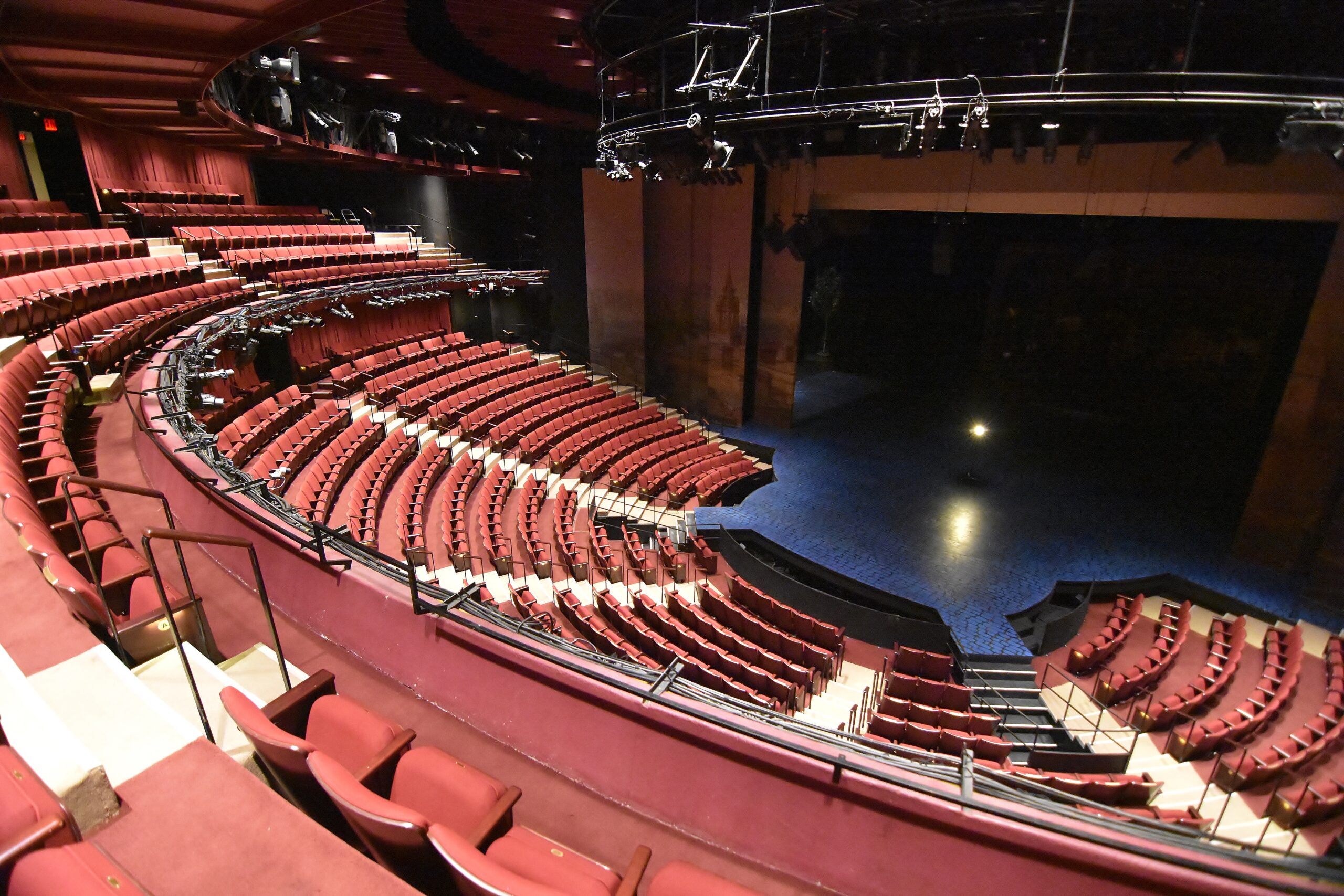
Best Seats at the Mitzi E. Newhouse Theater
The Newhouse has 299 seats across 7 rows and 5 sections. Because the room is compact and the stage wraps into it, there is no equivalent to a Broadway “bad seat” — but there are better and worse positions depending on the production and what you want from the experience.
Centered Sections — Any Row
The cleanest, most balanced view of the thrust stage. Good for direct address, facial expression and full-stage perspective. Safest starting point for any first-time Newhouse visitor and most productions.
Centered, Middle Rows
Monologue performance lives or dies on the performer-audience relationship. A centered position in the middle rows gives you the clearest direct-address connection without losing the full-stage picture.
Side Sections — Front Rows
Close, immersive, and intentional. Side sections in the front rows put you right alongside the thrust stage — great for people who want to feel inside the performance rather than watching it from a traditional position.
Centered, Farther Back
In a 7-row room, “farther back” doesn’t mean distant. Row F or G centered is still genuinely close and offers a complete picture of the stage. Strong value if centered front rows are gone.
Row H — Entrance Level
The only wheelchair-accessible row, at entrance level — no steps. Because the room is only 7 rows, Row H is not a distant position. Verify specific seats and companion options with Lincoln Center Theater before booking.
Extreme Side Angles
For monologue-heavy, direct-address shows, extreme side positions can feel less satisfying than centered seats. Not bad seats — but check the production’s staging before committing to a far side position for a show like The Whoopi Monologues.
7 Rows: How to Think About Each Zone
Seven rows is compact enough that distance rarely becomes a real problem at the Newhouse — the question is almost always about angle before it’s about proximity. Keep that in mind as you think through the row zones.
Front Rows (A–B)
The most immediate, intense, actor-up-close experience the room offers. Best for people who specifically want to feel right inside the performance — the thrust stage puts actors physically close. For monologue work like The Whoopi Monologues, very front rows can occasionally feel more like extreme proximity than optimal viewing angle. Strong choice if you know you love front-row theater.
Middle Rows (C–E)
The sweet spot for most productions and most audiences. Close enough for facial detail and emotional register, far enough for full-stage perspective. For The Whoopi Monologues, this is where to look first — especially centered positions in this zone. Recommended starting point for first-time Newhouse visitors.
Later Rows (F–G)
Still genuinely close in a 7-row room. Good choice if you want the most complete stage picture, prefer not feeling right on top of the action, or if earlier centered rows aren’t available. Centered positions in the F–G range can be excellent value seats.
Row H — Entrance Level
The only row at entrance level — which makes it the only row without steps down. Row H serves double duty: it’s the wheelchair-accessible row, and it’s also a practical option for anyone who prefers easier entry and exit. Because the room only has 7 rows, Row H is not a back-of-the-house position. Verify specific available seats and accessibility accommodations with Lincoln Center Theater at lct.org before purchasing.
Per Lincoln Center Theater’s official seating information, all rows other than Row H require approximately 1–2 steps down per row. If steps are a concern for any member of your party, Row H is the practical choice — and it’s a legitimate seat in a compact room, not a compromise.
Center vs Side Sections: Neither Is Wrong
The Newhouse seating splits into 5 sections around the 3/4 thrust stage. This is where the room’s design is most misunderstood — and where the clearest editorial guidance separates a useful seating guide from a generic chart.
Safest for Most Shows
- Clean view of main thrust stage axis
- Best for direct address and monologue
- Most balanced full-stage picture
- Best starting point for first-time visitors
- Recommended for The Whoopi Monologues
Part of the Room’s Design
- Often closer to the thrust than center
- Immersive, intimate, inside the action
- Intentional architecture — not leftover seats
- Best for ensemble or movement-heavy shows
- Use with care for direct-address monologue
In a proscenium theater, extreme side seats can mean staring at the back of actors’ heads. In a 3/4 thrust room, side sections are where part of the performance is pointed. Architects and directors design thrust stages knowing audiences will be on the sides. The show is written for that. Trust the room.
Best Seats for The Whoopi Monologues
The Whoopi Monologues is built around monologue performance, direct address and the relationship between performer and audience. Whoopi Goldberg’s original 1984 work was one-woman and completely dependent on that performer-audience connection — and the Lincoln Center reimagining with a five-woman ensemble amplifies that dynamic rather than changing it.
What that means for seating: the show will be pointing at you. Direct address only works when there’s a clear line of sight between the performer and the audience member. Centered positions make that relationship clean. Extreme side positions can feel like you’re watching direct address happen to someone else rather than experiencing it yourself.
Centered Middle Rows (C–E)
The optimal zone for monologue performance. Close enough for facial detail, centered enough for the cleanest direct-address relationship. Start here when buying tickets.
Centered Later Rows (F–H)
If earlier centered seats aren’t available, centered farther back is still excellent in a 7-row room. Row H can be strong if centered — and it’s the accessible option.
Front Rows A–B (Centered)
Maximum proximity and intensity. Good if you specifically love being right in it. For five performers sharing a stage, very front rows can occasionally make it harder to track ensemble staging simultaneously.
Extreme Side Sections
Fine for many shows, but for a monologue-heavy production built on direct address, far side positions can feel less satisfying. Check the seat map before buying anything at a strong angle.
Note: Kerry Washington is not scheduled to perform after Sunday August 2. If you’re booking to see Washington specifically, verify the current schedule at lct.org before purchasing.
Row H, Steps & Accessible Seating
Per Lincoln Center Theater’s official seating information: Row H is the only row accessible to people using wheelchairs, as it is at entrance level. All other rows require approximately 1–2 steps down per row.
Row H seats should be selected through Lincoln Center Theater’s official ticketing at lct.org. For specific accessibility questions — companion seating, hearing loops, headsets, or other accommodations — contact the Lincoln Center Theater box office directly before purchasing.
Don’t rely on a resale seating map to plan accessibility. Use the official source.
One thing worth emphasizing: Row H being “the last row” in a 7-row theater is not the same as being in the nosebleeds. The Newhouse is compact. Row H is still close. For guests who want to avoid steps entirely and sit at entrance level, Row H is a legitimate and comfortable seat — not a compromise.
No Late Seating: Why Arrival Matters More Here
Lincoln Center Theater’s policy does not permit late seating once a performance begins. That matters more in a thrust-stage room than in a large Broadway house — in a 7-row intimate theater, a late arrival disrupts the entire audience-performer relationship, not just the people in your row.
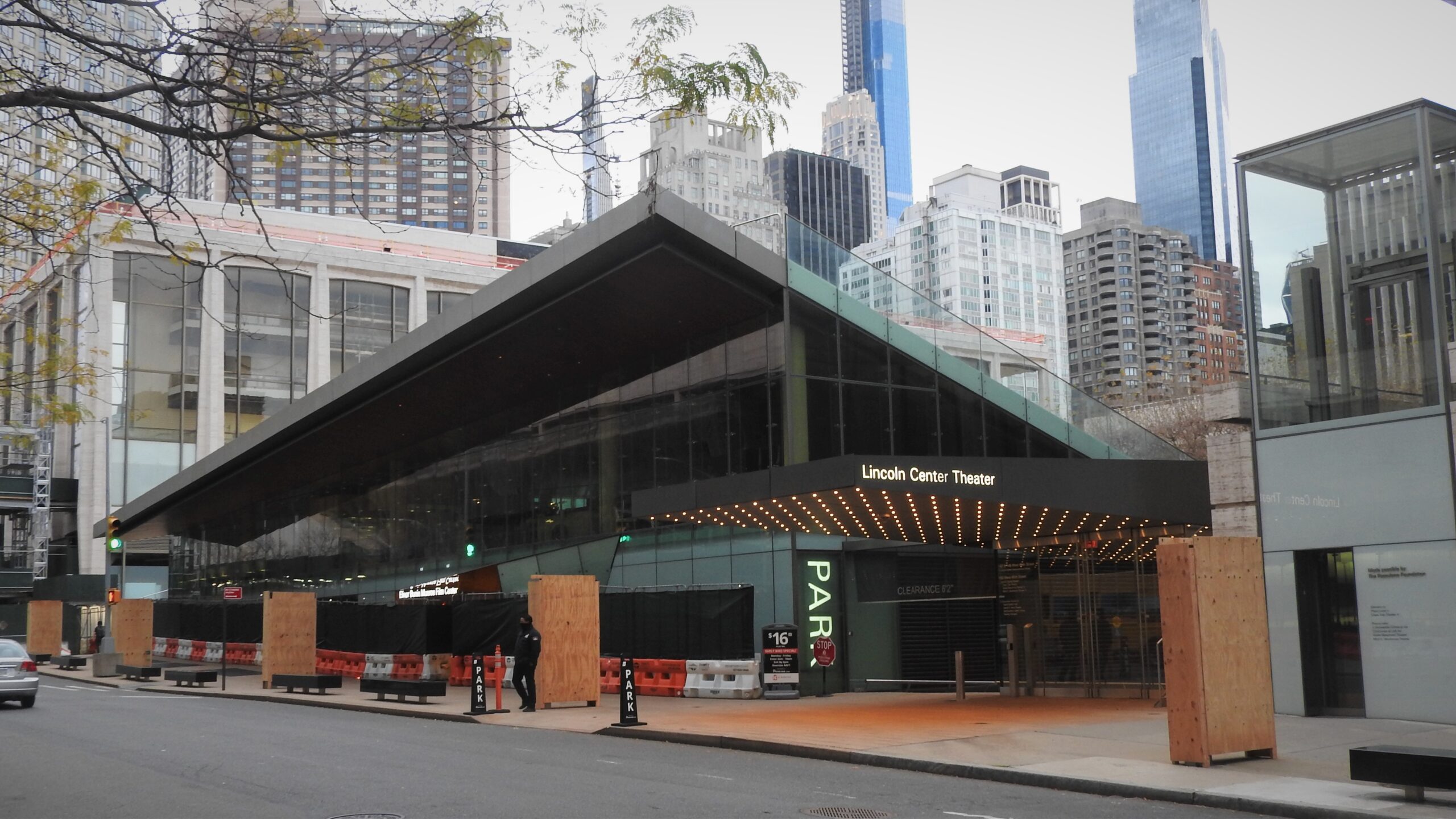
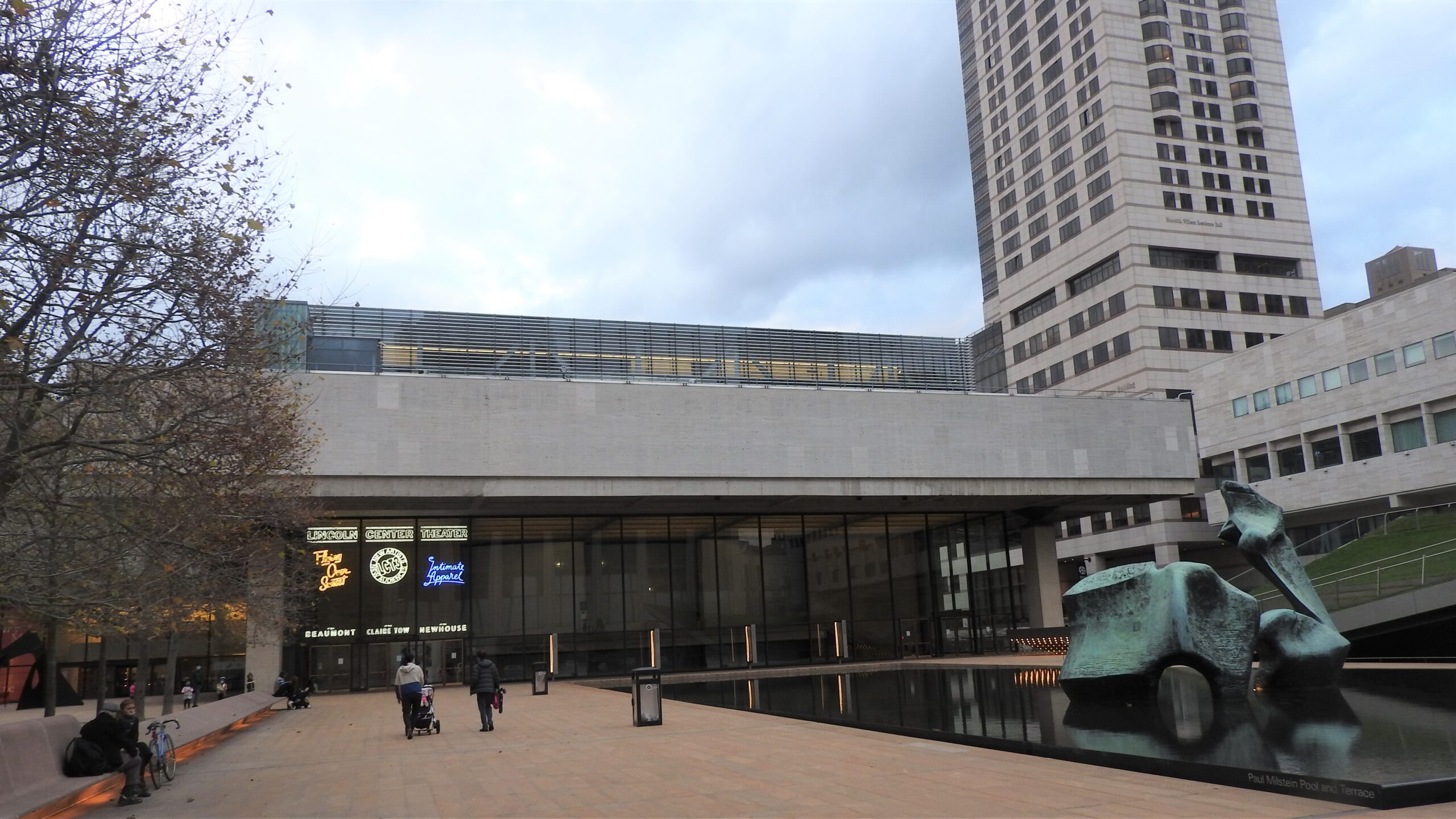
Plan to be at the Newhouse entrance at least 20 minutes before curtain. If this is your first time at Lincoln Center, build in extra time — the campus is beautiful but it can be confusing, and the Newhouse entrance is not the same as the Vivian Beaumont entrance. Check your ticket for which building and which door before you arrive.
For the full arrival and transit guide: Mitzi E. Newhouse Theater venue guide, getting home late, and before the show planning guide.
How to Choose the Right Seat at the Newhouse
Safest All-Around
- First time at the Newhouse
- Seeing The Whoopi Monologues
- Want best direct-address experience
- Prefer balanced full-stage view
- Not sure what the staging will do
Intimate Theater Fan
- You love feeling inside the performance
- You understand thrust-stage design
- You want the closest possible position
- The show has ensemble or movement staging
- You’ve been to thrust theaters before
Maximum Proximity
- You specifically want actor up-close
- You like intense, immediate theater
- One-person or solo shows especially
- You don’t need full-stage perspective
Accessibility & Easy Entry
- Wheelchair or mobility aid
- Steps are a concern
- Want entrance-level seating
- Easier entry and exit is a priority
- Contact LCT to confirm specific seats
Mitzi E. Newhouse Tickets: Seat-Picking Strategy
Always start with Lincoln Center Theater’s official ticketing at lct.org. The LCT seat map is the only accurate picture of the current production’s layout — and because the Newhouse seating chart can vary slightly by show, third-party resale maps may not reflect the current configuration accurately.
- Best all-around: Centered middle rows — the clearest, most balanced Newhouse experience for any production.
- Best for Whoopi: Centered position in any row — prioritize angle over pure proximity for direct-address monologue work.
- Best close-up: Side or front sections if you want maximum actor proximity and understand the thrust format.
- Best accessible: Row H — verify specific seats and companion options with Lincoln Center Theater before buying.
- Best value: Centered later rows (F–H), which are still genuinely close in a 7-row room.
- Best habit: Check the official LCT seat map for your specific production, not a generic diagram.
For star-led limited runs like The Whoopi Monologues, centered seats in the better rows move quickly after opening-week reviews. Book before coverage builds if you care about seat position. For Kerry Washington specifically: she performs through August 2 only — verify at lct.org before purchasing.
See the full Whoopi Monologues show guide for dates, cast schedule and booking strategy.
FAQ: Mitzi E. Newhouse Theater Seating
Centered seats are the safest overall choice — they give a clean view of the 3/4 thrust stage for direct address and full staging. Side sections can also be strong because the audience wraps around three sides. For The Whoopi Monologues, centered middle rows are the strongest starting point.
A 3/4 thrust stage extends out into the audience room, with seating on three sides of the stage rather than just in front of it. Actors face different directions at different moments. Side sections are part of the design — not automatically worse than center seats. It’s the opposite of a standard Broadway proscenium theater where everyone faces the same framed stage.
Not automatically. In a thrust-stage theater, side sections are intentionally part of the design — they can be close, immersive, and offer unique views of the staging. For direct-address monologue shows like The Whoopi Monologues, centered seats are still the safer bet, but side sections shouldn’t be dismissed outright.
7 rows, split across 5 sections around the 3/4 thrust stage. The seating chart can vary slightly by production — always check the official LCT seat map at lct.org for your specific show.
Row H is the wheelchair-accessible row — it’s at entrance level. All other rows require approximately 1–2 steps down per row. Contact Lincoln Center Theater directly at lct.org for specific accessibility arrangements before purchasing.
No. The Newhouse is only 7 rows — Row H is not a distant balcony. It’s the entrance-level row, the only one without steps, and a legitimate seat choice in a compact intimate room.
Centered middle rows — the C through E range is the ideal zone for a direct-address monologue show. Centered positions give you the cleanest relationship with the performer. Avoid extreme side angles for a show this dependent on direct audience connection.
No. Lincoln Center Theater policy does not permit late seating once a performance begins. Arrive early — especially if you’re navigating the Lincoln Center campus for the first time and need to find the Newhouse entrance specifically.
Yes. Lincoln Center Theater notes that the Newhouse seating chart varies slightly with each production. Always verify the current seat map for your specific show at lct.org before purchasing.
No orchestra/mezzanine/balcony split. No proscenium frame. The thrust stage wraps the audience around three sides, so side sections are part of the design, not leftover seats. In 7 rows, distance is almost never the issue — angle is. That’s the opposite of most Broadway houses.
The Short Version: Centered, Then Angle, Then Distance
At the Mitzi E. Newhouse Theater, the most useful seat-buying principle is: get centered first, then think about angle, then worry about distance. In a 7-row room with a thrust stage, you’re always close — the question is whether you’re at the right angle for what the show is doing.
For The Whoopi Monologues, centered middle rows are the clear recommendation. For other productions, side sections can be excellent. For anyone with mobility concerns, Row H is the only entrance-level row and it’s a legitimate seat, not a compromise. No late seating means planning ahead, especially for the Lincoln Center campus. See the Mitzi E. Newhouse venue guide for everything else about the room, and the Whoopi Monologues show guide for what’s currently playing.
LCT policy: no late seating once the show begins. Navigate the Lincoln Center campus in advance — the Newhouse entrance is not the same as the Vivian Beaumont.
Mitzi E. Newhouse Theater
- Stage3/4 thrust · audience on 3 sides
- Rows7 rows
- Sections5 sections
- Best OverallCentered, middle rows
- For WhoopiCentered, any row
- Best AccessRow H (entrance level)
- Steps~1–2 per row except Row H
- Late SeatingNot permitted
- Chart VariesCheck lct.org per production
Seat Strategy
- ✦ Best Overall
Centered sections, middle rows — the safest starting point for any show.
- Close-Up
Side or front sections — immersive and intentional in a thrust-stage room.
- ✦ Best Value
Centered later rows — still genuinely close in a 7-row room.
- ♿ Accessible
Row H — entrance level, wheelchair-accessible, no steps. Contact LCT.
- ⚠ Check Carefully
Extreme side angles for direct-address monologue shows like Whoopi.
Tickets & Visit
Before & After
More Seating & Venues
“Centered first, then angle, then distance. In 7 rows with a thrust stage, you’re always close — the question is whether you’re at the right angle.”
Seats Chosen — Now Plan the Rest
From the venue guide and current show to dinner on Columbus Avenue and getting home from the Upper West Side — everything around your seat choice.
Mitzi E. Newhouse Theater Guide
Full Lincoln Center venue guide — history, the Beaumont vs Newhouse distinction, getting there, and the Upper West Side night.
Full Venue Guide → 🎭 Now PlayingThe Whoopi Monologues
Kerry Washington, Kara Young and ensemble — the current Newhouse production and why centered seats matter for this show.
Show Guide → 🏛 VenuesOff-Broadway Venues Hub
Compare Newhouse seating with Cherry Lane, Public Theater, Minetta Lane and other major Off-Broadway rooms.
All Venues → 🎭 CompareCherry Lane Seating Guide
How proscenium-style seating at an intimate West Village room compares to the Newhouse’s 3/4 thrust setup.
Cherry Lane Seats → ⚖️ CompareBroadway vs Off-Broadway
Why a Lincoln Center thrust stage works completely differently from a Times Square proscenium house.
Read Comparison → 🎫 Pre-ShowBefore the Show Planning
Timing dinner, navigating the Lincoln Center campus and arriving at the right entrance — critical when there’s no late seating.
Pre-Show Guide → 💛 Date NightDate Night NYC
Lincoln Center campus, Upper West Side dinner, intimate thrust stage — build the full refined theater date around the Newhouse.
Date Night Ideas → 🚕 TransitLate-Night Transportation
The 1 train from 66th Street, rideshare from Lincoln Center, and the post-show Upper West Side exit plan.
Transit Guide →