

How to Choose NYC Football Seats: Giants, Jets, MetLife Stadium Views & Value
Football sightlines, angles, and comfort work differently than any other sport. Here’s how to choose the right seat for your game, your group, and your day at MetLife Stadium.
Choosing football seats is not like choosing seats for basketball, hockey, or a Broadway show. The field is enormous. The ball moves horizontally across the full width of the play. Formations develop in space you need to be able to read. Being very close is not always better — and being very cheap is not always the trade-off it seems. At Giants and Jets games at MetLife Stadium, the right seat depends on how much of the field you want to see, how exposed you want to be to the weather, who you are bringing, and what kind of day you are trying to have.
This guide is organized around those decisions — not around a section-by-section inventory of a seating chart.
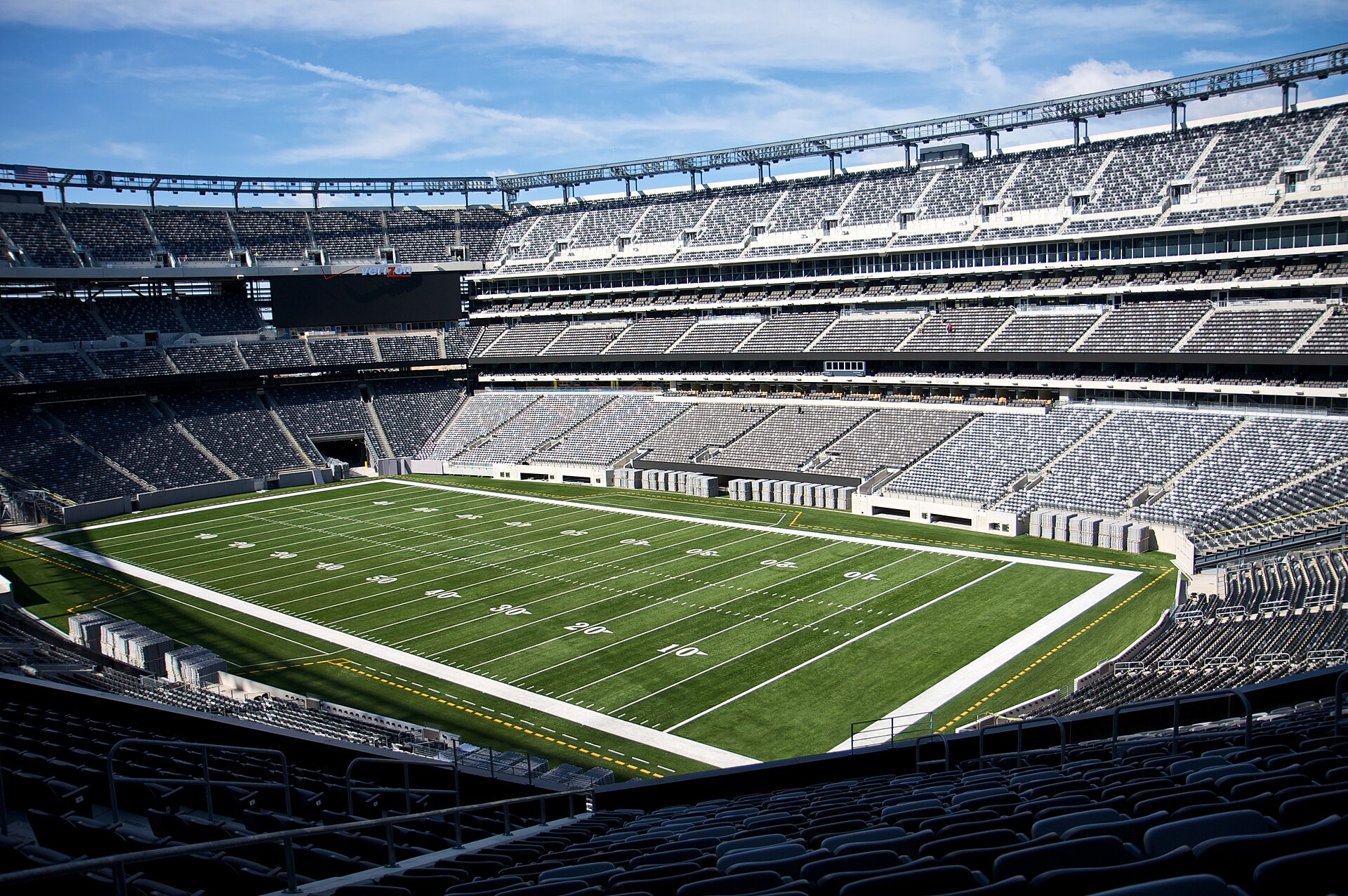
A mezzanine corner view inside MetLife Stadium — useful context for comparing football seat angles, elevation, sideline versus corner value, upper versus lower levels, weather exposure, and the full Giants or Jets game-day view.
Why Football Seat Choice Works Differently
The most important thing to understand about football seating is that the sport uses the entire field simultaneously. A play develops from the line of scrimmage, but the quarterback’s read, the receiver routes, the secondary coverage, and the run lanes all unfold across 53 yards of width and as much as 60–70 yards of depth on a single snap. Watching that without elevation or angle means watching a compressed, two-dimensional version of a three-dimensional game.
In basketball and hockey, closer is almost always better — the court and ice are small enough that any decent lower-level seat shows you the full action. In baseball, angle and sun exposure matter, but the key event (ball in play) is usually readable from most seats. In a concert, the only axis that matters is proximity to the stage and center alignment. Football rewards a different set of priorities entirely.
Even modest elevation above field level lets you see formations, coverage assignments, and run lanes develop. The flat-field view from the lowest rows looks more like a sideline reporter’s angle than a tactical view of the game.
The angle relative to the action — not just proximity — determines what you see. A sideline seat 30 rows up often gives you a better read of the game than a field-level seat directly behind the end zone.
MetLife is an outdoor stadium. Early-season games can be hot and glaring; late-season games can be genuinely cold and wet. Seat selection and weather aren’t separate decisions at an outdoor stadium — they’re the same decision.
The lowest, most expensive seats aren’t wrong — but in football specifically, they aren’t automatically better than seats a few rows higher with a cleaner full-field perspective. This is different from almost every other live event.
End Zone Seats: Energy, Touchdowns, and Tradeoffs
End zone seats create a specific kind of football experience. When the offense is driving toward you — especially in the fourth quarter, with the game on the line — the energy from an end zone section can be genuinely electric. Goal-line stands feel different when you’re looking directly at the action rather than watching from the side. Touchdowns scored at your end feel immediate in a way that sideline seats can’t replicate.
The tradeoffs are real. The full field is a narrow corridor from the end zone, which makes it hard to judge yardage, read formations, or track play development beyond about 30–40 yards. When the offense is at the far end of the field, the game can feel distant and harder to follow. The experience is less about watching football intelligently and more about being inside the atmosphere of a football crowd.
- You prioritize crowd energy over game view
- You are a passionate fan of the team and want to be in the thick of it
- Budget is the primary constraint
- You have been to games before and know what you are choosing
- Your group is large and you want to sit together affordably
- First-time football viewer trying to understand the game
- Date night where view and comfort matter
- Families where kids need to follow the action
- Anyone who wants to see both teams drive the full field
- High-priority games where full experience matters
End zone seats are not bad. They are a specific choice for a specific kind of game-day experience. The problem is when someone buys them because they are cheap without understanding what they are trading away.
Corner Seats: Often the Smart Value Play
Corner sections at MetLife Stadium occupy the territory between sideline and end zone — and they offer a genuinely underrated combination of view, price, and game experience. From the corners, you can see a real slice of the field. You have some sideline-style perspective on formations and most of the offensive field on one side, while still being close enough to scoring plays that touchdowns feel immersive rather than distant.
Corner sections are routinely priced below midfield sideline seats and above the cheapest end zone options, which tends to put them in the value tier that delivers more than their price suggests. The angle will not be perfect — you will see one end of the field better than the other — but for most casual and first-time visitors, corners are a very sensible choice.
Quality within corner sections varies. A front-row corner seat in the lower level is a different experience from a high-row corner in the upper deck. Check the specific row and verify the angle before buying. The seating charts that show exact section coordinates are worth a few minutes of research before you commit.
Best for: Value-focused visitors, casual fans attending their first or second NFL game, tourists who want an authentic NFL experience at a price that makes the day reasonable, and couples who want a real seat without paying midfield rates.
Lower Level vs. Upper Level: A Real Comparison
The choice between lower and upper level at MetLife shapes two fundamentally different game-day experiences. Neither is wrong. They just deliver different things, and being honest about which one you actually want makes the day work better.
- Closer to players — you feel their size and speed
- Stronger crowd immersion and atmosphere
- Better for feeling inside the event, not watching it
- Easier to get good photos and video
- Higher demand, typically more expensive
- Very low rows can flatten the field view
- Full weather exposure still applies
- Late-season cold hits lower level the same as upper
- Better tactical view of the full field
- Easier to understand formations and routes
- Often significantly better value per dollar
- Strong option for serious football viewers
- Can feel farther from the action
- Heights and stairs may be a factor for some
- Wind exposure can be stronger at higher levels
- Exits and concourse access worth checking
Lower Level Feels More Like Being Inside the Event. Upper Level Helps You Understand It.
Neither of these is a criticism. They describe two different kinds of football attendance. If you want to be close to the size and speed and crowd energy of an NFL game, lower level delivers that in a way upper level doesn’t. If you want to see formations develop, read the full field, and understand why plays succeed or fail, upper level sideline often gives you a cleaner view than lower-level seats at the same price point. Know which experience you want before you choose.
Club Seats and Premium Areas
MetLife Stadium offers various club and premium seating options that sit between standard and suite-level access. In general terms, club-area seats offer improved comfort, better concession access, more shelter from the elements, and an overall smoother game-day experience. Whether those benefits are worth the price depends entirely on who is going and what the day is meant to deliver.
Club amenities, included benefits, and access policies vary by seat type and can change season to season. Always verify current inclusions directly with the team or official ticketing before factoring specific club benefits into your buying decision. What was included in a previous season may not be included now.
That said, the general case for club-area seats is clearest for: date nights when comfort significantly improves the experience, families in cold or wet weather when shelter matters, special occasions where the full day is the point, and visitors who dislike long concession lines. For a casual weekend fan on a reasonable budget, standard seats with a good view will usually serve just as well.
Best Football Seats Based on Who’s Going
The right seat changes depending on who you are and what you need from the day. Here is a direct breakdown.
Best Football Seats for Families
Families have a different calculus than individual fans or couples. The best family seat isn’t necessarily the best football seat — it’s the seat where the whole group has what they need for three or four hours at an outdoor stadium in New Jersey.
The key family seat priorities: reasonable stair count and accessibility to the section, proximity to restrooms and concessions (kids will need both), a clear enough view that everyone can follow the action, manageable exit routes at the end of the game, and a seat level that doesn’t require the group to be in the most exposed position on a cold afternoon. Middle rows of accessible sections tend to be better than the cheapest available seat or the most expensive premium option.
Late-season games in November and December are a significant weather commitment for families with young children. If the game is in that window, build weather into the seat decision — not just as an afterthought. See the For a date night at a Giants or Jets game, the seat choice is less about football expertise and more about making the day comfortable for both people. If you are both genuine fans, choose the best football view your budget allows. If one of you is attending primarily for the experience and atmosphere, comfort and smoothness matter more than optimal angle. The date-night seat priorities: a clear view that doesn’t require explaining why you can’t see what’s happening, enough comfort that the evening doesn’t feel like endurance, a weather plan if the game is late-season, and seats that don’t cost so much that the expense overshadows the experience. Some elevation over field level is useful for the same reason it always is in football — a better-read game is a more interesting game for everyone, including the person who isn’t a hardcore fan. For date night specifically, club-area seats may justify their premium more than for other visitor types. Easier concession access, better comfort, and more weather shelter can improve the evening significantly when the goal is a genuine night out rather than a football-watching session. See the The most common tourist mistake when buying football tickets is choosing the cheapest available option without understanding what it delivers, or choosing by team identity without comparing what the seat actually shows. Neither of those decisions optimizes the experience. For first-time visitors specifically, a readable full-field view matters more than proximity or price. The game is more interesting when you can see formations, understand why plays succeed or fail, and track the ball without craning. A clean midfield angle — even in the upper level — typically serves a first-time visitor better than a flat low angle near the end zone. Tourists should also think logistically. MetLife is in East Rutherford, New Jersey — not in New York City — and the return trip after a game matters. Transit options and timing affect which seat works for the day. See the
Outdoor Stadium Reality MetLife Stadium is fully outdoors in East Rutherford, New Jersey, and the weather is a genuine seating factor for much of the football season. The NFL runs from September through January. That range includes hot early-September afternoons, beautiful October days, cold November evenings, and genuinely harsh December and January conditions. The seat that is perfect in October can be miserable in December. Early-season considerations: sun exposure and heat are more relevant. Day games in September with strong sun on exposed upper-level sections can be uncomfortable in a different direction. Check which side of the stadium gets afternoon sun before buying. Late-season considerations: cold, wind, and potential rain or snow become primary factors in any seat decision. Upper-level seats are more exposed to wind. End zone sections can funnel cold air. The warmest seats in a cold outdoor stadium are typically in the lower bowl or in climate-controlled club areas — not by a large margin in terms of temperature, but meaningfully in terms of comfort over three or four hours. Check the weather forecast when your tickets are already purchased, but build weather awareness into the seat choice before you buy. A November night game in a cheap exposed upper section is a very long way from a September afternoon in the lower bowl. At an outdoor football stadium, the best seat on paper can become the wrong seat if the weather is bad and the group isn’t prepared for it. For families and date-night visitors especially, weather tolerance should be part of the seat-buying calculation — not just clothing advice. Club-area seats and lower-bowl positions that offer some wind break are worth their premium for weather-sensitive groups in late-season games. The cheapest football ticket is not always the best value. The seat that costs $40 less than a comparable option is not a win if it costs you a readable view, requires a 45-minute wait to exit, and leaves you cold for the last two hours of the game. Football tickets are one piece of a game-day budget that includes transit, parking, food and drink, and time — and all of those interact with each other. The value play that actually works: buy a better seat at a game with lower demand. A prime sideline seat at a regular-season Giants game against a non-marquee opponent is often available at the same price as an end zone seat at a premium matchup. You get a better game-day experience at a comparable or lower cost. The schedule matters as much as the seating chart. For budget-focused visitors, corner sections and upper-level sideline remain the best options — not cheap end zone seats that deliver a weaker experience at a slightly lower price. A $20 premium for a corner seat over a deep end zone seat is almost always worth taking. That $20 doesn’t begin to cover the difference in experience. Choosing seats is one decision. Here is the full planning cluster — everything you need to make a Giants or Jets game at MetLife Stadium a well-planned, complete day.Best Football Seats for Date Night
Best Football Seats for Tourists and First-Time Visitors
Weather and Seat Choice at MetLife Stadium
Budget Strategy: Cheap Seats vs. Smart Seats
Common Football Seat-Buying Mistakes
How to Choose Your Football Seat — Step by Step
Continue Planning Your NYC Football Night
More NYC Football Planning Guides
Seats sorted. Now plan the rest — venue layout, which team to see, game-day logistics, and everything that makes a MetLife trip worth the New Jersey commute.
MetLife Stadium Seating Guide
Section-by-section breakdown of every level, sightline, weather exposure, and what each area actually delivers on game day.
Full Seating Guide →MetLife Stadium — Complete Venue Guide
Layout, entry gates, concessions, tailgate lots, and everything to know before you arrive in East Rutherford.
Explore the Stadium →Giants vs Jets — Which Game Should You Choose?
Still deciding which game to attend? Compare teams, matchups, ticket value, and crowd energy side by side.
Compare Teams →How to Plan a New York Football Game
Tickets, transit, timing, food, and what to wear — the complete game-day sequence from purchase to final whistle.
Build Your Day →First-Time Visitor Guide to NYC Football
What first-timers get wrong, what to expect at MetLife, and how to set up the day so nothing catches you off guard.
Read the Guide →