

NYC Sports
Seating Guide
How to choose the right seat at every major New York sports venue — by sport, budget, experience type, and what the seat actually looks like from where you’re sitting.
The most common sports seat mistake in New York is not choosing the wrong section. It is not thinking clearly about what the seat is actually supposed to do.
A seat that is great for a die-hard sports fan on a playoff night is not great for a first-time visitor who wants to understand what is happening on the field. A seat that is great for a couple who wants atmosphere on a date night is not great for a family managing two kids and four drinks. A seat that is genuinely good value on a weeknight against a mid-range opponent is overpriced for a sold-out postseason game.
This guide covers seating strategy for all six major NYC sports venues — what the seat tiers actually mean, where the real value lives, what to avoid and why, and how to think about seats based on who you are and what kind of outing you’re trying to have. Not a seating-chart dump. Not fake “section X is the best” certainty. A practical tool for buying smarter.
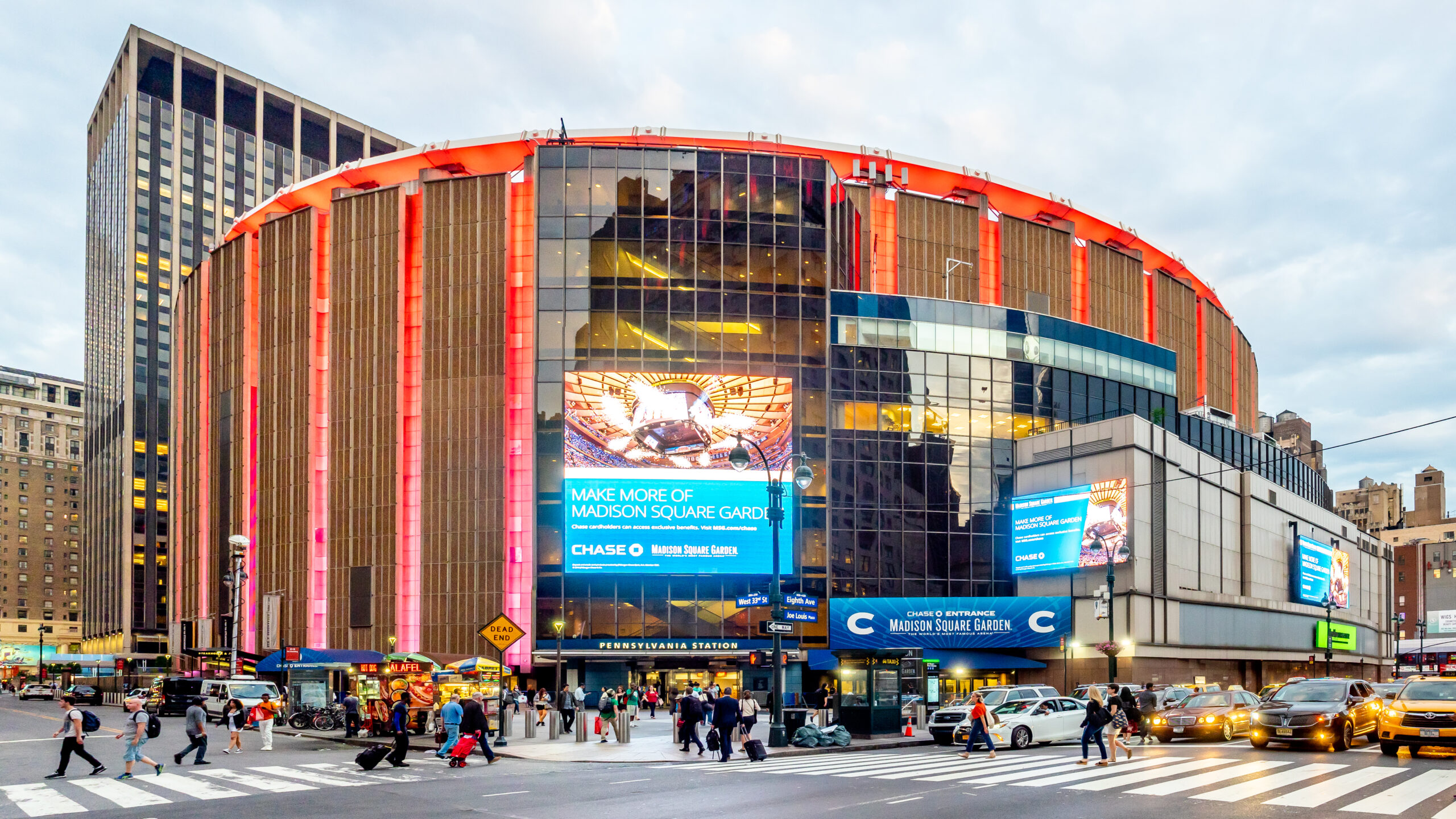
A full-bowl view inside Madison Square Garden shows exactly why seat angle and elevation matter more than raw proximity when choosing sports seats in New York.
The Principles of Smart Sports Seat Buying in NYC
Before diving venue by venue, here are the underlying principles that make seat decisions smarter regardless of which arena or stadium you’re in.
Closest is not always best
This is especially true in baseball and football, where proximity to the field can actually narrow your view of what’s happening. Being directly behind home plate is a premium experience in baseball — but so are slightly elevated Main Level seats that let you see the entire defensive alignment unfold. In basketball, floor-level seats in high-numbered rows (far from the basket) are often worse value than lower bowl center seats with elevation.
Different sports reward different seat angles
Basketball rewards sideline center position more than any other variable. Hockey rewards lower-level side-ice position — elevation helps you track the puck, but being too high makes the game abstract. Baseball rewards infield position over outfield at every price tier, but the specific row matters less because the pace allows you to process from a distance. Football is a full-field sport where a higher, wider angle frequently outperforms low-and-close sideline seats.
Venue-specific obstructions are the most common seat regret
The Chase Bridges at MSG. The deep outfield overhang at Yankee Stadium that blocks scoreboard views in the back rows of Field Level sections 105–108. The behind-basket sections at any arena where the game becomes confusing and visually flat. Seats that look fine on a flat seating chart but are functionally limited are the most common source of buyer regret. Verify with official seat views before buying at every venue.
Mid-tier infield / center sideline is the sweet spot at most NYC venues
The first few rows of the 200-level center sections at MSG. The Main Level infield at Yankee Stadium. The Mezzanine infield at Citi Field. The lower bowl center arc at Barclays. At every major NYC venue, there is a mid-tier price band that overperforms its cost. That zone is almost always found at infield or center-court position, slightly elevated from the field level.
The occasion changes everything
A regular-season weeknight game against a weaker opponent does not require the same seat strategy as a playoff game, a special event, or a once-only bucket-list trip. Match seat spend to occasion. A $400 lower bowl seat for a game you’ll forget is a worse use of money than the same seat for a playoff run you’ll remember for twenty years.
Always check the show-specific or game-specific seating chart
For arenas especially (MSG, Barclays), the configuration can change significantly by event. Sections that are great for basketball may be blocked or reconfigured for concerts. The end of the arena facing the stage matters in ways that the standard seating chart cannot show. Always confirm against the event-specific chart before purchase.
How Seat Logic Differs by Sport
| Sport | Best Position | Elevation Priority | Corners / Ends | Value Zone |
|---|---|---|---|---|
| 🏀 Basketball | Sideline center | Low-to-mid (avoid floor-level rows 10+) | Avoid behind-basket for first-timers | 200-level center, rows 1–8 |
| ⚾ Baseball | Infield, 1B/3B baseline | Slight elevation preferred over deep field level | Outfield works for casual/atmosphere | Main / Mezzanine level infield |
| 🏒 Hockey | Side-ice, low rows | Slight elevation helps track puck | Behind-goal can be exciting or limiting | 200-level center rows 1–6 |
| 🏈 Football | Midfield, elevated | Higher often better for full-field reads | End zone for proximity; poor for strategy | Club level midfield, upper deck midfield |
Madison Square Garden — Knicks & Rangers Seating Strategy
MSG is a vertical arena. The levels rise steeply and quickly — the lower bowl is genuinely close, the 200-level is the structural middle ground, and the 300/400-level reaches heights that feel more dramatic than they measure. Understanding this vertical character is the first step to buying seats wisely here.
Yankee Stadium — Seating Strategy for Yankees Games
Yankee Stadium has four meaningful levels — Field Level, Main Level, Terrace Level, and Grandstand — and the price drops are significant between them. The counterintuitive truth here is that the Main Level infield sections (200s) are frequently rated as the best viewing seats in the ballpark — not the most premium, but the best actual baseball view — because the slight elevation and infield position open the entire field up in a way that field-level positions do not.
Citi Field — Seating Strategy for Mets Games
Citi Field is widely regarded as one of the more intelligently designed ballparks in the league — good sightlines from multiple levels, a well-organized concourse, strong food options, and a layout that is notably family-friendly. The seat logic here is similar to Yankee Stadium in the general framework but the specific sections and levels differ.
Barclays Center — Nets & Concerts Seating Strategy
Barclays Center was designed from the ground up as both a basketball and concert arena, which shows in the bowl geometry. The suite level between the lower bowl and the 200s forces the upper tier to start at a higher pitch — meaning the 200-level at Barclays functions differently (and better) than upper levels at older arenas of similar capacity. This is one of the key things most seat-buyers don’t account for here.
MetLife Stadium — Giants & Jets Seating Strategy
MetLife is a different kind of seat decision than the arenas above. At 82,000+ capacity, the scale changes what “close” means. And because football is a full-field sport where the play develops horizontally across the entire 100-yard field, the viewing angle — specifically, how close you are to the midfield line — matters more than vertical proximity to the turf.
UBS Arena (Islanders) — A Brief Note
UBS Arena opened in 2021 in Elmont, Long Island — making it the newest major sports venue in the New York metro area. It was purpose-built for hockey with an ice-first bowl design, which means the sightlines from the lower and mid-bowl are consistently strong. The arena is smaller and more intimate than MSG, which benefits the hockey experience across almost every price tier.
The general seat logic for hockey applies: lower-level side-ice sections are the premium option, the center 200-level sections are the value zone, and behind-the-goal is exciting but limiting. UBS Arena is reachable by LIRR from Penn Station and Jamaica — it requires more planning than a Midtown arena, but tickets are generally more accessible in price than Rangers at MSG, and the newer facility delivers a quality game experience throughout the bowl.
Seat Strategy by Buyer Type
Your first game at MSG, Yankee Stadium, or Barclays should give you the full picture of what the sport looks like live. That means infield position at a baseball game and center-court or center-ice position at an arena. Avoid corners, end zones, and behind-the-basket sections until you know the venue and the sport well enough to make that tradeoff consciously.
Proximity to the concourse matters as much as proximity to the court when you’re managing kids. Mid-bowl sections with aisle seats — not buried in a row — give you the flexibility to move without creating a scene. Baseball families: Main Level infield at Yankee Stadium and Mezzanine infield at Citi Field both work well. Arena families: 200-level sideline sections with aisle access are the practical call.
For a date, the seat is partly about the experience and partly about the feeling of having chosen something good. Lower bowl center or sideline delivers the sense of occasion. If budget is a factor, the first few rows of 200-level center sections at MSG or Barclays provide a similar experience at a significantly lower price point — and still feel like a considered seat choice rather than a last-minute upper-deck compromise.
For fans who understand and follow the sport, the seat logic shifts toward game-watching quality rather than atmosphere. In basketball, center sideline where you can read spacing. In baseball, infield slightly elevated where you can follow pitch-selection and defensive positioning. In football, midfield elevated where you can see the entire field develop. Don’t pay proximity premiums that put you at an angle you have to mentally correct for.
The first rows of the budget tier at any venue consistently outperform the back rows at lower price points. At MSG, 300-level rows 1–5 near center beat 200-level rows 20+ behind the basket. At Yankee Stadium, Grandstand infield rows 1–3 beat Field Level deep outfield. The principle is the same everywhere: buy the best available rows within your tier, and choose infield or center over the discount of corners and outfield.
For a genuinely once-only trip — a playoff game, a championship run, a bucket-list visit to MSG — the single most reliable seating advice is to spend one tier above what your instinct says is reasonable. The difference between upper deck and mid-level center, or between mid-level and lower bowl sideline, is measured in years of memory. The seat cost is one night. The memory is not.
Buy for the Game You’re Actually Going To
A regular-season Tuesday night game in December against a bottom-tier opponent is not the game to blow your seat budget on. A playoff opener, a rivalry matchup, a team in a championship run, or a once-only visit to a venue you’ll never return to — those are the games where spending more on the seat makes sense because the game itself is worth more.
The seat strategy is not separable from the event strategy. Match seat spend to event significance, not to a fixed idea of what sports seats should cost.
Frequently Asked Questions
It depends on the sport and venue. For Knicks and Rangers at MSG, the first six rows of the 200-level center sections (209–213 and 223–227) are the strongest value seats in the building. For Yankees games, Main Level infield sections (213, 214, 223, 224) are widely rated as the best overall view at the ballpark. For Nets at Barclays, lower bowl center sections 9–11 and 23–25 are the standard, with 200-level center front rows offering strong value. For football at MetLife, upper deck midfield delivers the best full-field viewing angle for the price.
At most venues, yes — with the right section and row choices. The 200-level at both MSG and Barclays Center is steep enough to feel notably closer than equivalent upper levels at older arenas. At Yankee Stadium, Grandstand infield rows 1–5 offer a legitimate game-viewing experience at budget prices. The caveat is always position: upper-level center or infield is a different experience than upper-level corner or outfield. Buy the right position at the upper level before buying a poor position at a lower level.
Sometimes. The lower bowl at MSG is genuinely transformative for basketball and hockey — the proximity and energy are qualitatively different from mid-level seats. The lower bowl at Barclays center is strong but less dramatically different from the 200-level than at MSG. At baseball stadiums, the Field Level infield is excellent but the Main Level and Mezzanine infield sections often represent better value for the actual viewing experience. For football at MetLife, lower bowl midfield is fine but upper deck midfield often provides a better game-watching angle at a fraction of the cost.
Mid-level infield or center-sideline positions across all sports. At MSG, 200-level center front rows. At Yankee Stadium, Main Level infield. At Citi Field, Mezzanine infield. At Barclays, lower bowl center or 200-level center front rows. The principle is consistent: your first time at a venue, you want to see the full field or court clearly from an elevated center position. Corners, end zones, and behind-the-basket seats reward familiarity with the venue that first-time visitors don’t have yet.
Mid-bowl sections with aisle access and proximity to concourses. For baseball, Main Level infield at Yankee Stadium and Mezzanine level at Citi Field both work well for families — the ballpark pacing gives kids room to move without missing the critical moments. For arena sports, 200-level sideline sections with aisle seats allow the flexibility to manage young children without disrupting a row of fans. Avoid expensive lower bowl seats for a family where young children may need frequent concourse breaks — the premium is wasted when half the game is spent in the hallway.
Three categories warrant specific caution at MSG. Behind-the-basket sections in the lower bowl (for basketball) flatten the game visually and make fast breaks hard to follow — avoid for Knicks games if watching the sport matters. Rows directly under the Chase Bridges lose scoreboard visibility and sightlines for both concerts and sports — always check the specific row against the bridge position before buying. And deep floor sections with high row numbers at concerts are frequently disappointing — you’re paying floor prices for a position where the crowd standing in front of you blocks most of the stage.
Continue Planning Your NYC Sports Night
The Right Seat for the Right Night
There is no single best sports seat in New York City. There is the seat that fits the sport, the venue, the occasion, and the kind of night you’re trying to have.
The principle that holds across all six venues and all four sports is the same: mid-level infield or center-sideline position consistently outperforms its price tier. Buy the right section at a mid-level price before buying a poor section at a premium price. Avoid the known problem zones — behind-basket at every arena, under the Chase Bridges at MSG, deep outfield field level at Yankee Stadium, end zones at MetLife — and you eliminate the most common sources of regret.
Then match the seat spend to the occasion. A regular-season game deserves a sensible seat choice. A playoff run, a once-only visit, or a bucket-list sports night deserves a seat you won’t be mentally revising on the walk home.
Find the Right Seat — by Venue
Seating logic is different in every sport and every arena. These venue-level guides go deeper on sightlines, sections, and what to avoid — so you can stop guessing and book with confidence.
The main deck and lower bowl behind home plate are the sweet spot. Field-level seats near the dugouts put you close but sacrifice the full field view.
Citi Field’s lower bowl wraps tightly around the diamond. Promenade level center offers a strong value alternative to lower bowl prices with comparable sightlines.
At MSG, center court angle matters far more than level. Upper level center beats lower bowl corner almost every time for watching the full play develop.
Barclays is compact enough that upper level seats are genuinely good. The court-side experience is more accessible price-wise than MSG equivalents.
UBS Arena is purpose-built for hockey — sightlines are strong throughout. Center ice at any level is the priority. End zone seats are a real compromise.
The Prudential Center is one of the better mid-size NHL arenas for sightlines. Lower bowl center ice is excellent; upper deck center is strong value.
MetLife is a big outdoor stadium — the 50-yard-line is everything. Avoid end zone upper deck unless budget is the only consideration.
Side-by-side breakdown of Yankee Stadium and Citi Field seating — sections, angles, and how the two parks compare for different types of fans.