

Best Time to Go to a NYC Hockey Game: Rangers, Islanders, Devils, Weekends & Rivalries
Timing changes the whole night — weeknight vs weekend, early season vs late, rivalry energy vs quieter matchups, families vs date nights. Here is how to choose the right game for the right night.
Choosing the right time for a New York hockey game is not just about finding a date on the schedule. Timing shapes the entire night — how the crowd feels, whether the kids make it home before midnight, whether dinner is relaxed or rushed, whether the game carries meaning or is a quiet Tuesday in November. All of it connects.
This guide covers timing decisions for Rangers games at Madison Square Garden, Islanders games at UBS Arena, and Devils games at Prudential Center. Whatever your group — families, tourists, date nights, serious fans, or budget-conscious visitors — the right game is the one where the timing fits the plan.
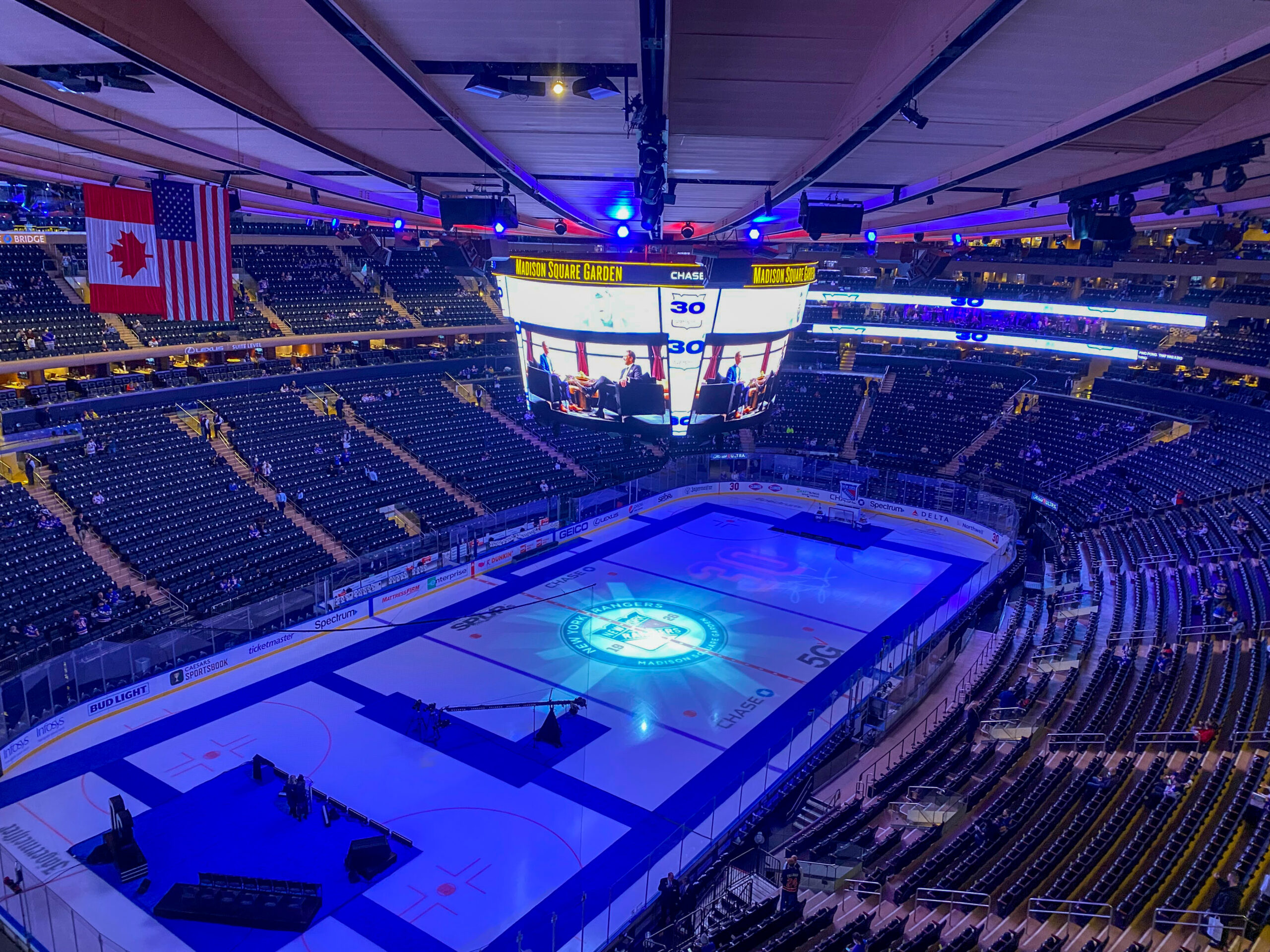
Madison Square Garden before a Rangers special-event night — the kind of timing, arrival, and atmosphere decision that can shape the best New York-area hockey game to choose. Photo by Andrew nyr via Wikimedia Commons.
When Should You Go to a NYC Hockey Game?
Best Time of Season for a New York Hockey Game
The NHL season runs from October through April, with playoffs extending into June for advancing teams. Each stretch of the season has a different feel — and a different fit depending on your group and goals.
Early Season
Good entry point for first-timers and casual visitors. The atmosphere is strong without maximum late-season pressure. Games can feel more accessible and relaxed, which suits families and tourists who want a hockey night without peak intensity. The weather is mild enough that transit and parking planning is simpler.
Holiday Window
A Rangers game during a Manhattan holiday trip can be a genuine highlight. Midtown energy is high, the arena feels festive, and the combination of a winter NYC night and a hockey game is hard to beat. The tradeoff: Midtown crowds are heavier, travel delays matter more, and school break schedules can cut both ways for families.
Midseason
Solid regular-season hockey without the urgency of a playoff race. Good for fans who want a real game in a real atmosphere. Winter weather becomes a genuine planning factor — build transit and parking buffer, especially for UBS Arena and Prudential Center. A strong, reliable stretch for a hockey night if the logistics are sorted.
Late Season
The best energy in the building if a team is in playoff contention. Games feel meaningful, crowds are louder, and the stakes make every period matter. Best for serious fans, rivalry matchups, and visitors who want the full arena experience. Not the easiest timing for young families or first-timers who want a lower-key introduction to the sport.
Playoff hockey at MSG, UBS Arena, or Prudential Center is genuinely electric — but it is expensive, intense, late-night possible, and high-demand. Best for serious fans and adults who want maximum atmosphere. Not the recommended first hockey game for young kids or visitors hoping for a casual night out.
Weeknight vs Weekend Hockey Games
Mon – Thu
Locals, date nights after work, Manhattan visitors staying near MSG, fans comparing quieter dates, anyone who does not mind a later night.
Fri – Sun
Families, tourists, first-timers, visitors building a full day around the game, anyone who wants a less-rushed arrival and a relaxed postgame.
Early starts
Families with young kids, visitors who want dinner after instead of before, anyone worried about getting home late. Check schedules — afternoon NHL starts are less common but do occur, particularly on weekends and holidays.
7 PM – 8 PM starts
Date nights, serious atmosphere, post-work fans, tourists who want sightseeing during the day and a game at night.
Best Timing by Team and Arena
The most flexible timing of the three arenas for Manhattan-based visitors. Weeknight Rangers games work beautifully if you are already near Midtown — dinner, arena, subway or hotel walk, done. Weekend games are strong for tourists and families but tend to see more demand for marquee matchups. Holiday and December games in Midtown carry a real NYC-winter energy worth seeking out. Penn Station crowding affects arrival and exit — always build buffer, especially on weekend evenings.
Timing at UBS Arena should be built around the transit or parking plan first. Weekend games are more comfortable for families and visitors coming from Manhattan. Weeknight games require a stronger return-trip plan if you are relying on the LIRR from Penn Station — know the late train schedule before puck drop. The arena itself is modern and well-run; when the geography fits the night, it is a genuinely strong hockey experience.
Devils games work particularly well for New Jersey-based visitors at almost any time. For NYC visitors, weeknight Devils games are practical if the NJ Transit plan is clean and both the arrival and return trains are sorted. Weekend games are the safer choice for families and first-timers. The key timing issue at Prudential Center is always the postgame train — missing the late train back to Penn Station means a rideshare, so check schedules before buying.
Best Timing by Group
Families
Weekend games with earlier starts are almost always the right call for families with young kids. The postgame exit is less rushed, school nights are not a factor, and there is more flexibility in how the day is built. Choose the arena with the cleanest route from your home or hotel — a simple exit at the end of the night matters a lot when kids are fading. Rivalry games can be fun for older kids who want atmosphere, but they tend to be louder, more intense, and occasionally more expensive than a quieter matchup. See the full families guide for arena-by-arena recommendations.
Tourists
Tourists should plan around hotel location first and game timing second. A Rangers game on a Wednesday night works perfectly for a visitor staying two blocks from MSG who has already seen the sights. That same game is a harder plan for someone staying in Midtown South with a full day of walking already behind them. Do not stack a heavy sightseeing day, a nice dinner, and a late hockey game unless the group genuinely has the energy for it. The holiday-season window can be magical for tourists — Midtown in December plus an MSG game is a strong combination — but the neighborhood is also at peak congestion. See the tourists guide for more.
Date Night
Date-night timing should protect dinner and postgame space. A 7pm puck drop means dinner needs to be at 5:30 or earlier — or planned as a post-game event if the area and energy support it. Rangers at MSG is the easiest date-night arena because the Midtown restaurant grid wraps around it naturally. Islanders and Devils both work when the transit plan is clean and the couple has committed to the route. Avoid games that turn the night into a logistics exercise. A weeknight can be intimate and efficient; a weekend feels less pressured. See the date night guide for the full picture.
First-Time Visitors
First-timers benefit most from choosing the simplest version of the night — not the biggest game. The arena closest to your hotel, an earlier arrival to catch warmups, center-ice or near-center seats, and a game that is not the most intense rivalry of the season. Early-season and midseason games tend to be more accessible in atmosphere than late-season or playoff-race matchups. See the first-time visitor guide for what to know before you go.
Rivalry Games: Best Atmosphere, Not Always the Easiest Night
Rangers vs Islanders, Rangers vs Devils, and Islanders vs Devils games carry a different energy than a standard regular-season matchup. These games tend to be louder, faster-paced in terms of crowd reaction, and emotionally sharper — which is exactly what makes them worth seeking out for the right group.
For a full comparison of the three teams and what separates a Rangers night from an Islanders or Devils night, see the Rangers vs Islanders vs Devils guide.
Best Timing for Value
Value in hockey tickets is not just about price per ticket — it is the total cost of the night, including transit, parking, food, and hotel if applicable. A cheaper ticket that requires an expensive parking situation or a late rideshare home may not be the actual value play.
For seat-choice guidance by arena, see How to Choose NYC Hockey Seats.
Weather, Transit, and Winter Timing
Hockey season overlaps almost entirely with cold weather, and in New York that means rain, snow, wind, and holiday travel congestion are real planning factors from November through March. MSG is the most transit-protected of the three arenas — Penn Station directly below means you can arrive and depart without outdoor exposure. UBS Arena and Prudential Center both involve outdoor walking between transit and the building, which matters more in poor weather. Families and tourists should build extra buffer in winter, avoid tight dinner-to-game timelines, and have a backup plan if transit is delayed.
Sample Best-Time Scenarios
Weekend game at the closest arena. Aisle-friendly seats. Simple food plan. Exit decided before puck drop. Leave a few minutes early if the kids are fading in the third.
Pick a night that doesn’t follow a packed sightseeing day. Dinner nearby at 5:30. Walk or subway to MSG. Hotel walk or subway home. Keep the plan simple.
Rangers for a Midtown dinner flow. Islanders or Devils when the couple has a clear transit plan and wants a different arena energy. Don’t rush dinner into puck drop.
Choose the matchup first. Arrive early for warmups. Center-ice or strong angle seats. Build everything else — dinner, transit, postgame — around what the game needs.
Compare seat quality at Prudential Center or UBS Arena against MSG for the same spend. Build the transit plan first. Whichever arena has the cleanest route and best seat wins.
Devils for NJ-based visitors with a clean NJ Transit plan. Islanders for Long Island or Queens visitors with a LIRR or parking plan. Either can be a stronger night than a Manhattan trip when the route fits.
Mistakes to Avoid When Picking a Hockey Date
Recommended Timing at a Glance
Frequently Asked Questions
Depends entirely on your group. For families, earlier weekend games are usually best. For tourists, the game that fits your hotel location and itinerary. For date nights, a game with room for dinner before or drinks after. For serious fans, rivalry or late-season games with a strong seat. The best time is the one where the timing, arena, route, and night-out plan all fit together.
October and November are good for first-timers and casual visitors — the atmosphere is solid without maximum intensity. December is strong for holiday-trip tourists, especially Rangers at MSG. March and April carry the best energy if a team is chasing a playoff spot. There is no universally bad month, but winter weather from January onward adds logistics that families and tourists should plan around.
For families and tourists, usually yes — fewer time pressures, easier arrival, and a more relaxed postgame. For locals, date nights, and Manhattan-based visitors, weeknights can be perfectly smooth and sometimes offer more seat availability on quieter matchups. The right answer depends on who is going and what the route home looks like.
Weekend games with earlier starts when available. Choose the arena closest to your home or hotel. Eat earlier or plan arena food so dinner is not a scramble. Decide the exit plan before the game. For young kids, having a contingency for leaving slightly early is worth building in — overtime can push a 7pm game to 10:30pm or later.
A night that does not follow a packed sightseeing day and leaves enough time for dinner before puck drop. Rangers at MSG fits Manhattan hotel stays most naturally — Penn Station below means easy arrival and exit. If you are combining a holiday NYC trip with a hockey game, factor in that Midtown is at its busiest in December and build extra time into your plan.
For the right group, yes — Rangers-Islanders, Rangers-Devils, and Islanders-Devils games carry a noticeably different energy than a standard matchup. Worth seeking out for serious fans, older kids who want atmosphere, and date nights looking for a charged evening. Not the lowest-stress pick for very young kids or first-timers who want a calm introduction to the sport.
They can offer more inventory and availability on quieter matchups, but we won’t make specific price guarantees — ticket prices vary by team, opponent, demand, and seat location in ways that shift constantly. Compare options across weeknights and weekends for your specific game and arena before assuming one is universally cheaper.
Yes, especially for first-timers and families. NHL warmups happen roughly 30 to 45 minutes before puck drop — players skate close to the glass, the pace is relaxed, and it is a good way to get oriented in the arena before the crowd settles in and the game starts fast. Arriving early also means less security and concourse pressure.
For first-timers, families, and visitors: 45 to 60 minutes before puck drop. That covers security, finding seats, food, bathrooms, and warmup viewing without rushing. Experienced fans comfortable with the building can trim that to 20 to 30 minutes. At MSG, Penn Station crowding on busy nights adds meaningful time to account for.
Better atmosphere, yes — if the team is in playoff contention, late-season games carry real stakes and the crowd reflects it. But they are not better for every group. Families with young kids, first-timers looking for a low-key introduction, and anyone with limited energy at the end of a long day may actually prefer the more relaxed vibe of an early or midseason game.
Not usually the best starting point. Playoff hockey is expensive, intense, loud, high-demand, and potentially very late. It is a great experience for fans who already love the sport. For a genuine first-timer, a midseason regular-season game with center-ice seats and an early arrival is a smoother and more comfortable introduction.
Location and timing first, then arena, then team. Your starting point determines which arena is practical. Your schedule and group determine what kind of game fits the night. Team preference matters most to fans who already have one — for neutral visitors, timing and logistics almost always matter more than which jersey is on the ice.
Weeknights work beautifully for Manhattan visitors and locals — efficient, energetic, and easy if you are already nearby. Weekends are stronger for tourists and families who want a full-day plan without the school-night or work-next-morning constraint. Penn Station is crowded either way — build arrival and exit buffer regardless of the day.
Late weeknight games that end at 10:30pm or later, especially on school nights. High-intensity rivalry games if the kids are young enough that loud crowds and long nights are a problem. Games that require complicated transit or a long drive home after a full day. Any game where overtime could push the night significantly past the kids’ usual limit.
The Right Time Is the One That Fits Your Night
There is no universally best time to go to a New York hockey game — there is only the right time for your specific group, arena, route, and night-out plan. Rangers at MSG on a December weeknight can be a perfect Midtown date night and a difficult family outing with young kids. A Sunday Islanders game can be a smooth, well-timed family afternoon for Long Island visitors and a logistics puzzle for tourists staying in Midtown.
Start with the arena that fits your location. Build the timing around your group. Get the route home sorted before you buy. That combination — more than any specific month, day, or matchup — is what makes a New York hockey night work.
For the full planning picture, see How to Plan a New York Hockey Night and the Rangers vs Islanders vs Devils comparison.