

Best NYC Hockey Game for Families: Rangers, Islanders, or Devils?
The most famous arena is not always the right one. Here is how to choose the game that actually makes the night easier with kids.
Taking kids to a New York-area hockey game is a different decision than going as adults. The right arena is not always the most famous one, the cheapest ticket, or the closest seat to the ice. It is usually the one that makes the full night — arrival, seats, food, exit, and getting home — as smooth as possible for everyone in the group.
A Rangers game at Madison Square Garden, an Islanders game at UBS Arena, and a Devils game at Prudential Center each create a genuinely different family night. This guide helps you figure out which one fits your family’s actual situation.
The Quick Answer: Which Game Is Best for Your Family?
The arena sits above Penn Station, is surrounded by hotels, restaurants, and subway lines, and requires the least transit planning for families already in Midtown. The tradeoff is pricing — Rangers tickets tend to run higher, and the Penn Station area post-game can feel chaotic with young kids.
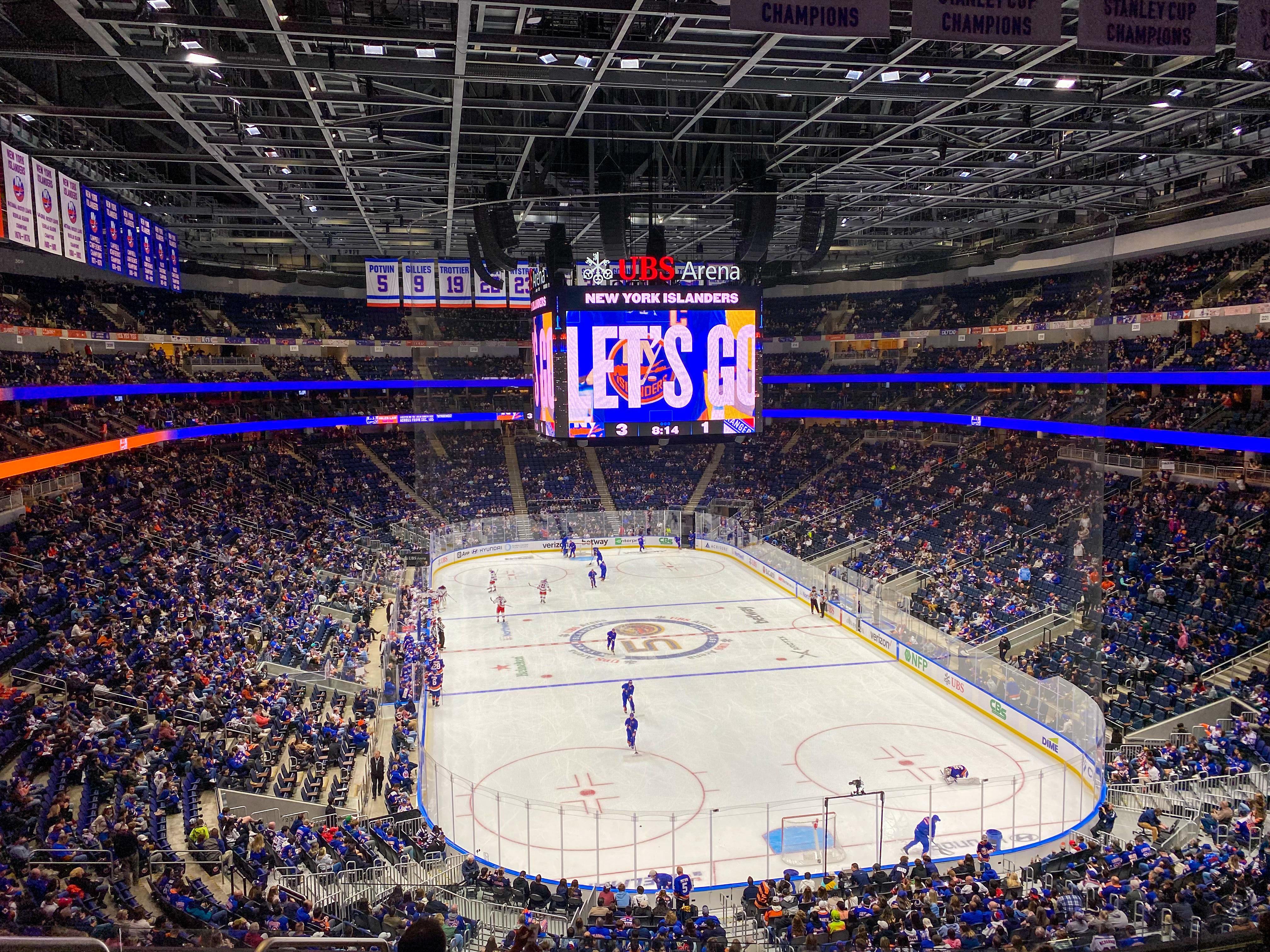
The modern arena at Belmont Park was purpose-built for hockey, has substantial parking, and is straightforward on the LIRR. It is not the natural choice for Manhattan hotel visitors without a plan, but for families whose geography fits the route, it can be a smoother family night than MSG.
Newark is easier to reach from much of New Jersey and from Manhattan via NJ Transit or PATH than most families assume. Ticket pricing is often the most favorable of the three. The key is planning the route and postgame logistics before the night — not after the final horn.
The best hockey game for families is usually the one with the least stressful full plan — not the biggest arena name, the cheapest individual ticket, or the closest row. Start with where you are sleeping. Then pick the game with the cleanest route, the right start time, and seats your kids will actually be able to follow the play from.
What Actually Makes a Hockey Game Family-Friendly?
Most family hockey advice focuses on team or arena prestige. The things that actually determine whether a family hockey night succeeds are more practical than that.
Start time and how late the game ends
A 7:30 PM start means a 10:00+ finish — later with overtime. For younger kids, that finish time plus transit home can push bedtime well past midnight. Weekend afternoon starts or earlier evening games change the whole equation. This is the variable families underweight most consistently.
How you are getting there and getting home
The arrival plan matters. The exit plan matters more. A crowded Penn Station with tired six-year-olds at 10:15 PM is a different experience than walking to a parking lot at Belmont Park. Know your return route before you buy tickets, not when you are already standing outside the arena.
Seat angle, aisle access, and bathroom proximity
For hockey with kids, a clear full-ice view from center or near-center beats a front-row corner every time. Kids who cannot see the whole ice stop caring about the game. Aisle seats make bathroom runs and food trips a non-event instead of a climbing exercise through a full row.
Crowd intensity and game significance
A divisional rivalry game has a different atmosphere than a midweek non-conference matchup. For older kids and teens, that intensity can be part of the appeal. For younger children, a louder, more emotionally charged crowd can be overwhelming. Match the game energy to who is in your group.
Food timing and concession realism
Hungry kids and long concession lines are a reliable path to a miserable third period. Eat before the game if your kids are particular about food or timing matters. Know which intermission you will use for the bathroom run versus the concession run — not both at once.
Weather and the walk between transit and arena
A February walk from a PATH stop to Prudential Center or a January wait on an LIRR platform matters more with kids than without them. Factor outdoor transit exposure into the plan, especially for younger children.
Rangers at Madison Square Garden with Kids
For families staying in Midtown Manhattan — near Times Square, Chelsea, Penn Station, Herald Square, the Theater District, or Bryant Park — Rangers games are the most logistically integrated choice. You can have dinner within walking distance, walk to the arena, and take the subway or commuter rail home without a complicated transit handoff. That convenience is real and worth paying for if the family is already positioned for it.
- Easiest for families in or near Midtown
- No need for regional train or parking plan
- Subway, LIRR, NJ Transit, Amtrak all accessible
- Best hotel and restaurant integration
- Strong “classic NYC sports night” memory
- Easy to explain logistics to visiting family
- Usually the most expensive of the three options
- Penn Station post-game is genuinely crowded
- Cheapest seats may not be best family value
- Late games + Midtown traffic can tire young kids fast
- Entry and exit flow can feel intense with strollers or young children
The practical family advice for Rangers: choose seats with a clear full-ice view rather than the cheapest available section, arrive earlier than you think you need to, and do not stack a full day of sightseeing before a late game. The MSG experience is better when the family arrives with energy to spare.
Islanders at UBS Arena with Kids
UBS Arena opened in 2021 and was designed specifically for hockey. The sight lines are built with the ice in mind, the concourse layout is clean, and the building has a more contained feel than MSG — which can actually work in families’ favor when managing kids between periods. For families coming from Long Island, Queens, or planning to drive and park at Belmont, the logistics can be significantly smoother than a Manhattan arena night.
- Modern purpose-built hockey arena
- Strong sight lines from most sections
- Substantial parking at Belmont Park
- LIRR-accessible from Penn Station
- Less of a Midtown tourist crush
- Often better seat value than MSG for comparable sections
- Not a walk-up from a Manhattan hotel
- Requires deliberate LIRR or driving plan
- Limited dining options immediately near the arena
- Postgame LIRR can be crowded — plan the platform
- Weather exposure on the walk from LIRR station
The practical family advice for Islanders: make the transit or parking plan the first decision, not an afterthought. UBS Arena rewards families who arrive knowing exactly how they are getting there and how they are getting home. For Long Island and Queens families, that plan is often the easiest of the three. For Manhattan-based visitors without a clear route, it requires more advance thought than MSG.
Devils at Prudential Center with Kids
Prudential Center is the most underestimated of the three options for families — particularly New Jersey-based families and families who care about watching good hockey from a well-positioned seat at a reasonable price. The arena is a short walk from Newark Penn Station, which is served by NJ Transit from New York Penn Station and by PATH trains from multiple Manhattan stops. For New Jersey families especially, the logistics are often more natural here than anywhere else.
- Frequently the best ticket value of the three
- Strong hockey sight lines — purpose-built NHL arena
- NJ Transit from NY Penn Station (~20 min)
- PATH from multiple Manhattan stops
- Natural fit for NJ-based families
- More manageable scale than MSG post-game
- Not a Manhattan night — plan accordingly
- Postgame train timing should be checked in advance
- Newark dining cluster requires advance research
- Late games and return trains need a clear plan
- First-time NYC visitors may prefer MSG’s simplicity
The practical family advice for Devils: research the return train before the game. Know which service you are taking home and roughly when it runs post-game. Families who arrive with that plan in place consistently have a smoother night than families who figure it out while standing on a platform at 10:30 PM with tired kids. Done right, Prudential Center is a genuinely strong family option — particularly if value and seat quality matter.
Side-by-Side: Rangers vs Islanders vs Devils for Families
| Category | Rangers | Islanders | Devils |
|---|---|---|---|
| Arena | Madison Square Garden | UBS Arena | Prudential Center |
| Best family base | Manhattan / Midtown hotel | Long Island / Queens / car-based | New Jersey / NJ Transit plan |
| Transit profile | Subway, LIRR, NJ Transit, Amtrak via Penn Station | LIRR primary; driving/parking at Belmont | NJ Transit, PATH; walkable from Newark Penn |
| Parking | Expensive and not recommended in Manhattan | Substantial parking at Belmont Park | Newark garages; easier than Manhattan |
| Typical ticket value | Premium-priced; consistent demand | Often better value than MSG | Frequently the strongest value of the three |
| Pregame dining | Full Manhattan cluster — most options | Plan ahead; eat before you arrive or en route | Ironbound and nearby Newark; plan intentionally |
| Postgame with kids | Penn Station can be crowded and intense | Parking exit or LIRR platform — manageable with plan | Newark Penn walkable; less chaotic than NY Penn |
| Arena age / design | Historic; multi-purpose | Modern 2021 build; hockey-first design | 2007 build; strong hockey sight lines |
| Main family advantage | Easiest integration for Manhattan families | Best fit for Long Island / car-based families | Best value and NJ Transit simplicity |
| Main family caution | Price and post-game Penn Station crowds | Requires clear transit or parking plan from Manhattan | Postgame logistics and Newark planning must be intentional |
Best Choice by Family Type
Rangers at MSG. The arena is connected to your transit, walkable from most Midtown hotels, and requires the least planning overhead. The premium pricing is partly a convenience fee — and for families who do not want to coordinate a regional train or parking plan, that convenience has real value.
Rangers at MSGIslanders at UBS Arena. The LIRR route from Penn Station is well-used by fans, the parking at Belmont is substantial, and the modern arena has been well-received as a purpose-built hockey venue. For Long Island families, this is the natural home game in every sense.
Islanders at UBS ArenaDevils at Prudential Center. NJ Transit from most of New Jersey makes this the simplest arena to reach without a car, and the ticket value is often the best of the three options. For NJ families, there is little reason to add cross-Hudson complexity when Prudential Center is right there.
Devils at Prudential CenterChoose whichever arena has the earliest available start time and the cleanest route home. For younger kids, start time and postgame simplicity matter more than team or arena prestige. Weekend matinees or early weeknight games are ideal. Avoid rivalry games with intense crowd energy until the kids are older.
Prioritize: start time + exit planRivalry games and higher-atmosphere matchups are more fun for older kids who can engage with the intensity. At this age, team loyalty and the atmosphere of the game can matter as much as logistics. All three arenas work well — let team preference and matchup drive more of the decision.
Any arena — let matchup and team drive itCompare Devils and Islanders carefully against Rangers before assuming the most famous arena is the right choice. A better center-ice section at Prudential Center can easily cost less than a side-angle corner at MSG. Total family cost — four or five tickets, food, transit — adds up fast, and the savings can be significant.
Compare Devils + Islanders vs RangersRangers at MSG, if the budget and hotel location support it. The Madison Square Garden experience is the one visiting families reference for years — the building, the Midtown location, the feeling of a New York sports night. The premium is partly for that memory, and for first-time visitors already staying nearby, it is usually worth it.
Rangers at MSGPick the game with the simplest arrival and exit for your specific family. That might be MSG for a Midtown hotel family, UBS Arena for a Long Island family with a car, or Prudential Center for a New Jersey family on NJ Transit. The easiest total plan wins over the most famous arena when the priority is actually enjoying the night.
Easiest full plan for your baseSeats With Kids: What to Buy and What to Avoid
Seat selection for families at a hockey game follows different logic than it does for adults at a concert or basketball game. The most important variable is not how close you are to the ice — it is whether your kids can see the whole ice surface and follow the puck.
For most families, a clear full-ice view from center or near-center, in a row your kids can handle, beats the absolute closest seat in a corner or behind one goal. Kids who cannot follow the play lose interest. Kids who can see everything stay engaged for three periods.
Center ice — the family default
Sections that sit at or near center ice give the clearest view of the full play — both ends, both goals, the full width of the rink. Upper-level center sections at all three arenas can be excellent family value: you sacrifice some proximity but gain the full picture, and kids can follow the game without craning to see the far goal.
Glass seats — exciting but limited
Very low glass seats are memorable and feel immersive, but they come with a tradeoff: you only clearly see the action on your half of the ice. For a first hockey experience with kids, sitting at center ice in the second level often produces a better understanding of the game than sitting behind the glass in a corner.
Aisle access matters more than parents expect
With kids, bathroom and concession trips happen. Seats at the end of a row or within a few seats of an aisle make those trips a quick in-and-out rather than a climbing exercise through a dozen strangers. When comparing seats of similar quality, bias toward aisle proximity.
Avoid deep corners and end zones for first-timers
Corner and end-zone seats can be exciting for fans who already understand hockey. For kids at their first or second game, they can make following the play on the far side of the ice genuinely difficult. Keep the first few games center-ish and let the kids learn the game before putting them in a challenging viewing position.
Row depth and stairs
Very deep upper sections with long stair climbs can be tiring for young kids before the game even starts. Know how many rows deep your section runs and whether the seats require a steep stair climb. Most arena apps and seating chart tools show this clearly enough to evaluate before purchasing.
Start Time, School Nights, and Getting Home
Start time is the variable families underweight most consistently. A 7:30 or 8:00 PM start means the game ends at 10:00 PM or later — with overtime or a longer third period, it could push to 10:45 or later. Add transit or parking time and you are looking at midnight or beyond for young kids who need to sleep.
Younger kids (under 8): target the earliest available start time. Weekend afternoon games, when they exist, are the ideal. Avoid weeknight rivalry games unless the next day is genuinely flexible. Older kids and teens: weeknight games work if school schedules allow. Rivalry and higher-atmosphere games are appropriate — the crowd energy is part of what makes those nights worth it.
Think backwards from bedtime
Start with when the family needs to be home, then subtract transit or parking time, then subtract the likely game length (allow 2.5 to 3 hours plus intermissions), and you have your latest acceptable puck drop. This exercise often changes which game families buy tickets for once they realize a 7:30 start does not work for a six-year-old with an 8:30 bedtime.
Rivalry games and atmosphere
Divisional rivalry games — Rangers vs Islanders, Rangers vs Devils, Islanders vs Devils — carry more emotional intensity in the crowd. For older kids who can engage with that, it is part of the experience. For younger children, a less charged non-divisional game is often more comfortable and frequently less expensive.
Overtime is real
Playoff games and close regular-season games go to overtime. If staying until the end matters to your family, build potential overtime into the plan. If the kids’ bedtime makes overtime unworkable, it is completely acceptable to leave after the second period of a tight game. Families who decide this in advance leave more calmly than families who argue about it while everyone is tired.
Do not stack the day
A full sightseeing day plus a big pre-game dinner plus a late hockey game is too much for most families with young children. Pick one major activity for the day, have dinner at a sensible hour, and arrive at the arena with energy. The game is better when no one is already exhausted when the puck drops.
Food, Bathrooms, and Arena Patience
Arena food is expensive and the lines can be long, especially at intermission when everyone moves at once. For families with younger kids or picky eaters, eating a full meal before the game — rather than relying on arena concessions — is usually the right call. Concessions are useful for snacks and drinks during the game, not for replacing dinner.
The intermission plan
Use the first intermission for bathrooms and the second intermission for concessions if needed — not both at once. Trying to do everything in fifteen minutes with kids almost always means getting back to your seats after the period has started. Pick one mission per intermission and stick to it.
Check the arena bag policy before you leave
All three arenas have bag size policies and most require bags to be clear or within certain dimensions. Check the current policy for whichever arena you are attending before you pack up and head out. Discovering a bag policy conflict at the gate with kids in tow is a stressful start to the night.
Know your early exit plan
Decide before the game whether you are staying to the final horn regardless or whether you are open to leaving early if the kids are done. Families who decide this in advance — and communicate it to the kids in advance — leave much more smoothly than families who debate it during an overtime period with cranky children. Leaving with 4 minutes left in the third is fine. Getting home before midnight is a win.
Transportation and Parking With Kids
MSG sits directly above Penn Station and is served by virtually every major transit option in the New York area. For families in Manhattan, this is the easiest arrival plan of the three venues. The tradeoff is the post-game Penn Station crowd — it is genuinely intense after a sold-out Rangers game, and managing young children in that environment requires patience and a clear platform plan. Arrive early. Know which exit you are using. Know which train or subway line you are taking home before the game ends.
UBS Arena is accessible by LIRR from Penn Station — roughly 30–40 minutes to the Elmont/Belmont Park station, verify current stop details before your trip. Belmont Park provides substantial parking for families who prefer to drive. The post-game experience is generally more manageable than Penn Station — the crowd disperses into a parking lot or onto LIRR platforms rather than a subway concourse. Families should verify current LIRR schedule and post-game train timing before the night.
Prudential Center is a short walk from Newark Penn Station, served by NJ Transit trains from New York Penn Station (roughly 20 minutes) and by PATH from multiple Manhattan stops. Post-game, Newark Penn Station is generally calmer than New York Penn Station after a Rangers game — a meaningful practical difference with tired kids. The key planning step: check return train times before the game starts. Late games with limited late-night service can create platform waits. Know your train before the final horn.
Transit schedules, LIRR stops for UBS Arena, PATH timing, and post-game train frequency all change. Verify current details with NJ Transit, MTA, and LIRR before your game. Do not rely on remembered information from a previous visit.
Family Hockey Mistakes to Avoid
Recommended Family Picks
Frequently Asked Questions
It depends on where you are based and what your family needs. Rangers at MSG is the easiest pick for families staying in Midtown Manhattan and wanting the classic New York sports experience. Islanders at UBS Arena is best for Long Island, Queens, and car-based families. Devils at Prudential Center is often the best value and most natural fit for New Jersey families. The right answer starts with your hotel or home location, then factors in start time, budget, and how simple the return trip will be.
All three are solid options depending on the family’s situation. Rangers at MSG is the most convenient for Manhattan hotel visitors and the most recognizable for first-time visitors. Islanders at UBS Arena is purpose-built for hockey and the best fit when geography points to Long Island. Devils at Prudential Center is frequently the best seat value and simplest plan for New Jersey families. The comparison guide above helps match your specific family to the right game.
Yes — particularly for families staying in Manhattan or near Midtown. The venue is easy to understand, the transit is accessible, and the “I went to a game at Madison Square Garden” memory tends to stick. The main family considerations are cost (Rangers tickets run higher), the post-game Penn Station crowd, and making sure start time works for younger kids.
Yes, especially for Long Island, Queens, and car-based families. UBS Arena is a modern building with good sight lines and a more contained feel than MSG, which can actually work well for families managing kids between periods. The planning requirement is real: it is not a walk-up from a Manhattan hotel. Make the transit or parking plan the first decision and the rest of the night is usually smooth.
Yes, particularly for New Jersey families and budget-conscious families. Prudential Center has good hockey sight lines, is a short walk from Newark Penn Station, and often has the best ticket pricing of the three. The key for families is planning the return transit before the game — post-game NJ Transit and PATH schedules should be checked in advance so no one is standing on a platform at 11 PM figuring out the last train.
Rangers at Madison Square Garden — it is directly above Penn Station and accessible by every major Manhattan subway line. There is no regional transit plan to manage. The post-game exit is the most crowded of the three, but the arrival is the simplest for families coming from a Manhattan hotel.
Devils at Prudential Center. NJ Transit from most of New Jersey reaches Newark Penn Station with a short walk to the arena. There is no cross-Hudson transit to manage, ticket pricing is often the most favorable, and the return trip is typically calmer than Penn Station after a Rangers game. For NJ families, this is often the clearest home-game choice.
Islanders at UBS Arena. The LIRR connection from Penn Station or the parking at Belmont makes this the natural fit for Long Island families. The arena was purpose-built for hockey in 2021, the parking situation is more family-friendly than a Manhattan garage, and the crowd is largely local — a different energy than MSG.
Center ice, at whatever level your budget allows. A clear view of the full rink helps kids follow the play — which keeps them interested and engaged. Upper-level center sections at all three arenas are strong family value: good angle, full ice visible, and usually priced significantly below lower-bowl seats. Prioritize aisle proximity within whatever section you choose. Avoid deep corners and end zones for first-time hockey kids.
They are exciting and memorable, but not ideal for a first hockey experience with young kids. Glass seats only give a clear view of your half of the ice — the action at the far end can be hard to follow. For a family’s first few games, center-ice seats in the second level usually produce better hockey understanding and engagement than glass seats in a corner.
Yes, particularly upper-level center sections. Upper center at MSG, UBS Arena, or Prudential Center gives you a complete view of both ends of the ice, which is the best way to understand and follow hockey. The tradeoff — more stairs to climb — is worth it for the angle. Make sure the section is not so high that the view becomes abstract, and look for sections without an overhang blocking sightlines to the opposite end.
At least 45 minutes to an hour before puck drop. For families: find the section, let the kids settle in, make the first bathroom run before the game starts, grab any food or drinks, and have time to watch warm-ups if they are interested. Arriving with only 15 minutes before puck drop with kids means rushing, potential stress at the gate, and starting the game already frazzled.
Eat before, especially with young kids or picky eaters. Arena food is expensive and the lines at intermission can be long. Having a full meal before puck drop means you are buying snacks and drinks at the arena rather than relying on it for dinner — a much calmer and cheaper way to handle it. For families with older kids who are fine with arena food, concessions during intermission work, but still arrive having had something substantial beforehand.
Often the Devils, sometimes the Islanders. Rangers tickets carry consistent demand that reflects MSG’s location as much as the seat quality. Comparing center-ice sections across all three teams — accounting for transit or parking costs as part of the total — often reveals meaningful savings at Prudential Center or UBS Arena without a meaningful sacrifice in the hockey experience.
For families staying in Manhattan who want the classic New York sports night memory, yes — especially on a one-time NYC visit. The premium reflects the convenience, the location, and the building’s weight as a sports venue. For families who are not already positioned for Midtown, or for whom budget is a real concern, the same money often buys better seats and a less stressful night at UBS Arena or Prudential Center.
The Family Bottom Line
The best New York-area hockey game for families is the one with the plan that actually works — the right start time, the right route, seats the kids can see the whole ice from, and a postgame that does not end with everyone exhausted on a platform at midnight.
For Manhattan families: Rangers at MSG, keeping the night simple and arriving with plenty of time. For Long Island families: Islanders at UBS Arena, with a clear LIRR or parking plan. For New Jersey families: Devils at Prudential Center, with the return train researched before puck drop.
And for any family: the game where the kids are engaged for three periods, get home at a reasonable hour, and ask to go again is the right game — regardless of which arena it is in.