

The Citi Field Area NYC — Neighborhood Guide
What the area around Citi Field is actually like for concert and event visitors — how to plan the night, whether to stay nearby, and how to build a better outing around it.
The first thing to understand about the Citi Field area is that it is not a neighborhood in the way that Hell’s Kitchen, Downtown Brooklyn, or Midtown West are neighborhoods. There is no block of restaurants to stroll down after the show. There is no cluster of bars within stumbling distance of the gate. The area around Citi Field is an event zone — a place you travel to, experience a major concert or game, and travel back from — and planning it like a walkable Manhattan entertainment district is the most common source of Citi Field frustration for first-time visitors.
That is not a reason to avoid the area. It is a reason to understand it. A Citi Field concert or Mets game can be an excellent New York outing — one of the better ones, in fact, when the planning fits what the area actually offers rather than what visitors project onto it. This guide covers what the Citi Field area is honestly like, how to use its strengths, how to account for its limitations, and how to build a night around it that actually works.
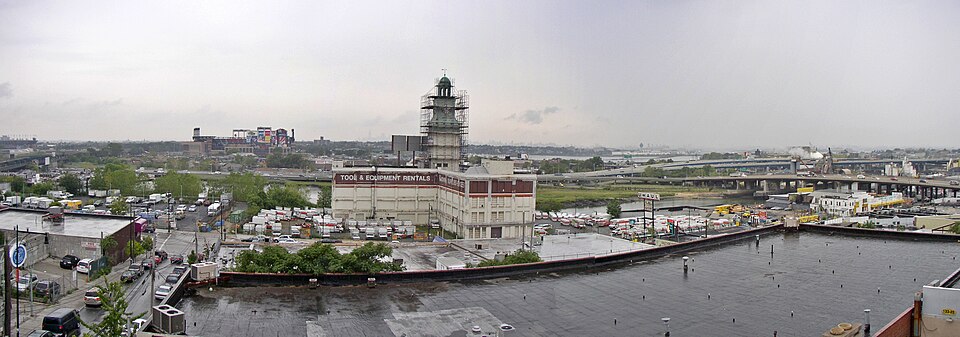
Citi Field, the Van Wyck corridor, and Willets Point — the wider Queens event zone around the stadium.
What the Citi Field Area Is Actually Like
Citi Field sits at 41 Seaver Way in the Willets Point section of Flushing, Queens — a wedge of land bounded by the Van Wyck Expressway, Roosevelt Avenue, Northern Boulevard, and the Flushing River. The stadium itself is surrounded by parking lots, and the immediate area has historically been industrial in character: auto repair shops, commercial yards, and the kind of working-uses that accumulate around transit infrastructure over decades.
That character is changing. The Willets Point neighborhood directly adjacent to the stadium is in the middle of one of the largest affordable housing redevelopments in New York City’s recent history — a plan that will eventually bring 2,500 affordable apartments, a new public school, 150,000 square feet of open space, a 250-key hotel, and a 25,000-seat soccer stadium for NYCFC called Etihad Park. The first phase of that project, 880 apartments in two buildings, opened in 2026. Etihad Park is under construction and expected to debut in 2027.
What exists right now is a major-event stadium with excellent transit access, adjacent parking, the early phases of a significant residential and mixed-use development under construction, and Flushing — one of New York’s best food neighborhoods — accessible by train two stops east. The area functions best as a destination rather than a neighborhood to wander. It rewards arriving with a plan and works best when you treat the event as the anchor of the night and build everything else around it with intention.
The distinction that matters for planning: the Citi Field area lacks the spontaneous after-show energy of a venue embedded in a dense city neighborhood. After a concert at Madison Square Garden, 20,000 people spill into Midtown and the city absorbs them — bars, restaurants, and subways all running. After a Citi Field show, 40,000 people move toward transit and parking, and the surrounding area offers limited reasons to linger. This shapes both the arrival experience and the post-show plan.
Flushing Meadows–Corona Park
The broader setting is worth noting. Citi Field sits inside Flushing Meadows–Corona Park — the largest park in Queens, the site of two World’s Fairs, and home to the USTA Billie Jean King National Tennis Center (home of the US Open) directly adjacent to the stadium. The park itself is a genuine asset: open space, the Flushing Bay Promenade, and a scale that gives the area a different feel from the density of Manhattan or Brooklyn venue neighborhoods. Summer evenings in the park before a show have their own quality. But this is a park, not a nightlife zone, and the distinction matters when you are planning where to eat and what to do after.
Why the Citi Field Area Works Differently From Manhattan Venue Neighborhoods
Most New York concert and theater venues sit inside neighborhoods that serve event visitors without anyone planning for it. The Theater District has dozens of restaurants and bars that fill with pre-show diners every night. The blocks around MSG have years of venue-adjacent infrastructure. Brooklyn venues are embedded in neighborhoods where the nightlife operates independently of any single event.
Citi Field works on a different logic. The venue drives the area rather than the other way around. The question “what should I do before or after the show?” does not have an obvious on-foot answer the way it does in Midtown or Williamsburg. The answer at Citi Field involves a transit decision — specifically, using the 7 train’s position in the network to link the stadium to the Flushing food corridor, to Manhattan, or to other Queens neighborhoods — rather than a walking decision.
This is not a disadvantage once you account for it. It simply means the night has to be designed rather than improvised. Visitors who arrive hungry, without a dinner plan, and expect to find a restaurant strip outside the stadium gate will be disappointed. Visitors who build a Flushing dinner into the transit trip and arrive at the stadium fed and on schedule will find the outing works smoothly.
The 7 train is not just transportation to Citi Field. It is the connecting thread that makes the area work as a full night. One stop east is Flushing — one of New York’s best food neighborhoods, with a concentration of Chinese, Korean, and Taiwanese restaurants along Main Street that has no real equivalent near any Manhattan concert venue. Building a Flushing dinner into the trip before heading one stop west to the stadium turns a logistics-first outing into a legitimately excellent Queens evening. The area does not reward improvisation. It rewards the reader who plans it properly.
Staying Near Citi Field — When It Makes Sense and When It Doesn’t
The question of where to stay for a Citi Field event depends entirely on whether the concert or game is the whole point of the trip or one piece of a wider New York visit.
Visitors who are flying in specifically for a major concert and flying out the next day. Maximum convenience, no transit complexity, easy arrival and departure. The Willets Point area’s developing hotel inventory, including the planned 250-key hotel as part of the Willets Point Commons development, will serve this use case directly.
Large groups coordinating multiple people, families with kids, or anyone for whom minimizing transit complexity is worth trading against neighborhood atmosphere. Staying close to the stadium removes the post-show logistics problem entirely.
Visitors spending multiple nights in New York who want to use the city between events. The Citi Field area’s current hotel inventory and limited walkable surroundings make it a poor base for exploring the city. A Midtown or Long Island City hotel offers the same transit access to Citi Field with significantly better access to everything else.
Visitors who want to continue the night after the show ends — late dinner, bar, more activity. The area around Citi Field does not support this well. Staying in Long Island City, Midtown, or another better-connected neighborhood keeps post-show options open.
Long Island City as an alternative base
Long Island City deserves mention as a practical alternative for visitors who want a Queens base without committing to staying directly at the venue. LIC sits on the 7 train between Citi Field and Manhattan — roughly 15 minutes by subway from the stadium, with a growing hotel inventory, Manhattan views, and a walkable, restaurant-friendly streetscape that Willets Point currently cannot match. For multi-night stays that include a Citi Field event plus other New York plans, LIC splits the difference effectively. For full hotel strategy including options at all price points, see the hotels near Citi Field guide.
Food and Pregame Planning — How to Think About It
Dinner before a Citi Field event is a planning decision, not an arrival decision. This is the most practical piece of advice on this page, and it is worth taking seriously before you book anything else.
The options divide roughly into three approaches, each of which works for a different kind of visitor:
Eat in Flushing first, then take the train one stop
This is the strongest pregame option for visitors who care about food and want the best version of the Queens night. The Flushing Main Street corridor — accessible via the 7 train one stop east of the stadium — has a concentration of Chinese, Korean, Taiwanese, and broader Asian cuisine that is genuinely world-class and unlike anything available near a Manhattan venue. Arrive in Flushing 90 minutes before the show, eat properly, and take the 7 train to Mets–Willets Point. The logistics are simple and the payoff is real. For specific dining picks, see the restaurants near Citi Field guide.
Eat inside the stadium
Citi Field has one of the best stadium food programs in baseball — a nationally recognized lineup that includes options from award-winning local chefs and concepts that reflect Queens’ culinary diversity. For visitors who want to skip the pregame logistics and build dinner into the stadium experience, this is a legitimate choice. It requires arriving early enough to explore the concourses before the crowd peaks, ideally 60 to 90 minutes before the show starts. The food is good enough that this is not a consolation option — it is a real one.
Eat in Manhattan before heading out
For visitors staying in Midtown or elsewhere in Manhattan, having dinner before making the 7 train trip is a perfectly reasonable plan. The transit is efficient enough that you can dine well in Manhattan and still arrive at the stadium with time to spare. This approach works best when the destination restaurant matters more than the Queens experience of the evening.
Do not arrive at Citi Field hungry, assuming you will find a full-service restaurant nearby before the show. The options immediately around the stadium entrance are limited in number and under pressure on event nights. The food inside the stadium is genuinely good, but the lines build quickly once the gates open. Either plan to eat elsewhere first, or plan to arrive early enough inside the stadium to eat before the crowd peaks.
Transit, Arrival, and How the Area Functions on Event Nights
The Citi Field area’s single greatest practical strength is transit access. The Mets–Willets Point station on the 7 train sits directly at the stadium entrance, making this one of the most straightforwardly transit-connected major event venues in the United States. The 7 train connects to Times Square, Grand Central, and the full Queens corridor. The Long Island Rail Road’s Port Washington Branch serves the same station, adding an option from Penn Station and Long Island that bypasses the 7 train entirely.
The practical implication for visitors is that the area is more comfortable to arrive in than to linger in. The transit system delivers you to the stadium door efficiently. After the show, that same transit system takes you wherever you are going next. What it does not do is give you a reason to wander the neighborhood between those two moments — because there is not enough there to warrant it, at least not yet.
Post-show timing matters more at Citi Field than at most New York venues. When 40,000 people exit a stadium at the same time, the 7 train platform fills immediately. The choice is either to move fast and accept some platform crowding, or to stay in the stadium for 15 to 20 minutes after the show ends and let the first wave clear. Both strategies work. Having a plan for which one you are using — before the final song — makes the end of the night significantly smoother.
For full transit directions, including subway routing from different Manhattan starting points, LIRR details, and driving approach, see the how to get to Citi Field guide. For parking, the Citi Field parking guide covers stadium lots and nearby options.
Citi Field Area vs Other NYC Venue Neighborhoods
Understanding where the Citi Field area fits relative to other New York venue neighborhoods helps set the right expectations before you build your plan.
Strong transit access. Major-event scale. Excellent nearby food in Flushing (one stop east). Limited walkable post-show options. Area in active redevelopment but not yet a finished neighborhood. Best when the event is the anchor and everything else is planned around it.
Maximum density of hotels, restaurants, bars, and post-show options. MSG and Radio City are embedded in this environment. More expensive. Works as a base for multi-night trips with multiple events. Less Queens character; more generic Midtown energy.
Barclays Center embedded in a real Brooklyn neighborhood. Post-show walkability is genuine. Hotel options at multiple price points. Brooklyn identity adds to the outing. Slightly further from Queens-based events but strong as a base for visitors doing multiple events across the city.
On the 7 train between Manhattan and Citi Field. Growing hotel inventory, walkable restaurant scene, Manhattan views. Better as a multi-night Queens base than Willets Point for most visitors. A practical compromise for trips that include Citi Field plus other Manhattan or Brooklyn plans.
The honest summary: if the Citi Field event is your main reason for being in New York — a specific concert, a must-see Mets series — the area works well and staying nearby maximizes convenience. If you are doing a broader New York trip and including one Citi Field event, a more centrally connected base makes more sense and the 7 train handles the transit to the stadium easily.
The Best Kinds of Citi Field Area Nights
Not every Citi Field outing needs the same plan. The area works differently depending on what kind of night you are building.
The entire point of the evening is the show. Flushing dinner beforehand, 7 train to the stadium, post-show train home. Clean, purposeful, and genuinely excellent when the show is worth it.
Lunch or dinner in Flushing, one-stop train to the stadium, full game day at Citi Field. The combination of one of New York’s best food neighborhoods with one of its best stadium food programs makes this a legitimately great Queens day.
Fly in, stay near the venue, attend the show, fly out. Minimal complexity, maximum proximity to the event. As the Willets Point hotel and retail development matures, this will only improve.
Large groups benefit from the stadium’s scale and clear layout. Easy transit arrival, clear concourse navigation, and a venue designed for high-volume crowds means groups can coordinate more easily here than at many smaller venues.
Common Mistakes to Avoid With Citi Field Area Planning
Planning it like a Manhattan arena night
The most common mistake. Assuming there is a restaurant strip outside the gate, that bars will be open nearby after the show, or that the area operates like the blocks around MSG or Barclays. The planning logic is different here. Building your night around transit and treating Flushing as the neighborhood layer — rather than expecting it at the stadium door — fixes this entirely.
Not deciding on the post-show plan before the show starts
After a 40,000-person stadium event, the transit decision matters. Are you taking the first wave of the 7 train? Waiting 15 minutes and taking a less crowded one? Using the LIRR? Taking a rideshare from Shea Road? Having no plan means making this decision when you are tired, in a crowd, and under time pressure. Decide before the show starts.
Skipping Flushing because it feels like extra steps
The Flushing food corridor is one stop east on the same train you take to the stadium. It is not out of the way. Treating it as optional and eating at the stadium or skipping dinner entirely is leaving the best thing about this neighborhood location on the table.
Staying nearby for a multi-night city trip
If your trip includes other plans in Manhattan or Brooklyn, the Citi Field area is not the right base. The 7 train gets you to the stadium from almost anywhere in Manhattan or Queens efficiently. There is no need to anchor your whole trip in a neighborhood that primarily serves one venue when a more connected base covers everything you need.
Leaving dinner planning vague for a stadium night
You will be hungry. 40,000 other people will also be hungry. The stadium food is good but the lines build quickly once gates open. Either eat in Flushing before you arrive, or arrive early enough inside the stadium to eat before the crowds develop. “We’ll figure it out when we get there” is a recipe for a long concession line and a mediocre experience.
Not accounting for the area’s development context
Willets Point is actively being built out. The new hotel, retail, and open space associated with the Willets Point Commons development will change what is available near the stadium over the next several years. What is true today may not be true in 2027 or 2028 when Etihad Park opens and the neighborhood matures. Check current conditions before planning a detailed area-based outing.
Building the Full Citi Field Night
The neighborhood guide answers “what is the area like and how do I think about it.” The planning pages below answer the specific practical questions. Together they cover the full outing.
Frequently Asked Questions
The Citi Field area — technically Willets Point in Flushing, Queens — is primarily an event zone rather than a neighborhood in the traditional sense. The stadium and its parking lots are the main features of the immediate vicinity, with an industrial area to the north that is currently undergoing a major redevelopment into affordable housing, a soccer stadium, and retail. It is not a walkable entertainment district. It functions best as a transit-first venue destination, with Flushing’s restaurant corridor one stop east on the 7 train serving as the main neighborhood asset for pre-show dining.
It depends on your trip. If the concert or Mets game is the primary reason you are in New York and you want maximum convenience, staying near the venue makes sense. If you are on a multi-night trip with other Manhattan, Brooklyn, or Queens plans, a more centrally connected base — Midtown, Long Island City, or Downtown Brooklyn — will serve you better, since the 7 train makes Citi Field easily accessible from any of those starting points. See the hotels near Citi Field guide for specific options and strategy.
The best option is Flushing — one stop east on the 7 train, with one of New York’s most acclaimed food corridors along Main Street. Chinese, Korean, Taiwanese, and more, all within walking distance of the Flushing 7 train station. Arrive 90 minutes before your event, eat properly, and take the train one stop west to the stadium. Alternatively, arrive at the stadium early and use the in-venue food program, which is genuinely strong — but build in 60 to 90 minutes before showtime to avoid the peak crowd at the concessions. The one thing to avoid is arriving hungry without a plan.
Yes — it is one of the strongest cases for any New York venue’s adjacent neighborhood. Flushing is a legitimate food destination that attracts visitors on its own merits, and the fact that it sits one subway stop from the stadium makes it essentially frictionless to include. Visitors who skip it in favor of eating at the stadium or in Manhattan are passing up the best thing the area offers.
The 7 train to Mets–Willets Point is the primary option — approximately 30 minutes from Times Square, directly to the stadium entrance. The LIRR Port Washington Branch also serves the same station, which is a useful option from Penn Station or for the post-show trip. For full routing, timing, and exit strategy, see the how to get to Citi Field guide.
Willets Point is undergoing a major redevelopment that will eventually bring 2,500 affordable apartments, a new public school, 150,000 square feet of open space, a 250-key hotel, and Etihad Park — a 25,000-seat soccer stadium for NYCFC. The first phase of 880 apartments opened in 2026. Etihad Park is currently under construction and expected to debut in 2027. The neighborhood will look meaningfully different in a few years than it does today, so checking current conditions before planning a detailed area outing is worth doing.
The Citi Field Area — In Brief
The Citi Field area works well for the visitor who understands what it is: a transit-connected Queens event zone with a major stadium at its center, an exceptional food neighborhood one stop east, and a surrounding area that is actively developing rather than fully formed. It does not work well for visitors who expect it to operate like a Manhattan entertainment district.
The best Citi Field nights share a common structure: a Flushing dinner, an efficient 7 train arrival, a well-chosen seat, and a post-show plan that accounts for the transit exit. None of that is complicated. All of it has to be planned rather than improvised.
Use the guides below to handle each piece of it. The neighborhood has plenty to offer — it just requires being specific about what you are going for and how you are getting there.
Citi Field Works Best When You Treat It Like a Queens Event Mission
The Citi Field area is not a stroll-outside-the-gate nightlife district. It is a stadium-centered event zone with excellent transit, huge crowds, Flushing food one stop away, and Long Island City or Midtown as smarter bases for wider NYC trips.
Restaurants Near Citi Field
Use Flushing, stadium food, or a pre-planned Queens dinner instead of gambling on a walkable restaurant strip outside the gate.
Plan the Food The Spine of the NightHow to Get to Citi Field
The 7 train, LIRR, parking, rideshare, and post-show exit strategy are what make this event zone work.
Open Transit GuideCore Citi Field Area Planning
Venue · Food · TransitCiti Field Concert Guide
Use the concert guide for venue layout, seating logic, stadium-scale arrival, and what to know before a major show.
Restaurants Near Citi Field
Flushing dinner, stadium food, pregame timing, and what not to do when arriving hungry before a big event.
Hotels Near Citi Field
Nearby stays, Long Island City alternatives, Midtown logic, and when sleeping near the stadium actually makes sense.
How to Get to Citi Field
7 train, LIRR, driving, rideshare, Mets–Willets Point, and post-show crowd management.
Parking Near Citi Field
Stadium lots, driving strategy, event-night traffic, and when the car is easier than the train.
NYC Neighborhood Guides
Compare Citi Field’s event-zone setup with LIC, Midtown West, Downtown Brooklyn, Theater District, and more.
Build the Queens Event Night Around the Route
Flushing · LIC · 7 TrainLong Island City Guide
The stronger multi-night Queens hotel base when Citi Field is one event inside a wider NYC trip.
Use Flushing Before the Event
The strongest full-night move: eat one stop east, then take the 7 train west to the stadium.
Mets–Willets Point Transit
The 7 train and LIRR are the reason this non-walkable event zone can still work beautifully.
Stay Nearby or Elsewhere?
Stay near Citi Field when the event is the trip. Pick LIC or Midtown when the trip is bigger than the event.
Parking and Exit Strategy
Parking can work, but the post-show exit wave matters. Decide whether you are leaving fast or waiting it out.
NYC Night Out Hub
Restaurants, hotels, transportation, neighborhoods, Broadway, concerts, sports, and full-evening planning.
Concert, Mets & Stadium Planning
Concerts · Baseball · SportsCiti Field Concert Guide
Concert seating, field/floor layout, arrival scale, Queens logistics, and what to know for stadium shows.
NYC Concert Venues
Compare Citi Field with MSG, Barclays, Forest Hills Stadium, MetLife, Yankee Stadium, and other major venues.
NYC Concerts Hub
Concert planning, venues, ticket timing, seating, hotels, restaurants, transportation, and date-night guides.
New York Mets Game Guide
Mets game-day planning, what the ballpark experience is like, and how to build a Queens baseball day.
Citi Field Sports Venue Guide
Sports-focused stadium planning, seating, gates, baseball context, and how Citi Field works for Mets nights.
Baseball in NYC
Yankees, Mets, stadium comparisons, seating guides, family/tourist resources, and New York baseball planning.
Use This Guide While Reading
On-Page JumpsWhat the Area Is
Understand Willets Point, Flushing Meadows–Corona Park, and why this is an event zone first.
Where to Stay
When staying near Citi Field makes sense, when LIC is smarter, and when Midtown is better.
Food and Pregame
Flushing, stadium food, Manhattan dinner, and why arriving hungry without a plan is the wrong move.
Arrival and Exit
7 train, LIRR, platform crowds, and the post-show decision that makes the end smoother.
vs Other Neighborhoods
How Citi Field compares with Midtown West, Downtown Brooklyn, Long Island City, and other venue areas.
Common Mistakes
Do not plan it like MSG, skip the post-show decision, or ignore Flushing because it feels like extra steps.
Broader NYC Planning Hubs
Neighborhoods · Concerts · SportsNYC Neighborhood Guides
Compare event zones, hotel bases, restaurant areas, theater districts, and sports/concert neighborhoods.
NYC Transportation Guide
Subway, LIRR, rideshare, parking, walking, and event-night return planning across NYC.
NYC Hotel Guides
Where to stay for concerts, Broadway, sports, families, romantic weekends, and transit-friendly trips.
NYC Restaurant Guides
Pre-show dinners, concert food, sports-night meals, date-night restaurants, and neighborhood dining strategy.
NYC Concerts
Venue guides, seating, hotels, restaurants, transportation, date-night planning, and ticket strategy.
Sports in NYC
Baseball, basketball, hockey, football, stadiums, arenas, seating guides, families, tourists, and transit.