

New York Yankees Tickets, Schedule & Complete Game-Day Guide
What a Yankees game is actually like, who it suits best, how it compares to the Mets, and how to build the full day around it — plus New York Yankees tickets, schedule, next-game and home-game buying guidance.
A New York Yankees game is not simply a baseball ticket. It is one of the most recognizable sports outings in the city — a combination of historic franchise, distinct stadium, Bronx setting, and game-day atmosphere that adds up to something specific and deliberate, regardless of where the team stands in the standings on any given day. Whether you are a visitor to New York trying to decide which baseball game is worth your time, or a local planning a proper Yankees outing for the first time in a while, the question is not just “should I go?” — it is “what kind of day or night do I want, and is this the right fit for it?”
This guide covers what the Yankees game-day experience is actually like, who tends to get the most out of it, how it differs from the Mets in useful practical terms, how Yankee Stadium shapes the outing, and how to build the full day or evening around it. If you already know you want in and are just here to find New York Yankees tickets, the rest of this guide covers single-game, season, group, and rivalry-date buying strategy in detail — and yankees baseball tickets are available directly below.
New York Yankees Tickets, Schedule, Next Game & Home Games
New York Yankees tickets are one of the highest-volume sports searches in New York, and the buying decision changes depending on whether you are looking for an ordinary regular-season game, a rivalry date, Opening Day, a same-day ticket, a season plan, a group outing, or the postseason. The official Yankees ticket portal sells single-game tickets, season tickets, group tickets, Flex Plans, Pinstripe Pass tickets, premium seating, suites, and select ticket specials.
For the Yankees schedule, game today, next game, home schedule, and the latest start-time changes, use the official team schedule as the final source because MLB game times can change. The Yankees also publish full-season, home-only and downloadable schedules. This page focuses on which ticket type makes sense and how to plan the outing rather than duplicating a live scoreboard.
Current Yankees Home Schedule Snapshot — Updated September 22, 2026
Final-week AL East home series at Yankee Stadium.
Night game in the final regular-season homestand.
Friday-night home game at Yankee Stadium.
Saturday-night home date with national-broadcast demand potential.
Sunday afternoon regular-season home finale.
MLB start times, opponents, postponements and makeup games can change. Check the official Yankees schedule again before publishing or traveling. This snapshot is dated September 22, 2026 so readers can tell when it was last verified.
Official Yankees Ticket Options
The standard choice for one specific home date. This is the core product behind searches for Yankees game tickets, Yankees tickets today, Yankees tickets tonight and Yankees single-game tickets.
A general-admission standing-room ticket available for 2026 regular-season home games that includes the first drink. It is one of the Yankees’ main lower-cost, social-entry options.
Full and partial season plans, Flex Plans and group options cover repeat visitors and larger outings. Current Yankees group-ticket benefits begin at 10 tickets for select games.
Cheap Yankees Tickets & Value Options
Search volume around cheap Yankees tickets is meaningful, but the cheapest legitimate option is not always a resale listing. For select 2026 games, the Yankees have offered Mastercard Value Games with certain Terrace, Grandstand or Bleacher tickets under $10, while the Pinstripe Pass offers standing-room admission plus a first drink. Availability varies by game, so compare those official value programs with standard single-game inventory before assuming the upper deck is automatically the cheapest path in.
Official Yankees Tickets, Ticketmaster & Mobile Entry
The Yankees identify yankees.com as the official source for New York Yankees tickets. Ticket access is mobile through the MLB Ballpark app, and the Yankees’ mobile-ticket system may require signing into the linked Ticketmaster account to display the barcode. Print-at-home PDFs are not accepted for entry, and screenshots are not valid mobile tickets. Have the ticket loaded before reaching the gate.
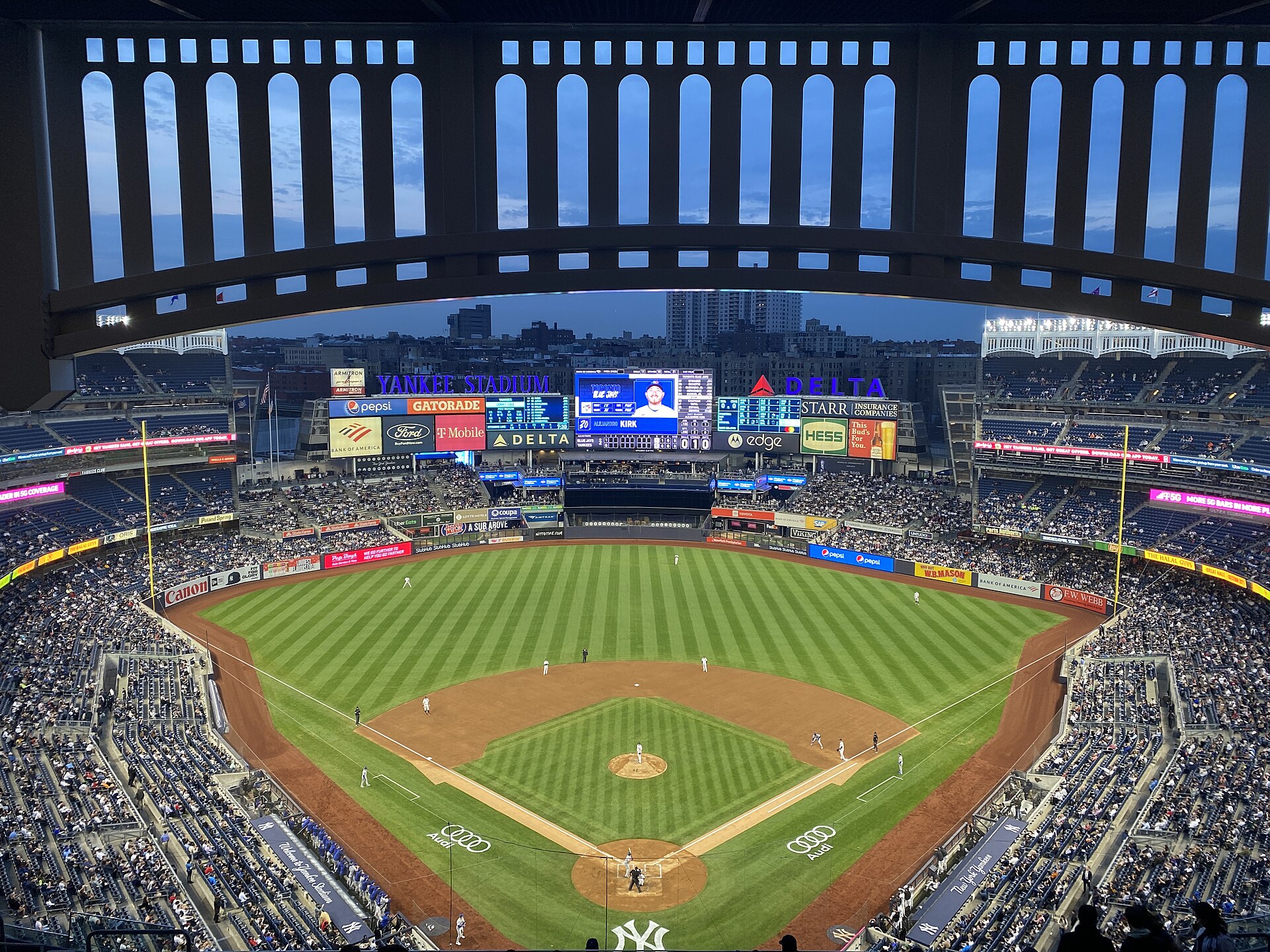
View of Yankee Stadium from Section 420.
What a New York Yankees Game Actually Feels Like
The thing that distinguishes a Yankees game from a generic “going to a baseball game” experience is the weight the franchise carries with it. Other teams play in New York. The Yankees are New York baseball in a specific, historically loaded way that has nothing to do with the current roster and everything to do with what the name and the setting have accumulated over more than a century.
That weight is present at the stadium before the first pitch. The crowd skews toward genuine baseball knowledge — Yankees fans tend to be engaged, informed, and opinionated. The stadium is large and loud when it fills up. There is an expectation in the building that something is supposed to happen, and that expectation is part of what makes an ordinary Tuesday night game feel like an event rather than background entertainment.
A Yankees game is the right choice when you want the most broadly recognizable, tradition-laden baseball outing New York offers. You will be in a large stadium with an engaged crowd, a franchise context that arrives pre-loaded with meaning, and a Bronx game-day atmosphere that is different from anything in Manhattan or Queens. That combination is worth planning around when it is what you are actually after.
The Bronx setting matters more than visitors sometimes expect. Getting there requires a real transit trip — around 25 minutes from Midtown on the 4, B, or D train — and arriving at the stadium neighborhood feels like arriving somewhere, not just crossing a street. The game is the destination in a way that changes how you approach the day.
Inside, the stadium is modern, well-organized, and easy to navigate. Concessions are substantial. The sightlines are strong throughout most of the seating bowl. And from the right seats on a night when the crowd is in it, there are few better sports environments in the city.
Who Yankees Games Are Best For
Not every sports experience works equally well for every visitor. A Yankees game has a clear identity, and being direct about who gets the most out of it is more useful than “it’s great for everyone.”
If you have one baseball game to see in New York and you want the one that carries the most weight and recognition, this is it. The Yankees are the frame of reference most visitors bring with them before they arrive.
Few franchises in American sports have a more layered historical identity. For someone who cares about where the game has been, a Yankees game at Yankee Stadium is a direct connection to that.
When the Yankees are relevant and the stadium is full, the atmosphere is among the best in baseball. Even regular-season games with something at stake can feel like events in this building.
Yankee Stadium is well-suited to families — organized, clearly navigable, with food options throughout and strong sightlines from most sections. Kids who know the franchise name will recognize where they are.
If what you most want is a relaxed, neighborhood-feel baseball afternoon with a mellower crowd and easier transit, the Mets at Citi Field may actually suit you better. The Yankees experience skews larger and more intense.
Yankees tickets and in-stadium spending tend to run higher than Mets counterparts. The experience delivers, but if budget is the primary constraint, the Mets offer a comparable baseball outing at a lower price of entry.
Yankees vs Mets — The Honest Practical Comparison
This is one of the most common questions visitors ask when they have one baseball game to plan: Yankees or Mets? The answer is not about which team is better — it is about what kind of outing you want. The two experiences are genuinely different in ways that matter for planning.
High-recognition, tradition-heavy, large stadium with a loud engaged crowd. The flagship NYC baseball identity. Transit-forward (4/B/D to 161st St). Higher price point. Best when you want history and atmosphere to be part of the day.
Modern stadium, more neighborhood-feel game day, Queens setting, generally more relaxed crowd energy. Slightly easier to get to from certain parts of the city. Often lower ticket prices. Best when you want a full-day Flushing outing with a mellower vibe.
Choose the Yankees when recognition, legacy, and a large-stadium atmosphere are what you are after — when you want the game to feel like an event. Choose the Mets when you want something that feels a bit more local, a bit more relaxed, and easier to fold into a full Flushing or Queens day. Both are legitimate baseball experiences. The Yankees are simply a different kind of outing, and knowing which kind you want before you buy tickets is the only decision that matters here.
One practical note: transit to Yankee Stadium is genuinely excellent — the 4, B, and D trains put you at the stadium door in around 25 minutes from Midtown. Citi Field requires the 7 train out to Flushing and is a slightly longer trip from most Manhattan starting points. For visitors staying in Midtown or the Upper East Side, the Yankees transit trip is actually slightly more direct.
If your trip happens to line up with the Subway Series — the Yankees and Mets meeting on the schedule — that is its own kind of event with its own logistics and ticket demand. The Subway Series guide covers that matchup specifically.
Yankee Stadium and What It Adds to the Experience
Yankee Stadium — the current version, which opened in 2009 across the street from the original — is a large, modern facility designed to support the weight of the franchise it houses. It is not a throwback park or a charming neighborhood bandbox. It is a serious baseball stadium: big, loud when full, well-organized, and built around the idea that coming to a Yankees game should feel different from coming to an ordinary sporting event.
Two practical details matter more than visitors usually expect before they arrive. First: the stadium is 100% mobile ticketing — no paper tickets are accepted. Have your tickets on your phone before you leave for the game, not somewhere in your email waiting to be opened at the gate. Second: Yankee Stadium is cashless. Every transaction inside the stadium — food, drinks, merchandise — requires a card or mobile payment. Plan accordingly.
For the full venue guide to transit, parking, policies and game-day logistics, see the Yankee Stadium game-day guide. For sections, rows, views, value areas and seat selection, use the Yankee Stadium seating guide. This page focuses on the Yankees as a team experience and how to plan the day around them; the venue guide covers everything you need to know about the physical space.
How to Think About a Yankees Game Day
A Yankees game works best when you treat it as the main event of the day rather than something to fold into a busy schedule. The transit trip out to the Bronx, the stadium environment, the post-game crush on the train — all of it adds up to an outing that asks you to commit to it. Visitors who try to squeeze a Yankees game between two other Midtown activities often find it rushed. Those who build the day around it tend to have a much better time.
Day games vs night games
Day games — most commonly on weekdays or weekend afternoons — tend to draw smaller, quieter crowds and offer a more relaxed pace. The sun can make certain seating sections uncomfortable in peak summer; factor that in when choosing seats. Night games bring the larger, more charged crowds that produce the atmosphere the Yankees are known for. Weekend nights when the team is competitive are when the stadium is at its most electric. If your goal is the full Yankees experience, a night game during the spring or fall is the strongest version of it.
Finding Yankees tickets today, tonight, or last-minute
Same-day demand is common for Yankees games — a nice evening, a visiting friend, or a last-minute change of plans is often all it takes. If you’re searching for yankees tickets today or yankees tickets tonight, availability generally holds up better than you’d expect outside of rivalry series and marquee weekend dates, since Yankee Stadium’s seating bowl is large enough to absorb walk-up-style demand for most regular-season games. Last minute yankees tickets are typically easiest to find for weekday games against non-rival opponents, and cheap yankees tickets tend to surface in the upper deck and outfield sections rather than anywhere near the infield. For yankees game tickets today or yankees game tickets tonight specifically, checking availability the morning of gives the clearest read on what’s actually left for that date.
Yankees Opening Day
Yankees Opening Day tickets are among the most in-demand of the regular season. Opening Day at Yankee Stadium comes with pregame ceremony, a fuller and louder crowd than a typical early-season game, and a genuine sense of occasion — this is the one date on the schedule where “just a regular-season game” does not apply. If getting new york Yankees Opening Day tickets is the goal, expect higher prices and earlier sellouts than any other date on the April calendar, and plan the rest of the day (transit, food, arrival time) with a bigger crowd in mind.
Old Timers’ Day
Yankees Old Timers’ Day is a Bronx tradition unlike almost anything else in baseball — a mid-season date, typically in summer, when franchise legends return to the field before the regular game. It draws a different kind of crowd than a standard weekday game, skewing toward longtime fans and families with an interest in franchise history, and it is worth checking the schedule for specifically if that history is part of why you are going to a Yankees game in the first place.
When to arrive
Arriving 45 minutes to an hour before first pitch is a reasonable target. This gives you time to find your seats, explore the concourses without fighting the arriving crowd, grab food before the lines develop, and be settled before the first inning. Batting practice is sometimes visible from the field-level seats before gates fully open — if you have tickets in lower sections and want to see it, check the stadium gates opening time for that day.
The transit reality
The 4, B, and D trains all stop at 161st Street–Yankee Stadium, making this one of the most directly transit-connected stadiums in American professional sports. Midtown to the stadium is roughly 25 minutes. Plan for the post-game train to be crowded — give yourself time, do not rush the exit, and consider waiting 15 to 20 minutes after the game ends before heading to the platform if crowd tolerance is a concern. The Yankee Stadium guide covers transit strategy in detail.
Cashless and mobile ticket reminders
Before you leave: confirm your tickets are loaded in your phone’s wallet or the official Yankees app. Bring a card for every in-stadium purchase — there is no cash option inside the stadium. These two things are the most common sources of preventable friction on Yankees game day.
Yankees vs Red Sox — The Rivalry Games
No matchup in the sport carries more weight than Yankees vs Red Sox. This is the oldest and most storied rivalry in American professional sports, and a Yankees vs Red Sox game at Yankee Stadium is a genuinely different atmosphere from an ordinary regular-season date — louder, more contentious, and more closely watched, regardless of where either team sits in the standings that year.
If you are choosing which Yankees home date to attend and a Red Sox series is on the schedule, it is worth prioritizing. Boston Red Sox vs Yankees tickets tend to sell faster and at a premium compared to games against most other American League opponents — the rivalry drives demand on its own, independent of either team’s record. For visitors who want the single most charged regular-season atmosphere Yankee Stadium offers outside of the postseason, a Yankees and Red Sox series is typically the strongest candidate on the calendar.
Red Sox series weekends bring a larger visiting contingent than most opponents, a louder and more divided crowd, and tighter transit and concession lines than a typical weekday game. If you are set on a Yankees vs Red Sox game specifically, expect to book earlier and pay more than for a comparable date against a non-rival opponent.
However you’re searching for it — red sox v yankees, boston red sox v yankees, yankees red sox tickets, yankees v red sox tickets, or yankees and red sox tickets — you’re looking at the same rivalry date on the schedule, and the same planning logic applies: book earlier and expect a premium over a comparable non-rival matchup.
Single-Game, Season, and Group Tickets
Most visitors are buying Yankees single game tickets for one specific date, but the team also sells season-long and group packages, and it’s worth knowing the difference before you commit to either.
Single-game tickets
New York Yankees single game tickets are what almost every visitor and most locals are after — one date, one seat, no season-long commitment. Availability and pricing shift with opponent, day of week, and time of season; rivalry series, weekend dates, and Opening Day carry a premium over an ordinary Tuesday game in a quiet stretch of the schedule. Whether the search is for yankees single game tickets or yankees individual game tickets, both point to the same one-date, one-seat purchase.
Season tickets
New York Yankees season tickets cost varies significantly by section — a full-season plan behind home plate runs at a different order of magnitude than a plan in the upper deck. As a general rule, how much are New York Yankees season tickets depends far more on where in the stadium the seats are than on any flat per-game rate, so a specific section and row matters more than a single headline number when comparing options.
Group tickets
New York Yankees group tickets are currently structured for groups of 10 or more for select games — school groups, company outings, birthday parties, and similar gatherings. Group pricing and seating blocks are handled separately from single-game sales, and booking ahead of a popular date (a weekend game, a rivalry series) matters more for groups than for individual seats, since blocks of adjacent seating sell out from the available inventory faster than scattered single seats do.
Yankees Postseason Tickets
When the Yankees make the postseason, Yankees playoff tickets — or new york Yankees playoff tickets, if you’re searching by the full team name — become the highest-demand, highest-price tickets of the year at Yankee Stadium, well above even a Red Sox series or Opening Day. Postseason ticket availability and pricing depend entirely on how far the team advances and who the opponent is, and both shift on short notice as a series progresses, so postseason planning requires more flexibility and a shorter booking window than a regular-season date.
If a Yankees postseason run is a possibility during your trip window, keep an eye on the schedule as the regular season closes — postseason tickets are not sold or priced the same way as the rest of the season, and they move fast once a series is set.
Common Mistakes to Avoid
Not deciding what kind of day you actually want
The Yankees are the right choice for a specific type of outing — not the default for “any baseball game in New York.” If you want a relaxed neighborhood feel, a mellower crowd, or an easier budget, the Mets at Citi Field may fit you better. Know which experience you are after before you buy tickets.
Assuming transit will be seamless without any planning
The 4/B/D is excellent, but post-game trains are crowded and the walk from the station to the stadium can feel longer than the map suggests if you are unfamiliar with the neighborhood. Give yourself buffer time in both directions, and read the Yankee Stadium transit guide before your first trip.
Showing up without mobile tickets ready to go
100% mobile ticketing means paper printouts will not get you in. If your tickets are in an email or a PDF, get them into your phone’s wallet or the Yankees app before you leave home. The gate line is not the place to figure this out for the first time.
Not accounting for the cashless policy
Yankee Stadium does not accept cash. Every transaction — food, drinks, merchandise — requires a card or mobile pay. If you or anyone in your group typically relies on cash, plan ahead. There are reverse ATM kiosks in the stadium that convert cash to a prepaid card, but lines can develop.
Treating the game as a footnote to a packed day
The Yankees game is better as the anchor of the day than as one item on a full itinerary. The transit time, the stadium experience, and the post-game logistics reward being the main event. Build other plans around the game, not the other way around.
Ignoring seat selection in a stadium this large
Yankee Stadium has many sections, and not all of them offer the same experience. Far upper-deck seats at the outfield corners are a long way from the action; field-level seats behind the plate or along the baselines are a fundamentally different game. The Yankee Stadium seating guide breaks this down in full.
Waiting too long to buy for rivalry or postseason dates
Yankees vs Red Sox tickets, Opening Day, and any postseason date move faster and price higher than an ordinary regular-season game. If one of these dates is the reason for your trip, do not treat the purchase timeline the same way you would for a quiet midweek game against a non-rival opponent.
Building the Full Yankees Day
The Yankees game is at One East 161st Street in the Bronx, and the day tends to work best when it is organized around that fact rather than trying to connect it to unrelated Manhattan plans.
Getting there
The 4, B, or D train to 161st Street–Yankee Stadium is the right answer for almost every visitor. From Grand Central (4 train) or from anywhere on the B/D corridor (34th Street, 42nd Street, 59th Street), the trip is direct and consistent — roughly 25 minutes from Midtown. Full transit strategy, parking options, and arrival logistics are in the Yankee Stadium game-day guide.
Food and the Bronx before the game
The blocks surrounding the stadium in the Bronx have a cluster of pregame options — bars and restaurants along River Avenue that fill up with fans in the two hours before a game. This is the most direct pregame option and the one that best matches the Yankees game-day energy. For a different kind of pregame meal, Arthur Avenue — the Bronx’s Italian-American restaurant corridor — is accessible from the stadium neighborhood and offers some of the best Italian food in the city. It requires slightly more planning but delivers significantly on the food side of the day.
Hotels
Most visitors to a Yankees game stay in Midtown Manhattan and use transit to the stadium — the trip is efficient enough that staying near the stadium itself offers no meaningful advantage for most people. The hotels near Broadway guide covers Midtown hotel options if you are combining a Yankees game with a broader NYC trip that includes Broadway or other Theater District plans.
Pairing with the rest of the trip
For visitors combining a Yankees game with other NYC plans, the most natural pairings are a Midtown home base, an Upper East Side exploration earlier in the day, or an evening in the Bronx before or after the game. The day does not need to be all baseball — but the game should be the anchor rather than an afterthought. Trying to do Rockefeller Center, the High Line, and a Yankees night game in one day works better on paper than in practice.
Frequently Asked Questions
The Yankees identify yankees.com as the official source for New York Yankees tickets. The official ticket portal includes single-game tickets, season tickets, group tickets, Flex Plans, Pinstripe Pass, premium seating and suites. Mobile tickets are accessed through the MLB Ballpark app, with Ticketmaster account authentication used in the Yankees mobile-ticket flow.
The Pinstripe Pass is a general-admission standing-room ticket offered for 2026 regular-season home games. It includes admission to non-assigned standing-room and social-gathering areas plus the first drink, making it one of the main official value options for fans who do not need an assigned seat.
Use the official Yankees schedule for the latest game date, opponent and start time. MLB game times can change because of television selections, weather, postponements and makeup games, so the official schedule should be the final check for Yankees game today, next game and home-game planning.
Yes — particularly if you want the most broadly recognizable baseball experience the city offers. The Yankees carry a name and a stadium that visitors from anywhere in the world recognize, and the game-day atmosphere when the stadium is full is one of the better sports environments in the city. For a visitor with one baseball game to spend, the Yankees deliver what most people picture when they think “baseball in New York.”
Larger and more charged than most baseball experiences in the city. The crowd is engaged and knowledgeable, the stadium is loud when full, and the franchise’s weight comes with it. The Bronx setting, the transit trip out, and the stadium environment add up to something that feels like an event rather than a casual afternoon — which is exactly the point for the visitors who get the most out of it.
The Yankees offer a larger, more tradition-heavy, higher-intensity experience at a premium price point. The Mets at Citi Field offer a more modern, slightly more relaxed game day in Queens at generally lower cost. Yankees games suit visitors who want history, scale, and the most iconic local baseball identity. Mets games suit visitors who want a neighborhood-feel outing with a mellower crowd. Both are legitimate baseball experiences. The difference is in what kind of day you want to have.
Very — it is one of the most transit-accessible stadiums in American professional sports. The 4, B, and D trains all stop at 161st Street–Yankee Stadium, and the trip from Midtown Manhattan is approximately 25 minutes. For full transit directions, parking options, and arrival strategy, see the Yankee Stadium game-day guide.
Night games are where the stadium is at its most atmospheric — larger crowds, louder, and with more energy. Day games offer a more relaxed experience, shorter lines, and a less intense crowd, and can be a strong option for families or visitors who prefer a mellower outing. For a first-time visitor who wants the full Yankees experience, a night game during the spring or fall season is the strongest version of it.
Yes. Yankee Stadium is well-organized, clearly navigable, and has food options throughout. Kids who know the Yankees brand will recognize where they are. Day games are a better fit for younger children — the pace is more comfortable and the crowds are smaller. Night games offer more atmosphere but also more crowd intensity. Either way, the stadium itself is a comfortable family environment.
No. Yankee Stadium is a cashless venue — all food, drinks, and merchandise transactions require a card or mobile payment. There are reverse ATM kiosks on-site that convert cash to prepaid cards if needed, but lines can develop on busy days. Bring a card.
No — and more importantly, a physical ticket will not work. Yankee Stadium uses 100% mobile ticketing. Paper printouts are not accepted. Have your tickets loaded in your phone’s wallet app or the official Yankees app before you arrive at the stadium.
Plan around the game rather than squeezing it into a full day. Arrive at the stadium 45 to 60 minutes before first pitch. The bars and restaurants along River Avenue near the stadium are the most direct pregame option. For a longer food-forward pregame, Arthur Avenue in the Bronx is one of the city’s best Italian-American dining corridors and within range of the stadium. See the Yankee Stadium guide for specific pregame logistics.
How much are Yankee tickets varies enormously by opponent, day of week, time of season, and seat location — an upper-deck seat for a quiet weekday game against a non-contender costs a fraction of a lower-level seat for a Red Sox series or a weekend date late in a pennant race. There is no single flat price; the cost of Yankee tickets is really a range shaped by demand for that specific date.
Yankees season tickets cost depends heavily on section — plans behind home plate and in premium lower-level areas run substantially higher than upper-deck or outfield season plans. Asked another way, how much is Yankees season tickets comes down to the same answer: rather than a single number, treat season ticket cost as a range tied to seating location, and compare specific sections directly if you’re weighing whether a season plan makes sense for how many games you actually expect to attend.
Opening Day tickets typically go on sale as part of the team’s regular single-game ticket release ahead of the season, and they are consistently among the first home dates to sell out given the demand around the season’s first game. If Opening Day specifically is the goal, plan to buy as soon as single-game tickets become available rather than waiting.
Generally, yes. Yankees vs Red Sox is the sport’s most storied rivalry, and tickets for a Red Sox series at Yankee Stadium typically sell at a premium compared to games against most other American League opponents, independent of either team’s record that season. If a Yankees and Red Sox game is the specific date you want, expect to book earlier and pay more than for a comparable non-rival matchup.
Yankees group tickets are handled separately from single-game sales and are currently available for groups of 10 or more for select games, such as school groups, company outings, or larger celebrations. Group pricing and available seating blocks vary by date, so booking ahead of a popular game matters more for groups than it does for individual single-game tickets.
The New York Yankees — In Brief
A New York Yankees game is the right choice when you want the most historic, tradition-heavy, large-stadium baseball experience New York offers. The franchise’s identity, the stadium’s atmosphere, the Bronx setting, and the quality of the game-day experience when the team is relevant add up to something that stands apart from a generic “going to baseball” outing.
Plan it as the anchor of the day, not a side event. Use transit. Have your mobile tickets ready. Know whether you are the kind of visitor the Yankees experience is built for — and if you are, this is one of the best sports days the city can provide.
Ready to buy Yankees tickets? Whether it’s a single game, a season plan, a group outing, or a Red Sox rivalry date, new york Yankees tickets for the full home schedule are available below.
For everything you need on the physical venue and game-day logistics, see the Yankee Stadium game-day guide. For section-by-section seat selection, use the Yankee Stadium seating guide. For the broader baseball picture in New York, the baseball hub covers both teams and both stadiums.
Yankee Stadium — Everything Around the Game
Team chosen. Now build the Bronx day — where to sit, what to do before the game, how to get there, and the full neighborhood context for a Yankees game night.