

Hammerstein Ballroom Seating Chart: Floor, Balcony, Best Seats & Views
Use the Hammerstein Ballroom seating chart to compare the GA floor, first and second balconies, box views, obstructed rows, capacity, and the best position for your kind of show.
Hammerstein Ballroom is not a standard theater with clear best-seat logic. It is a flexible concert room inside the Manhattan Center — a 35,000-square-foot ballroom originally built for opera in 1906 — with a flat floor that is almost always general admission standing, two sloped balconies that seat roughly 1,200 people combined, and a set of opera boxes running along both sides. This guide functions as the Hammerstein Ballroom seating chart, Hammerstein ballroom nyc seating chart, manhattan Hammerstein ballroom seating chart, Hammerstein ballroom seating map, and Hammerstein ballroom seat map in one place — some fans search the shorter “Hammerstein seating chart” and land on the same room and the same breakdown of Hammerstein ballroom seats described below. Whether the balconies are reserved or GA depends on the event. Whether the floor even makes sense for your experience depends on the show, the crowd density, and how tall you are.
The most important thing to understand before buying any Hammerstein ticket: the floor is flat. Unlike venues with raked or tiered floor sections, a flat floor means the only way to see the stage from mid-floor at a sold-out show is to be in the front or to be tall. This single fact changes the entire seat strategy for most buyers, and it is what the page you are reading is built around.
Hammerstein Ballroom Seating Chart & Seat Map
The Hammerstein Ballroom seating chart is event-sensitive because the room is flexible, but the permanent architecture is straightforward: a large GA-capable floor, a 535-seat first balcony divided into sections 101–105, a 525-seat second balcony divided into sections 201–203, plus side opera boxes and lower-level spaces. Ticketmaster shows an event-specific seat map, so use the map attached to your exact show rather than assuming every Hammerstein setup is identical.
For current public events, Manhattan Center’s FAQ says the standard rule is general-admission floor and general-admission balcony seating on a first-come basis. A row or seat number printed on a GA ticket may be inventory tracking rather than an assigned chair. If a specific event is sold with reserved seating or a special production layout, follow that event’s Ticketmaster description and map.
The published Manhattan Center plans label first-balcony sections 101–105 and second-balcony sections 201–203. Both plans specifically warn that rows J and K have obstructed views. Those are structural warnings worth taking seriously whenever your event uses those row labels.
Hammerstein Ballroom Capacity & Seating Capacity
Hammerstein Ballroom capacity is configuration-dependent. Manhattan Center currently lists the room at up to 3,500 for a standing-room GA concert, up to 2,000 theater-style, 1,000 for a seated dinner, and 2,500 reception-style. The published breakdown also lists 535 flexible seats in the first balcony, 525 in the second balcony, 120 in the opera boxes, and 150 on the lower level.
That is why Hammerstein Ballroom seating capacity should not be treated as one fixed seat count. A concert can use far more standing capacity than a theater-style event. For seat selection, the event-specific Ticketmaster map matters more than a single total-capacity number.
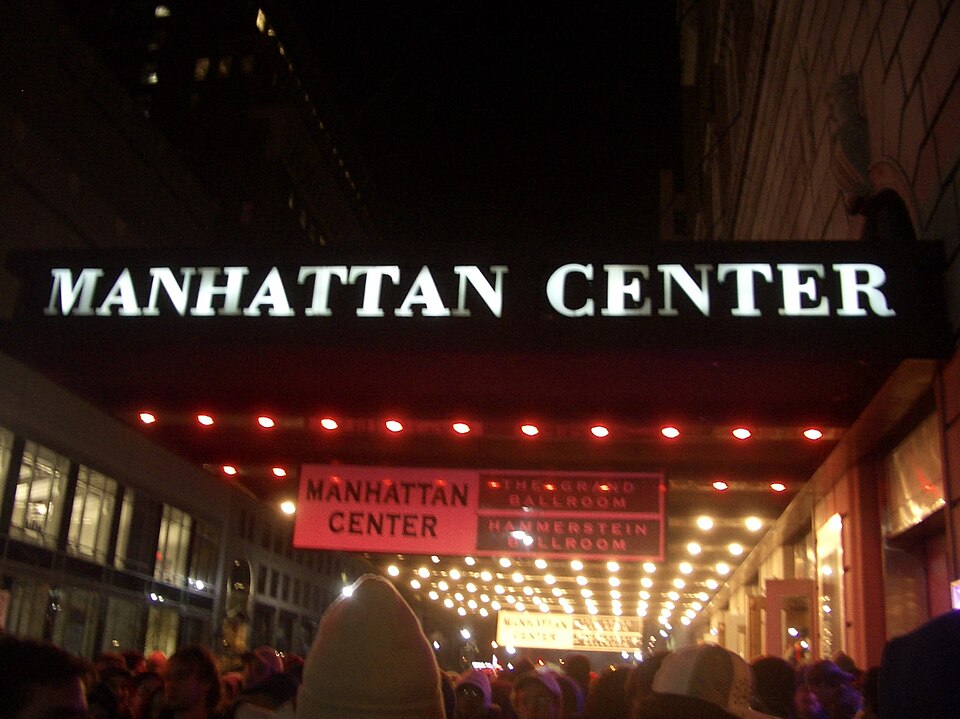
Hammerstein Ballroom at Manhattan Center in Midtown Manhattan, a strong visual anchor for a seating guide built around floor, balcony, and box strategy.
Quick Answers — Hammerstein Ballroom Seating
Center sections in the first balcony (rows A through roughly E) give you a clear elevated sightline, reliable sound, and a seat — which means you can arrive without fighting for position. This is where experienced Hammerstein attendees tend to land if they are not going specifically for the floor-rush experience.
The balconies slope gently and are positioned unusually close to the main floor for a room of this size. Center sections in the first five rows of the first balcony give you an unobstructed sightline of the full stage without the overhead obstruction that kicks in further back in the balcony.
The front of the GA floor is where the energy of a Hammerstein show concentrates. It requires arriving early, committing to standing for the full set, and accepting that you will not move freely once the room fills. For the right show and the right person, nothing else in the room competes with it.
At a sold-out Hammerstein show on a flat floor, anyone more than roughly five rows from the stage who is under six feet tall will struggle to see. The balconies offer a clear sightline, a seat, and lower physical demand. For most buyers, the first balcony center is a better experience than the floor unless front-section access is the specific goal.
Second balcony center tickets typically cost less than first balcony reserved seats. The stage is further away but the sightline is clear and the seats are comfortable. For a performance you want to see cleanly without paying the first-balcony premium, center rows in the second balcony are the value option.
The flat floor is one of the most frequently cited drawbacks at Hammerstein. Shorter attendees standing mid-floor at a sold-out show will often see very little of the stage. The balcony is not a consolation — for this specific situation it is the clear correct answer.
The six opera boxes run three on each side along the walls between the floor and the balconies. They are atmospheric, somewhat private, and give the room a theatrical quality that the balconies cannot replicate. The tradeoff: they look at the stage from an angle, not head-on. Center-adjacent boxes are workable; the far end boxes are genuinely side-angle positions.
The Ticketmaster seating chart for Hammerstein looks the same regardless of whether balconies are reserved or GA — it always shows sections and row designations. But a “row G, section 102” ticket may be an assigned seat or a standing GA position depending on the event setup. A Hammerstein ballroom view from my seat or view from my seat Hammerstein ballroom check on the ticketing platform before buying can confirm which configuration applies to your specific event. Check the ticket description carefully before buying.
Start Here: How Hammerstein Ballroom Actually Works
Hammerstein Ballroom is not a theater with fixed rows and reserved seats throughout. It is a flexible concert room, and the way seats and floor areas are configured changes event to event. Before any other seat decision, you need to know which of three configurations your show is using.
The current public-event baseline is GA. Manhattan Center’s FAQ says all shows use general-admission seating or standing floor on a first-come, first-served basis. If your ticket shows a row or seat number but is marked GA, that number is used for capacity tracking rather than guaranteeing a specific chair. Floor ticket holders stand general admission; balcony ticket holders use general-admission balcony seating.
Event-specific layouts can still differ. Ticketmaster publishes a seating chart for the individual event, and special productions can use different setups. If your exact event is explicitly sold as reserved seating, follow the assigned section/row/seat information on that event page. Do not assume a seat is reserved merely because a section or row number appears on the ticket.
For GA balconies, arrival timing matters. The best front-center positions are first-come, and Manhattan Center says doors open one hour before the scheduled show time. If balcony position matters to you, treat door time as part of the seat-selection decision.
Buying a ticket with a row or section number and assuming that automatically means an assigned seat. Under Manhattan Center’s current GA policy, printed seat and row numbers can be capacity-tracking numbers only. If your event is explicitly sold as reserved seating, use the assigned map; otherwise, assume position is first-come and plan your arrival accordingly.
The Room Layout: Floor, Balconies, and Boxes
Hammerstein’s layout is distinct from most Manhattan concert venues of similar capacity. The room was built as an opera house — all the architectural ambition and verticality that implies — and the bones of that original design are what give it its character as a concert venue. The stage is at one end; the two main balconies are at the opposite end and along the sides, running unusually close to the main floor. The opera boxes are positioned on both walls between the floor level and the first balcony, creating a layer of the room that most concert venues do not have at all.
The Floor
The floor is the central fact of Hammerstein’s seating logic, and its most important characteristic is one that catches many first-time visitors off guard: it is flat. No rake. No tiers. A flat ballroom floor running from the stage to the rear of the room, with no built-in elevation advantage for anyone standing further back. This is the room’s original design — a grand ballroom rather than a concert hall — and it is why floor GA at a sold-out Hammerstein show can be excellent if you are near the front and genuinely difficult if you are not.
The stage is elevated (approximately 4 feet per one Tripadvisor reviewer), which helps somewhat, but not enough to overcome the height-of-crowd problem at a dense floor. Experienced Hammerstein regulars are direct about this: if you are under 6 feet tall and cannot get within the first five or six rows of the stage, the floor at a sold-out show will often mean seeing the backs of heads rather than the performers.
First Balcony
The first balcony is the most versatile position in Hammerstein Ballroom, and for many buyers it is the right answer — sometimes regardless of price. The official floor plan confirms a shallow curved balcony with 535 seats across sections 101–105, which is why the level feels relatively connected to the stage compared with a distant arena upper tier. From the first balcony, the stage is clearly visible without neck-strain, the sound is strong, and you have a seat rather than standing room — which means you arrived when you wanted to rather than hours before showtime.
Within the first balcony, center sections (roughly 102, 103, 104) in rows A through E are the best positions. You want to be in the center rather than the sides, and you want to be in the earlier rows rather than the later ones — two specific reasons. First, side sections 101 and 105 create increasingly angled views toward the outer edges, and recent visitor reports include some limited-view complaints in section 101. Treat the extreme side positions more cautiously than the center sections. Second, the official Manhattan Center floor plan notes that rows J and K in the first balcony have obstructed views — and even before J and K, sitting in the later rows means the balcony overhang starts to affect sound quality. “You don’t want to be too far back, otherwise you’ll find the overhang will have a negative impact on the sound quality” is the consistent advice from experienced Hammerstein attendees.
Second Balcony
The second balcony is structurally similar to the first — the same gentle slope, the same center-over-sides logic, the same need to avoid the back rows where the overhang affects sound. The primary difference is elevation and price: you are one level higher and further from the stage, and tickets typically cost less. The same section and row guidance applies: center sections in the earlier rows are the strongest positions; side sections and later rows are progressively weaker.
From the second balcony, the stage is visibly smaller than from the first balcony but the sightline is clean and unobstructed in the center early rows. For a performance where watching the full stage picture matters, the second balcony center still delivers that. For an intensely close, performer-focused experience, it does not. The honest positioning: second balcony is the value tier where most of the experience holds but some of the intimacy is traded away.
Opera Boxes
The six opera boxes run along both side walls of Hammerstein, three per side, positioned at a height between the floor level and the first balcony. They are the most architecturally distinctive element in the room and they look the part: elevated, somewhat private, with the feel of a theatrical event rather than a concert. Most of the time, boxes at Hammerstein are reserved for special guests, promotional use, or VIP packages — general-sale public tickets to the boxes are less common but do appear for certain events.
The tradeoff with the boxes is the viewing angle. The floor and balconies face the stage head-on. The boxes are positioned on the sides and look toward the stage at an angle. The closer a box is to the stage end of the room, the more side-on the view becomes. The rear-most boxes on each side are angled less acutely and offer a more workable sightline. A box seat closer to the back of the room, on the wall side, is a better viewing position than a box closer to the stage at the extreme side.
Floor Tickets: When They’re Worth It and When They’re Not
The Hammerstein floor delivers a specific kind of concert experience that no other part of the room can replicate: physical proximity to the stage, immersion in the crowd, and the particular energy that comes from being surrounded by the performance rather than looking down at it from above. None of that is diminished by the flat floor problem — it is still the best place to be if being close is the goal.
The flat floor problem is real and worth being direct about. At a sold-out Hammerstein show, the floor fills to a dense crowd standing on a flat surface. The stage is elevated by a few feet. If you are standing five rows from the stage, you are close enough that the crowd density works in your favor — the performers are above you, the elevation gap helps. If you are standing fifteen rows back, you are looking through and over a crowd that has effectively closed off your sightline to the stage. One Tripadvisor reviewer who stood mid-floor at a Lindsey Stirling show — a 6-foot-tall person — described seeing “very little of the performers.” This is not an outlier experience; it is the predictable outcome of a flat floor at a dense concert.
If you are buying floor tickets, your plan must account for arrival. Doors typically open one hour before showtime. For a sold-out show where front section positioning matters, arrivals 60–90 minutes after doors open often find the front sections already locked in by the committed early arrivers. Floor tickets for Hammerstein work best when they are paired with a genuine intention to arrive at or near door open — not a 30-minute buffer. If that level of commitment is not realistic for your evening, the balcony will likely give you a better actual viewing experience than a mid-floor position.
When the floor is the right call
The floor at Hammerstein is the right call when you plan to be in the front — meaning near the stage, within the first six or seven rows of the crowd — and are willing to commit the arrival time to get there. For the right show and the right buyer, being in the front of the Hammerstein floor is the best concert experience the room offers. The energy is extraordinary, the proximity is real, and the flat floor problem becomes irrelevant when you are close enough that everyone else is behind you.
The floor also works better at lower-density shows — events where the floor does not fill to capacity. At a show that is not completely sold out, the mid-floor position becomes more tenable because the crowd does not form the dense front-to-back wall that creates the sightline problem. Checking the event’s likely crowd profile before buying helps calibrate this: a niche genre show, a weeknight event, or a less commercially mainstream act will generally produce a thinner floor than a high-demand sold-out weekend show.
When the balcony is the smarter move
The balcony is smarter than the floor when: you cannot arrive near door open; you are shorter than about 5’10”; you want a seat; you are attending with someone who cannot stand for 2–3 hours; you are going to a high-demand, sold-out show where front positions will be intensely competed for; or you simply want to watch the performance rather than participate in the crowd experience. These are not consolation reasons — for most people going to most Hammerstein shows, at least one of these applies.
Balcony Strategy: Why Elevation Often Beats the Floor at Hammerstein
The counterintuitive truth about Hammerstein Ballroom is that the people in the balconies frequently have better viewing experiences than a significant portion of the people on the floor — and they often paid less for their tickets. Understanding why makes the seat choice obvious for most buyers.
The balconies at Hammerstein are architecturally unusual. The published floor plans show shallow curved seating tiers rather than a steep distant upper deck, and recent visitor seat-view reports continue to describe the first balcony as feeling closer in person than photos suggest. The first balcony sits at a height that still puts you in a genuine relationship with the performance rather than looking down from a great distance, and the gentle slope means the rows behind the front can see clearly without the person in front of them becoming an obstacle.
First balcony vs second balcony — which is worth more?
The first balcony is meaningfully closer and delivers a noticeably stronger sightline and sound experience than the second balcony. If the choice is between first balcony center rows A–E and second balcony center rows A–E, and the price difference is modest, the first balcony is worth it. The second balcony is where the value calculation shifts: if first balcony tickets are selling at a significant premium, second balcony center rows A–E is still a solid position that most buyers will be happy with. The loss is in distance and some intimacy; the gain is in cost.
Where to sit in the balcony
Center sections (roughly 102, 103, 104 in first balcony numbering) are the priority over side sections (101 and 105). As you move toward the extreme outer seats in the side sections, the viewing angle becomes increasingly oblique. Recent seat-view reports also show that some side positions can pick up pillar, wall, or roof-line interference depending on the event setup. In either center or side sections, earlier rows are better — the rear rows of the first balcony are specifically noted in the official Manhattan Center floor plan as having obstructed views (rows J and K), and even before reaching J and K, the balcony overhang reduces both sightline and sound quality in the rear rows.
The practical guidance: center sections, rows A through approximately E or F, are the strongest first balcony positions. The same logic applies to the second balcony. If the balconies are configured as GA rather than reserved, arrive early enough to secure these positions — a 30-minute arrival before showtime is typically sufficient for GA balcony positioning at most events, but for high-demand shows, arrive closer to door open.
Both balconies at Hammerstein have overhead structure from the balcony above them. As you move toward the rear of either balcony, the overhang above begins to cut into your view of the upper stage and ceiling — and in some back-row positions, the balcony overhang literally blocks part of the stage view from above. This is not a problem from the front several rows, but it becomes increasingly relevant as you move toward the rear of the section. Rows J and K in the first balcony are officially flagged as obstructed. The published second-balcony plan also marks rows J and K as obstructed, so the same caution applies there as well.
Are the Opera Boxes Worth It at Hammerstein?
The opera boxes at Hammerstein are the room’s most atmospheric option and also the most misunderstood. They run three per side along the lateral walls between the floor and the first balcony — elevated side positions that look more like traditional opera seating than anything else in a contemporary concert venue. When they appear as ticket inventory, they tend to be priced as premium, VIP, or special-access options.
The honest viewing angle assessment: the boxes look toward the stage from the side, not from directly in front of it. This is the fundamental tradeoff. For a musical performance where seeing the full stage is important — seeing the full band, the production design, the lighting, all the visual elements that concerts deploy — the side angle means you will always be missing part of what is happening on the opposite side of the stage from your box. For a performance where the primary experience is sound and presence, and where the sightline angle matters less, the boxes are more viable.
Box position within the six boxes also matters. The boxes closer to the stage end of the room see the stage at a sharper angle — essentially looking sideways at the front of the stage. The boxes closer to the rear of the room see the stage from a more frontal angle and offer a more complete view. If box tickets are available for your event and you have the option of choosing a specific box, the rear-positioned boxes on either side are the better viewing positions.
What the boxes genuinely offer that no other section provides: a sense of occasion and theatrical grandeur. Being in a Hammerstein box is a specific experience — elevated, slightly apart from the main crowd, with the visual splendor of the room laid out around you. For the right kind of event and the right kind of buyer, that atmosphere is worth more than the sightline tradeoff. For anyone who needs to see the full stage clearly, center balcony is the better choice.
Hammerstein Ballroom View From My Seat: What Changes by Level
Searches for Hammerstein Ballroom view from my seat are especially useful here because the experience changes dramatically by level. A floor photo tells you almost nothing about what a packed floor will feel like at your height, while balcony and box photos can reveal the angle, overhang, pillar, or wall interference that a simple map cannot show.
Recent visitor reports reinforce the basic strategy already in this guide: first-balcony GA positions a few rows up can provide a strong elevated view, while some section 101 and side-box positions have generated limited- or obstructed-view complaints. Use seat-view photos as a supplement to the official map, not a replacement for the event-specific Ticketmaster configuration.
Best Spots at Hammerstein Ballroom — By Category
First balcony center, rows A–E. Clear sightline, strong sound, seats regardless of configuration (if reserved), and elevation that solves the flat-floor problem entirely. This is the answer for most buyers who want reliability and a good viewing experience without the floor GA commitment.
Within the first five to six rows of the GA floor, arrived at door open. At this position, the flat floor works in your favor — the performers are above you on the elevated stage, everyone else is behind you, and the energy of the room is fully accessible. This is the best experience Hammerstein offers for the right show and the right buyer, but it requires real commitment to early arrival and sustained front-position holding.
Second balcony center rows in the first half of the section. Lower price than first balcony, still a clear sightline from the elevated slope, still a seat, still a solid view of the full stage. The trade is distance. For shows where being close is not the primary goal, second balcony center rows are where experienced cost-conscious buyers gravitate.
The flat floor at Hammerstein is a specific problem for shorter attendees. Any position in the first balcony center is more reliably comfortable than mid-to-rear floor for this demographic. The advice from experienced visitors is consistent: if you are not going to be at the front of the floor, the balcony is the clear choice.
For the theatrical experience of being in Hammerstein rather than watching a performance from it, opera boxes rear-positioned on either side. Atmospheric, slightly private, architecturally significant. The sightline is angled but the experience of the room is maximized.
For high-energy shows where dancing and movement matter more than seeing the stage, the rear and side areas of the floor give you freedom to move without the dense front-of-stage lock-in. You will not see much from mid-floor at a sold-out show, but if the audio experience and freedom of movement is the goal, this is the correct zone.
Best Position by Show Type
Accessibility at Hammerstein Ballroom
The current Manhattan Center public-events FAQ confirms an ADA ramp into the building and access to the main floor. It also says accessible seating is available through Ticketmaster and that ADA restrooms are located on the first balcony. For event-specific accommodations, the venue directs guests to events@mc34.com with the guest name, event, date, and order number.
The published Hammerstein floor plans show elevators adjacent to the balcony levels, but the current public-events FAQ does not explain how or when guests may use them. If elevator access is essential, confirm the route with Manhattan Center before purchasing a balcony ticket rather than relying on the floor-plan symbol alone.
Because the ADA restrooms are listed on the first balcony while the accessible entrance reaches the main floor, visitors with mobility considerations should confirm the exact event-day route and seating arrangement with the venue in advance.
Getting There and Arrival
Hammerstein Ballroom is inside the Manhattan Center at 311 West 34th Street, between 8th and 9th Avenues — one block from Penn Station. The venue is accessible by the 1, 2, 3, A, C, and E trains to 34th Street–Penn Station. PATH trains from New Jersey arrive at 33rd Street and Avenue of the Americas. The location makes it one of the easiest major concert venues in Manhattan to reach from outside the city.
Arrive with adequate margin for what you are trying to do. Doors open one hour before showtime for most events. For floor GA shows where front position matters, arriving at door open is the right strategy. For balcony seats — reserved or GA — 30 to 45 minutes before showtime is comfortable, but for GA balcony configurations at high-demand shows, arriving closer to door open will give you the best center section selection. Meyer’s Parking Garage is next door at 323–331 West 34th Street for drivers.
Frequently Asked Questions
The permanent room layout includes a large floor, first-balcony sections 101–105, second-balcony sections 201–203, side opera boxes, and additional lower-level space. Ticketmaster publishes an event-specific chart, and Manhattan Center’s current public-event policy says GA floor and balcony positions are first-come unless the specific event is explicitly configured otherwise.
There is no single fixed seating-capacity number because the room changes by configuration. Manhattan Center currently lists up to 3,500 for a standing-room GA concert and up to 2,000 theater-style. Its room breakdown lists 535 flexible seats in the first balcony, 525 in the second balcony, 120 in the opera boxes, and 150 on the lower level.
The published Manhattan Center plans explicitly mark rows J and K as obstructed in both the first and second balcony layouts. Event production can create additional sightline issues, so also check the specific Ticketmaster map and any limited-view labeling for your show.
For most buyers, first balcony center sections (roughly 102–104) in rows A through E. This position offers a clear elevated sightline, strong sound, and a seat regardless of whether the floor is crowded. For buyers committed to the floor experience with early arrival, the front five to six rows of the GA floor are the best positions in the room. Second balcony center early rows are the best value alternative.
For the front of the floor, yes — if you arrive at or near door open and commit to holding your position. For mid-to-rear floor at a sold-out show, the flat floor makes the experience significantly worse for anyone under approximately 6 feet tall. The flat floor — not sloped or raked — means there is no natural elevation advantage as you move back. Many experienced Hammerstein attendees prefer the first balcony specifically because of this.
Yes, and often they are the best tickets in the room for buyers who want a reliable viewing experience. The balconies at Hammerstein are described as unusually close to the ground and gently sloped, which means they feel less remote than upper tiers at many comparable venues. Center sections in the first five or so rows of the first balcony are consistently the best overall positions in the building. Avoid the rear rows (especially J and K in the first balcony per the official floor plan) where the overhang affects both sightline and sound.
For atmosphere, yes. For sightlines, it depends on which box. The boxes are positioned on the side walls and look toward the stage at an angle rather than head-on. The rear-positioned boxes on each side have a more workable sightline than the boxes closer to the stage end, which see the stage from a sharper side angle. For buyers who want the theatrical, atmospheric experience of the room and are less concerned about seeing every detail of the performance, boxes can be worth it. For buyers who need a clear stage view, center balcony is the better choice.
It depends on the event. The floor is almost always general admission standing — first come, first served. The balconies can be configured as reserved seating (assigned section, row, and seat number) or GA (first-come standing/seating within the balcony sections), depending on the specific show. The official Manhattan Center FAQ explicitly notes that row and seat numbers on Ticketmaster floor tickets are for capacity tracking only and do not indicate assigned seating. Check the ticket type before purchasing.
The current Manhattan Center FAQ confirms ADA ramp access to the building and main floor, ADA restrooms on the first balcony, and accessible seating available through Ticketmaster. The published floor plans show elevators near the balcony levels, but the current FAQ does not explain public elevator procedures, so guests who require elevator access should confirm the route in advance at events@mc34.com.
Doors open one hour before showtime. For floor GA shows where front positioning matters, arrive at or near door open. For reserved balcony seats, 30–45 minutes before showtime is comfortable. For GA balcony configurations at high-demand shows, arriving closer to door open will secure better positions in the front rows of the balcony. The front rows of the first balcony center sections fill first when balconies are configured as GA.
Know the Room, Know What You Want — Then Buy
Hammerstein Ballroom is a venue that rewards buyers who understand the tradeoffs before they purchase. The flat floor means the floor-GA experience splits sharply between excellent and frustrating depending on where you end up. The balconies, positioned unusually close to the ground and gently sloped, are frequently the smarter buy — and for shorter attendees or anyone who values a clear view over being physically close, the first balcony center is simply the correct answer. The boxes are genuine and atmospheric, but they come with a side-angle view that requires honest evaluation.
The other thing to verify before buying: whether the balcony for your specific event is reserved seating or GA. Ticketmaster’s chart looks the same either way, but the experience is materially different. Check the ticket details, not just the section label.