

Off-Broadway Venues NYC — The Planning Guide
Where Off-Broadway actually happens, how the venues differ from each other and from Broadway, and which room fits the kind of night you want.
Off-Broadway is not a backup plan for when Broadway shows are sold out. It is a distinct part of New York’s theater ecosystem — one with its own venues, its own neighborhoods, its own character, and a number of shows that are better experienced here than they would be on a larger stage. The Westside Theatre’s production of Little Shop of Horrors has run for seven years because the 270-seat room is the right scale for that show. New World Stages runs five simultaneous productions beneath a Midtown plaza, operating more like a commercial entertainment complex than a traditional single-house theater. The Public Theater in Astor Place has launched more significant American plays than almost any other institution in the country. These are different operations, in different neighborhoods, with different purposes.
This guide covers the Off-Broadway venues that matter most for visitors planning a New York theater night — what each room is, where it sits, what kind of productions it tends to host, and how to match the right venue to the kind of evening you want. Individual venue guides are linked from the venue cards below. For the broader Off-Broadway picture — how it differs from Broadway, and how to decide between them — see the Off-Broadway hub.
Why the Venue Matters More Off-Broadway
At Broadway, the venue is usually secondary to the show — you are going to see Hamilton or Wicked, and the Richard Rodgers or Gershwin Theatre is just the address. Off-Broadway does not work that way. The venue identity, the neighborhood, the room size, and the institutional mission of the theater all shape the experience in ways that matter before you pick a show.
Off-Broadway venues range from rooms that seat just over 100 people to complexes with multiple stages that can seat nearly 500. At the smaller end, you are genuinely close to the performers in a way Broadway rarely offers.
Unlike Broadway, which clusters in the Theater District, Off-Broadway venues are distributed across Midtown, Hell’s Kitchen, Union Square, the East Village, and the West Village. Where the venue is affects the whole night.
The Public Theater is not interchangeable with New World Stages. Irish Rep is not interchangeable with Daryl Roth. Each venue has a distinct programming identity that tells you something about what you are walking into.
Off-Broadway includes shows that have run for years — and productions that open and close within weeks. Some venues specialize in new American plays; others run proven commercial hits that transferred from Broadway or are building toward it.
With Broadway, you generally pick the show first and the theater follows. With Off-Broadway, it often works better to pick a venue zone first — based on your neighborhood, what kind of room you want, and what the venue tends to program — and then choose from what is playing there. A night at The Public Theater in Astor Place is a fundamentally different kind of evening from a night at New World Stages in Midtown, even if the tickets cost roughly the same.
The Main Off-Broadway Venues
These are the Off-Broadway venues most useful to know for planning a New York theater visit — covering the range from major commercial complexes to neighborhood institution houses.
The Upstairs Theatre (~270 seats) is where Little Shop of Horrors has run since 2019. The building has housed some of Off-Broadway’s most significant long runs, including a 12-year run of I Love You, You’re Perfect, Now Change. In Hell’s Kitchen, close to the Broadway theater cluster but with a distinctly different feel. Important: the Upstairs Theatre is on the second floor, requires 21 steps, and is not wheelchair accessible.
Full venue guide →Built beneath the Worldwide Plaza, New World Stages runs multiple productions simultaneously with stages ranging from 199 to 499 seats. It has become a natural home for shows that finished Broadway runs and want to continue Off-Broadway — Jersey Boys, Avenue Q, The Play That Goes Wrong, and many others found long second lives here. The most Midtown-convenient of all Off-Broadway venues, and wheelchair accessible. Nearest subway: C or E to 50th Street.
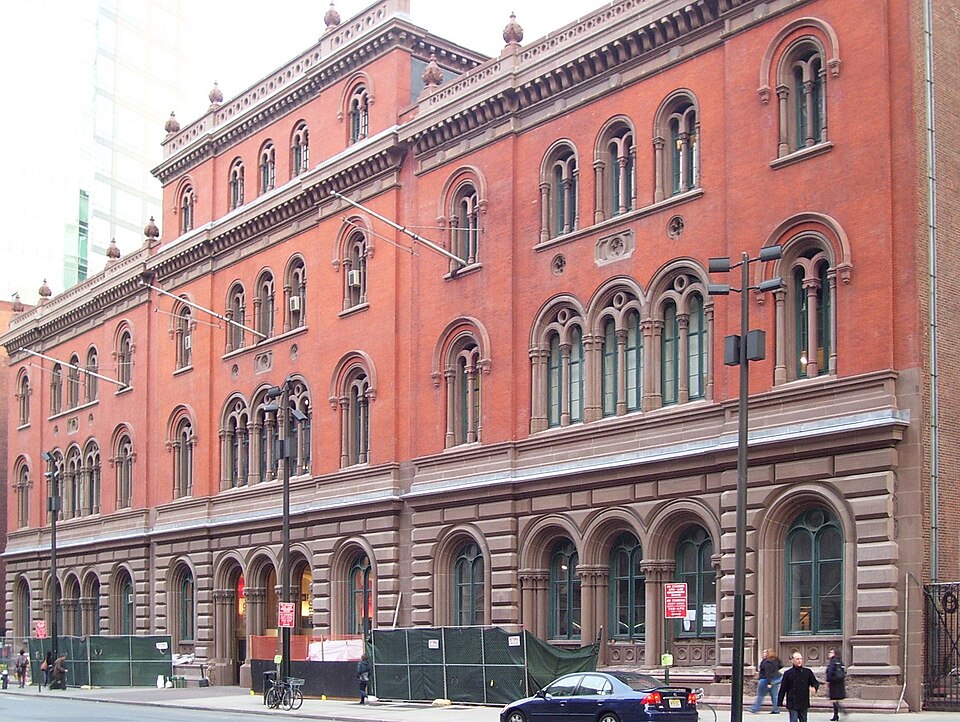
Full venue guide →Founded by Joseph Papp in 1967, The Public operates five stages in its landmark Lafayette Street building and is responsible for an outsized share of the most important American plays and musicals of the last sixty years. Hamilton started here before Broadway. So did A Chorus Line, Fun Home, and many others. Going to The Public is not just seeing a show — it is engaging with the institution that has done more to shape contemporary American theater than almost any other. Astor Place is a 20-minute subway ride from Times Square.
Full venue guide →One of Off-Broadway’s defining institutions, the Lortel has operated since the 1950s and remains one of the most respected venues in the city for serious playwriting. It sits on Christopher Street in the West Village, which means the neighborhood itself is a reason to make the trip: pre-show dinner on Bleecker Street or along the Hudson River waterfront, and a room that feels properly literary in a way that Midtown commercial venues do not. The Off-Broadway Lucille Lortel Awards are named for the theater’s founding patron.
Full venue guide →The Daryl Roth is housed in the former Union Square Savings Bank building — a distinctive space that has been used for flexible staging configurations, including productions that turn the room into an environment rather than a conventional proscenium setup. It is one of the stronger downtown Off-Broadway destinations for adventurous new work and has developed a reputation for productions that take physical risks with the theater space itself. Union Square has excellent transit connections and strong dining options in all directions.
Full venue guide →Founded in 1988 by Charlotte Moore and Ciaran O’Reilly, the Irish Rep has a specific and well-maintained identity: it produces Irish and Irish-American drama with a commitment and depth of understanding that generalist theaters cannot match. Its programming runs from Beckett and O’Casey to new Irish playwrights and American writers working in the tradition. The Chelsea location means a neighborhood with strong restaurant options before the show and a different feel from both the Times Square cluster and the downtown theater scene.
Full venue guide →Stage 42 is positioned on Theatre Row — the stretch of West 42nd Street between Ninth and Tenth Avenues that has developed as an Off-Broadway hub distinct from the Broadway Theater District two blocks east. At up to 499 seats, it is at the large end of the Off-Broadway scale and can accommodate the kind of production that needs more room than a typical Off-Broadway house provides. It has a well-regarded auditorium with good sightlines throughout. Close to Hell’s Kitchen dining and the Port Authority subway hub.
Full venue guide →The Theater Center operates multiple stages in Midtown, positioning itself as an Off-Broadway alternative within easy walking distance of the Broadway cluster. For visitors who want the convenience of a Times Square-adjacent location without committing to full Broadway prices or scale, it is one of the most practical options. Check current programming on the venue site for what is running during your visit.
Full venue guide →Off-Broadway by Neighborhood Zone
Where the venue sits shapes the full night — not just the theater, but the dinner before it, the drinks after it, and the transit getting there and back. These are the main Off-Broadway zones and what each one offers.
The most Midtown-convenient Off-Broadway zone. Westside Theatre and Stage 42 sit on Theater Row (West 43rd Street) and New World Stages is a few blocks north at 50th Street. Subway access is excellent — A, C, E to 42nd Street–Port Authority puts you at the center of this cluster. Ninth Avenue’s restaurant strip is the strongest pre-show dining corridor in this zone, and it is all walkable. For visitors staying in the Theater District or Times Square, this is the easiest Off-Broadway reach.
The Public Theater at 425 Lafayette Street is the defining anchor of this zone. The 6 train to Astor Place is the most direct connection from Midtown. The neighborhood has strong restaurant density along St. Mark’s Place, Lafayette Street, and the surrounding blocks. An evening at The Public feels distinctly different from a Midtown theater night — more literary, more downtown in pace and energy, and with the specific weight of knowing you are in the building that launched more significant American theater than almost anywhere else. Plan for 20–25 minutes of transit from Times Square.
Union Square is one of the best-connected transit hubs in Manhattan — the 4, 5, 6, L, N, Q, R, and W trains all stop here, which means you can get to Daryl Roth Theatre from almost anywhere without a transfer. The neighborhood has strong dining options across price points in every direction from the square. The Daryl Roth itself is in the former Union Square Savings Bank building, which gives the venue an architectural presence that most theaters do not have before you even reach the stage.
Christopher Street in the West Village is a deliberately different kind of theater night from anything Midtown offers. The 1 train to Christopher Street is the most direct connection. The surrounding neighborhood — Bleecker Street, the Hudson River waterfront, the brownstone blocks of the West Village — rewards arriving early and making the evening a neighborhood exploration rather than just a show. Dinner on Bleecker Street or along Hudson Street before a Lortel show is one of the better theatrical evenings you can design in New York.
The Irish Rep at 132 West 22nd Street sits in Chelsea, reachable by the C or E train to 23rd Street. Chelsea has strong restaurant options and a neighborhood feel that is calmer and more residential than Midtown without being as far downtown as the Village theaters. For visitors who want a clear artistic identity in their theater choice and a neighborhood that rewards the full evening, the Irish Rep in Chelsea delivers both.
Which Off-Broadway Venue Fits Your Night
Accessibility — What to Know Before Booking
Off-Broadway venue accessibility varies more than Broadway, and the differences matter significantly for visitors with mobility considerations. There is no single rule that applies across the category — each venue needs to be checked individually before purchase.
The Westside Theatre Upstairs — where Little Shop of Horrors plays — is not wheelchair accessible. Reaching the performance space requires 21 steps from street level, with nine additional steps to reach certain rows once inside, and two steps in the aisle at every row. There is no elevator. A wheelchair-accessible restroom is available at the lobby level (ground floor) only. Always verify accessibility details on the individual venue page or by contacting the venue directly before purchasing tickets.
New World Stages at 340 West 50th Street is generally wheelchair accessible. The Public Theater has multiple stages and accessible options; verify the specific stage and seating for the production you are attending. Stage 42 and The Theater Center are Midtown venues — verify current accessibility provisions directly. Daryl Roth, Lucille Lortel, and Irish Rep each have their own specific configurations that require individual verification.
The individual venue guides below include current accessibility details for each space. Always verify directly with the venue before finalizing plans where accessibility is a primary consideration.
Browse All Off-Broadway Venue Guides
Frequently Asked Questions
Off-Broadway is defined by seat count. A venue with between 100 and 499 seats in New York City qualifies as Off-Broadway. Theaters with fewer than 100 seats are Off-Off-Broadway; theaters with 500 or more seats in the Theater District are classified at the Broadway level. The category spans a wide range — from intimate 100-seat houses to New World Stages’ five-stage complex with individual stages up to 499 seats.
No — Off-Broadway is spread across Manhattan. The Midtown cluster (New World Stages, Westside Theatre, Stage 42, The Theater Center) is the closest to Times Square, but significant Off-Broadway venues are also in the East Village (The Public Theater), Union Square (Daryl Roth), the West Village (Lucille Lortel), and Chelsea (Irish Rep). Choosing between a Midtown Off-Broadway show and a downtown one involves planning the full evening differently.
New World Stages (340 West 50th Street), the Westside Theatre (407 West 43rd Street), Stage 42 (422 West 42nd Street), and The Theater Center (210 West 50th Street) are all within walking distance of Times Square hotels and the main Broadway Theater District. New World Stages and Stage 42 are the most logistically straightforward for visitors who want to minimize transit planning.
Yes — by definition. Off-Broadway venues seat between 100 and 499 people; Broadway houses range from around 500 to nearly 2,000. The practical effect is that Off-Broadway shows feel more intimate — you are closer to the performers, the room has a different energy, and the production design tends to work with the smaller scale rather than trying to fill a large house. For some shows and some audiences, that intimacy is the better experience.
No — accessibility varies significantly. New World Stages is generally accessible. The Westside Theatre Upstairs is not wheelchair accessible and requires substantial stair navigation. Other venues have their own specific configurations. Always check the individual venue guide or contact the venue directly before purchasing tickets if accessibility is a consideration for your visit.
New World Stages, the Westside Theatre, Stage 42, and The Theater Center are the most commercially oriented Off-Broadway venues — they tend to host long-running productions, shows that transferred from Broadway, and programming aimed at broad general audiences. The Public Theater, Lucille Lortel, Daryl Roth, and Irish Rep are more institutionally driven, with programming shaped by specific artistic missions rather than primarily commercial considerations.
How to Use This Guide
The most useful way to approach Off-Broadway planning is to start with venue zone and room type before you pick a show title. A night at New World Stages in Hell’s Kitchen, a night at The Public in Astor Place, and a night at the Lucille Lortel in the West Village are three fundamentally different evenings in three different parts of the city, and understanding that before you buy tickets makes the whole decision cleaner.
Use the venue cards above to orient yourself, then click through to the individual venue guides for full details on seating, accessibility, neighborhood, and current programming. For the broader Off-Broadway context — how it differs from Broadway and how to decide between them — the Off-Broadway hub and the Broadway vs. Off-Broadway guide are the right next stops. For show-specific planning, current Off-Broadway shows including Little Shop of Horrors at the Westside Theatre are covered in the individual show guides.