

Parking in NYC for Broadway, Concerts & Sports
A practical guide to parking in Manhattan and around NYC event venues — where to park, how to compare garages and costs, when to pre-book, and when transit is the better move.
Parking in New York City is not one decision — it’s three or four different decisions depending on where you’re going and what kind of night you’re having. Parking for a Broadway matinee in Midtown on a Saturday afternoon is a completely different situation from parking for a Knicks game at Madison Square Garden on a Tuesday night, which is again different from parking for a concert at a venue in a less transit-dense neighborhood. The right approach to each is different, and the answer to “should I drive?” shifts accordingly.
This page is the starting point. It covers the broad parking logic for Broadway, concerts, and sports, and routes you into the specific guide for the kind of event you’re planning. If you already know what you’re looking for, the section links above take you directly there.
If you’re searching broadly for parking in NYC, parking in Manhattan, or a Midtown parking garage before a show or game, the useful question is not simply which garage is closest. The better comparison is total price, walking distance, reservation window, vehicle restrictions, and how easily you can get out after the event. This guide focuses on that event-night decision; street-parking rules, alternate-side regulations, monthly parking, and parking-ticket issues are separate questions.
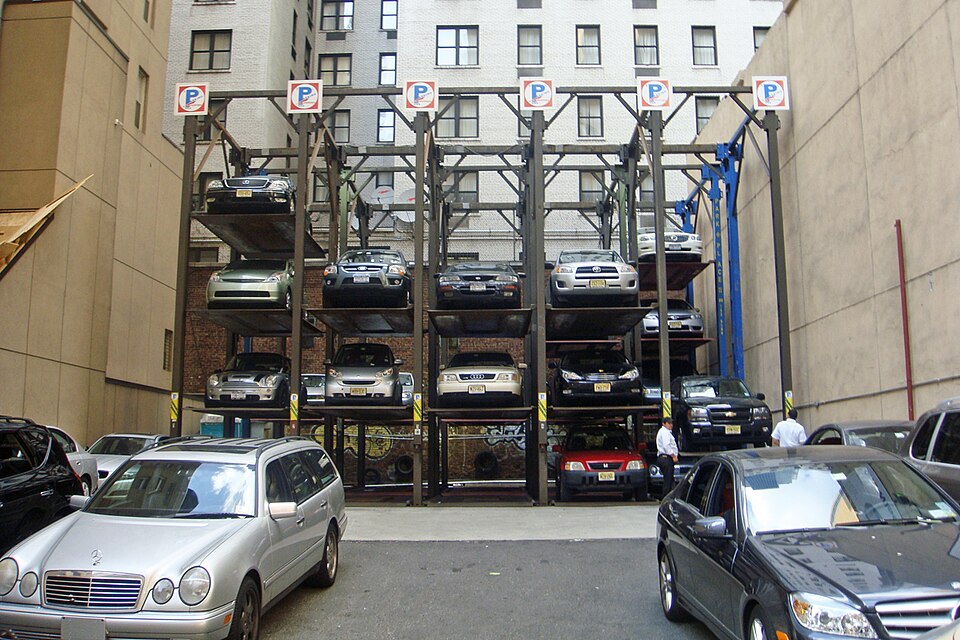
- Where to park in NYC for an event Start with garages within a comfortable walk of the venue, then widen the search by several blocks. In Midtown Manhattan, a slightly longer walk can give you more price and exit-route options than insisting on the closest garage.
- Parking for Broadway Garages exist throughout the Theater District, but rates vary by date, time, vehicle, and demand. Compare current reservation prices before you go rather than relying on a drive-up search. See the Broadway parking guide.
- Parking for concerts at MSG Madison Square Garden sits directly above Penn Station — transit is the intended access route. Driving is possible but the surrounding streets are among Midtown’s most congested on event nights.
- Parking for concerts at other venues Depends heavily on the venue and neighborhood. Outer-borough venues and those outside the transit-dense core are more driveable. Midtown and Manhattan venues generally are not.
- Parking for Knicks, Rangers, or Devils MSG (Knicks/Rangers) — transit strongly recommended. Prudential Center in Newark (Devils) — much more driveable, large adjacent garage.
- Driving makes the most sense when You’re coming from outer boroughs or suburbs, traveling with a group where transit cost approaches garage cost, or attending an event at a venue that’s difficult to reach by train.
- Transit beats driving when Your venue is directly subway-accessible (MSG, most Broadway theaters, Radio City), you’re going alone or as a couple, and the garage price is high relative to the group’s transit cost.
- Best pre-booking approach SpotHero and ParkWhiz both let you compare participating garages and reserve a space before arrival. Prices and savings vary, so compare the final rate, reservation hours, vehicle limits, and cancellation terms before booking.
Parking in NYC for an event: where to park and what to expect
For a Broadway show, concert, game, or full night out, most visitors searching for parking in NYC are really choosing between three approaches: reserve a Manhattan garage near the venue, park farther from the busiest blocks and walk or take a short transit connection, or leave the car outside the event district and use rail or subway for the final leg.
In Midtown, the closest garage is not automatically the best parking choice. A garage directly beside Times Square, a Broadway theater, or Madison Square Garden may be convenient before the event but slower to reach or exit when crowds let out. Comparing garages across a wider radius can reveal a better combination of price, walking distance, operating hours, vehicle clearance, and post-event route.
Search around the venue rather than only beside it. For theater nights, use the dedicated Broadway guide; for a destination centered on Times Square itself, use the Times Square parking guide.
MSG is directly above Penn Station, so parking competes with unusually strong subway and regional-rail access. Drive when it solves a real trip problem, not simply because a garage exists nearby.
Yankee Stadium and Citi Field have event parking options around the ballparks, which makes the decision different from a Midtown arena or theater.
There is no single best parking garage in Manhattan for every event. Match the reservation to your venue, arrival time, vehicle, walking tolerance, and route home.
For the two densest Midtown destinations in this guide, go directly to parking near Broadway or parking near Times Square for the more specific neighborhood strategy.
Parking for Broadway shows in NYC
Most Broadway theaters are concentrated in Midtown Manhattan from the low 40s through the low 50s, with the Vivian Beaumont Theater at Lincoln Center farther north. Most Broadway houses are within a short walk of a subway station or major Midtown transit hub. That’s the starting context for any Broadway parking decision: transit is not an afterthought here — it’s the infrastructure the neighborhood is built around.
That said, plenty of people drive to Broadway. Visitors staying outside the city, families with young children who don’t want the subway logistics, and groups coming from suburbs where a shared garage cost divides favorably across the car — all of these make driving a reasonable choice. The Broadway parking situation is manageable if approached correctly. It is not manageable if approached as an afterthought at 6:45 PM on a Saturday.
The core Broadway parking principles: garages are plentiful in the Theater District, but prices and availability change with the day, curtain time, vehicle, and demand. Reservation platforms such as SpotHero and ParkWhiz let you compare participating garages before you arrive. Search beyond the theater’s immediate block — including options west of the busiest Broadway and Times Square corridors — and compare the final price and reservation window rather than assuming the nearest garage is the best value.
The complete Broadway parking guide covers which garages work best for different theaters, how far in advance to book, what rates to expect by day and time, and how to structure the evening so parking doesn’t consume the pre-show window. It also covers the validated parking options that some Theater District restaurants offer.
Read the Broadway Parking Guide →Parking for concerts in NYC
Concert parking in New York is more venue-dependent than any other event type. The city’s major concert venues span a wide range of transit accessibility — from Madison Square Garden (directly above Penn Station, arguably the most transit-accessible arena in North America) to smaller and mid-sized venues in outer-borough neighborhoods where driving is often the more practical choice. There is no single answer to concert parking in New York because the venue changes the entire calculation.
Madison Square Garden
MSG sits at Seventh Avenue and 32nd Street, directly above Penn Station. The 1/2/3 and A/C/E trains serve 34th Street–Penn Station, while additional subway options are available nearby at 34th Street–Herald Square. For concerts at MSG, that transit access is a major advantage: driving means entering a busy Midtown corridor and then paying for a garage before you ever reach the arena. If you are coming from somewhere with easy subway or rail access, transit deserves serious consideration. If you are driving in from the suburbs or New Jersey and transit genuinely is not practical, compare garages north and west of MSG as well as the closest options rather than locking onto the arena’s immediate blocks.
Radio City Music Hall and Midtown venues
Radio City sits at Sixth Avenue and 50th Street — same dense Midtown transit zone as most Broadway theaters. The same logic applies: the B/D/F/M stop at 47–50th Streets Rockefeller Center is the right approach for most people. Driving to Radio City carries the same Midtown parking premium as driving to Broadway.
For garage-specific planning, use the dedicated Radio City Music Hall parking guide.
Outer-borough and off-the-grid venues
For concerts at venues outside the transit-dense core — certain Brooklyn and Queens venues, smaller Manhattan spots without direct subway adjacency — the calculus shifts. A venue that requires two transfers or a long walk from the nearest subway may be more practically reached by car, particularly late at night for the return trip. For these, checking venue-specific parking recommendations is the most useful step, and pre-booking a nearby garage through SpotHero remains the best tactical approach regardless of venue.
Concert parking changes dramatically by venue. Use the dedicated concert-parking guide to compare the driving and garage strategy for major NYC concert venues without turning this general parking hub into an all-venue directory.
Browse NYC Concert Parking →Parking for sports in NYC
Sports parking in the New York area divides sharply by venue — and notably, two of the region’s most popular sports teams play in arenas and stadiums that are much more driveable than anything in Midtown Manhattan.
Madison Square Garden — Knicks and Rangers
Same situation as MSG concerts: transit-first venue in the densest part of Midtown. The 1/2/3 to 34th Street Penn Station puts you directly at the arena entrance. For Knicks and Rangers games, transit is the default recommendation unless driving is genuinely necessary for your situation. When driving, the same pre-booking strategy applies — garages north of 34th Street on Eighth and Ninth Avenues book faster for Knicks and Rangers games than many Broadway shows due to the earlier event start times and higher in-market attendance.
Prudential Center — New Jersey Devils
The Prudential Center in Newark is the most driveable major sports venue serving the New York market. It has multiple nearby parking facilities and more than 3,500 parking spaces within two blocks, and Newark Penn Station is two blocks from the arena. For attendees coming from New Jersey or driving from outer boroughs, the Prudential Center is a straightforwardly driveable destination in a way that MSG is not.
Yankee Stadium and Citi Field
Both stadiums have parking options around the ballpark and strong transit access. Yankee Stadium is served by the 4 and D at 161st Street–Yankee Stadium, with B service available on weekdays; Citi Field is served by the 7 at Mets–Willets Point and by the LIRR. For high-demand games, arrive early and check the team’s current parking information before leaving. The Yankees direct drivers to City Parking for prepaid individual-game parking, while the Mets sell prepaid parking for selected games when available.
Parking works differently at stadiums with surrounding lots than at Midtown arenas. Use the sports-parking guide for venue-level parking and arrival planning, while team pages stay focused on tickets, schedules, matchups, and the game-day experience.
Browse NYC Sports Parking →A useful distinction: Sports events at venues with dedicated adjacent parking (Yankee Stadium, Citi Field, Prudential Center) behave differently from sports at arenas embedded in Midtown transit infrastructure (MSG). If the venue has its own lot, driving is more viable. If the venue is surrounded by Midtown commercial real estate, transit almost always wins on cost and stress.
NYC parking costs: what to budget for an event night
There is no single NYC parking rate that applies across Manhattan. Garage prices vary by neighborhood, date, arrival and exit time, vehicle size, special-event demand, and whether you reserve ahead. The useful comparison is the final price for the full reservation window, not a headline hourly rate that may not match the time you actually need.
For context, the MTA’s base subway fare is $3.00 per ride in 2026. That makes the parking-versus-transit calculation very different for one person than for a group splitting one garage bill. Compare the total cost for the whole party, then include the non-price factors: walking distance, traffic on arrival, garage exit time after the event, and whether the car actually helps with the rest of the night.
Pre-booking can be useful because it lets you see participating garage prices and secure a reservation before you enter the busiest blocks. It does not guarantee that every reserved rate is cheaper than every drive-up rate, and prices can change by date and demand.
Before paying, check the reservation’s start and end times, oversize-vehicle charges, height limits, in-and-out rules, cancellation terms, and the amount due. Those details can matter more than a small difference in the displayed base price.
How to find cheaper parking in NYC and Midtown Manhattan
If price matters, widen the search radius instead of looking only at the garage closest to the entrance. In Midtown, comparing garages several blocks away can produce more choices and may also make the drive out easier after a show or game. Search the full time window you need, compare the final total, and check whether an oversize fee applies to your vehicle.
Street parking can look like the cheapest option, but it is not a dependable event-night strategy for visitors who do not know the block. NYC curb rules vary by sign and location, and alternate-side regulations apply on many streets. Read every posted sign and check current NYC DOT/311 rules rather than assuming an open curb space is legal for the duration of the event.
When driving to an NYC event is actually worth it
The reflexive advice to “just take the subway” is correct for a lot of situations in New York — but not all of them. There are genuine cases where driving is the right call.
Groups of three or more from outside transit range. A garage bill divided across three or four people can become more competitive with individual rail or rideshare costs, especially for suburban visitors who would otherwise drive to a station, park there, and then pay additional fares. Do the group math using the actual garage quote and the actual transit route rather than assuming one option is automatically cheaper.
Families with young children. The subway at 11:00 PM after a Broadway show with two tired young children is a real logistical challenge. For families with children under ten, a car parked nearby — even at a premium — can be worth the cost for the post-show ease alone. Driving also removes the timing pressure that comes from show-night subway crowding on the 1/2/3 or A/C/E platforms immediately after Broadway curtains.
Venues that are genuinely hard to reach by transit. Some of New York’s most interesting concert and performance venues are not on direct subway lines. For events at venues where the transit option involves multiple connections, a long walk, or an uncomfortable late-night return route, driving is a practical rather than lazy choice.
Nights that extend deep into late-night service. NYC Transit normally operates 24 hours a day, but not every route runs around the clock and late-night service is less frequent. Planned work can also change routes. For a very late event, compare the specific return trip before deciding whether the car is worth having.
When parking in NYC is more trouble than it’s worth
Just as honestly: there are situations where driving into Manhattan for an event adds stress, cost, and time without adding corresponding value.
Saturday evening in the Theater District. Broadway curtains, Times Square traffic, restaurant arrivals, and pedestrian volume all converge in the same Midtown window. Driving in, reaching a garage, and getting parked before a 7:00 PM or 8:00 PM curtain requires more buffer time than many visitors expect. The subway avoids the garage search entirely; a rideshare avoids parking but can still be affected by street congestion.
Going alone or as a couple. The 2026 subway base fare is $3.00 per ride, so one subway trip for two adults is $6.00 and a simple round trip is $12.00 before any fare-cap effects. Compare that with the actual garage quote for your event. Unless the transit route is genuinely unworkable, small groups often have the strongest cost case for transit.
Events where the post-show plan is nearby. If you’re going to dinner after the show, staying in a Midtown hotel, or planning to walk around the neighborhood after the event, having a car parked in a garage adds a complication to the evening without solving a problem. It’s something you have to go back to rather than something that takes you somewhere.
Any event at Madison Square Garden with a workable transit option. MSG sits directly above Penn Station, with the 1/2/3 and A/C/E at 34th Street–Penn Station plus regional rail. If that network works for your trip, it removes the need to enter a garage at one of Midtown’s busiest event destinations.
The smaller the group, the harder it is for a Manhattan garage to compete with a $3 subway fare on cost alone. As the group gets larger, one shared parking bill can become more reasonable — especially when the trip starts outside the subway system.
That does not make driving automatically better. Use the current garage quote, transit fares for the full group, tolls where applicable, and the value of the post-event route to decide what the car is actually buying you.
How to choose the right NYC event parking strategy
A few questions that resolve most parking decisions quickly.
How are you getting to New York? If you’re driving from outside the city, the question is whether to park near the venue or leave the car at a rail station outside the busiest event district and take NJ Transit, LIRR, Metro-North, or the subway for the final leg. That park-and-ride approach can reduce Midtown driving, but parking availability and train schedules vary by station, so check the specific station before you commit.
How many people are in your group? Group size is the single most important cost variable. One or two people should default to transit unless there’s a strong reason not to. Three or more people start to make driving competitive on cost.
What time does your event end? Broadway shows typically end between 10:00 and 11:00 PM — a time when subway service is still frequent. Events that run past midnight, or events where the post-show plan extends well into the night, make having a car more useful.
Are you planning other stops? If the night includes dinner at a specific restaurant, a neighborhood walk, or a post-show drink at a place that’s not directly on a transit line, having a car gives you flexibility. If the plan is event and home, transit does that efficiently.
For Broadway specifically, the full Broadway transportation guide covers all options including subway, rideshare, and walking — the parking question only makes sense in the context of the full transit picture for the evening.
Browse parking guides by event type
Each event type has its own parking logic, venue geography, and booking strategy. The guides below go deeper on each.
Frequently asked questions
It depends on your group size, route, and the current garage quote. For one or two people with easy subway access, the $3-per-ride subway fare usually gives transit a strong cost advantage. For a family or group coming from outside the subway system, splitting one garage bill may be more competitive. The Theater District has many garages, and reservation platforms let you compare participating facilities before arrival. The full picture is in the Broadway parking guide.
It depends almost entirely on the venue. For Madison Square Garden and Radio City Music Hall — both in dense Midtown with strong subway access — transit deserves serious consideration. For outer-borough venues or smaller spaces without a direct transit connection, driving may be more practical. If you decide to drive, compare participating garages before the event and check the reservation hours, vehicle restrictions, and final price rather than relying on a drive-up search.
At some venues, yes — significantly. Yankee Stadium, Citi Field, and the Prudential Center in Newark all have adjacent stadium parking and are in neighborhoods where driving is more manageable than Midtown. Madison Square Garden is the exception: it sits in the heart of Midtown with no dedicated parking structure, and driving to a Knicks or Rangers game carries the same congestion and garage-cost challenges as driving to a Broadway show. The venue matters much more than the sport.
The best place to park is usually a garage that balances walking distance, total price, reservation hours, vehicle limits, and the route you want to take after the event. In Midtown Manhattan, compare garages across several blocks instead of choosing the closest garage by default. For Broadway, MSG, Times Square, Radio City, and other major destinations, use the dedicated venue or neighborhood parking guide when available.
There is no single NYC parking rate. Manhattan garage prices vary by location, day, time, vehicle size, event demand, and reservation window. Compare the final total for the entire period you need and check for oversize-vehicle charges or other restrictions before booking.
If the car will stay parked for most of the day, search for a garage that covers your full arrival-to-departure window rather than stacking short reservations. Compare Midtown and nearby options based on where the rest of your day is happening. If you are driving from outside the city, also compare parking at a rail station and taking transit for the final leg.
Yes. Depending on where you are coming from, parking at a station served by NJ Transit, LIRR, or Metro-North and riding into Manhattan can avoid the most congested part of the drive. Parking rules, capacity, and train schedules vary by station, so check the specific station before leaving home.
Transit wins for one or two people attending events at venues with direct subway access — it’s cheaper, removes parking logistics, and in Midtown is often faster than driving the final mile. Driving wins for groups of three or more, visitors coming from outside the subway’s practical range, families with young children who need the post-show convenience, and events at venues that are awkward to reach by transit. The honest answer is that New York’s subway system handles Midtown and the major arenas very well — which is why the “just drive” instinct often costs more in time and money than it saves.
Parking in New York for an event night is neither the disaster people expect nor the easy solve some visitors assume. Broadway, concerts, and sports each have their own venue geography, transit access, and parking economics — and the right strategy for each is different.
The consistent principles across all three: pre-book rather than drive up, consider transit seriously if the venue has good subway access, and do the group-size math before committing either way. The specific guides below go deeper on each event type, including which garages work best, what rates to expect, and how to build parking into the evening without it becoming the evening.
Browse NYC Parking Planning
Use these guides to move from broad NYC parking strategy into Broadway, concert, sports, and transportation pages that help you figure out whether driving actually fits the kind of event night you are planning.