

How to Get to Yankee Stadium
Subway, Metro-North, driving, and rideshare — which way works for where you’re coming from, and how to handle the trip home after the game.
Yankee Stadium is one of the most transit-friendly major sports venues in the United States. The subway station literally shares its name with the stadium — 161st Street–Yankee Stadium — and puts you steps from the gate. Metro-North Railroad runs dedicated game-day trains from Westchester, Connecticut, and the Hudson Valley directly to a station across the street. For visitors coming from Manhattan, the Bronx, or the inner suburbs, this is a stadium you do not need a car to reach, and in most cases you are better off without one.
That said, getting there is not exactly the same from every starting point. A game night trip from Midtown Manhattan looks nothing like getting there from Connecticut, and the return journey — the part most people underplan — operates under different logic depending on whether you take the subway or Metro-North, and on how quickly you want to leave after the final out. This guide covers the full picture: the right route for where you are coming from, and how to think about getting home before you get there.
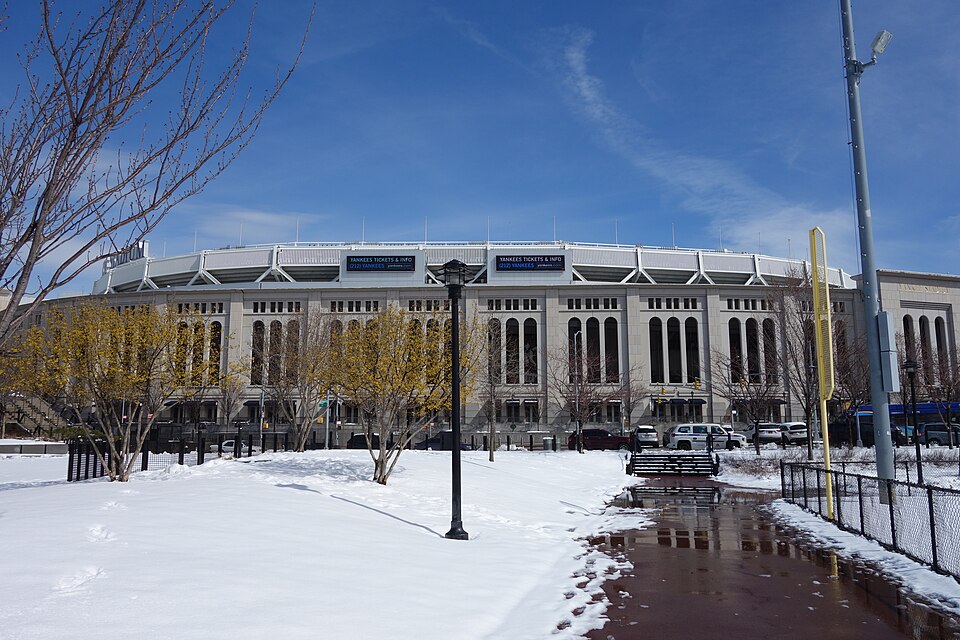
Street-level arrival view of Yankee Stadium from 161st Street in the Bronx.
Unlike MetLife Stadium across the river, Yankee Stadium sits inside New York City, directly above a subway station served at all times by the 4 train and the D. Metro-North delivers fans from the suburbs to a station across the street. For most people attending a Yankees game or event here, the question is not whether to take transit — it is which transit option matches their starting point.
Getting to Yankee Stadium — By Where You’re Starting
The most useful framing for Yankee Stadium transportation is not “which line goes there” but “which approach works for my starting point.” Here is the practical answer for each major origin.
The subway is the default and correct choice from virtually anywhere in Manhattan. The 4 train runs from the East Side (Grand Central, 86th Street, Brooklyn Bridge, Bowling Green) directly to 161st Street–Yankee Stadium at all times — no transfers, no complexity. From Midtown, it takes around 25–30 minutes. From the Upper East Side, less. From Lower Manhattan, slightly more.
From the West Side or areas near 6th Avenue, the D train is your route — running from the Village, Herald Square (34th Street), and 59th Street–Columbus Circle north through the Bronx, stopping at 161st Street at all times (except rush-hour express runs in the peak direction, though the D typically stops on game days). From Herald Square on the D, it is roughly 25 minutes.
The B train is an option on weekdays only — same D train tracks, useful during weekday afternoon or early evening games for riders on the Sixth Avenue corridor.
From Brooklyn, the D train is your most direct route. It runs from Coney Island through Bay Ridge-adjacent neighborhoods, across to Midtown on 6th Avenue, and continues all the way to 161st Street in the Bronx on the same line — no transfer needed. From Downtown Brooklyn (DeKalb Ave, Atlantic Ave), the ride is roughly 45–50 minutes. From further south in Brooklyn, budget an hour or more.
An alternative from parts of Brooklyn near the 4 train: take the 4 to the Bronx directly. From Borough Hall in Downtown Brooklyn, the 4 runs through Manhattan and up to 161st Street. Either way, the D is typically the simpler option for most Brooklyn starting points since it goes directly without worrying about transfers.
From most of Queens, the cleanest path is reaching the 4 train and riding it to 161st Street. From Long Island City or Astoria, this involves a connecting subway (N/W to transfer to 4, or 7 to Times Square to transfer). From Jamaica or the LIRR corridor, arriving at Grand Central Madison via LIRR and then taking the 4 train (or Metro-North Hudson shuttle) from Grand Central is a smooth option for a single-ticket trip.
Queens is generally a transit-manageable trip but adds a transfer that Manhattan riders do not face. Budget an additional 20–30 minutes over Manhattan trip times depending on starting neighborhood and connection timing.
If you are already in the Bronx, you may be the most fortunate Yankee Stadium visitor. The 4 train serves the Jerome Avenue corridor through the Bronx and stops at 161st Street. The D runs up the Grand Concourse. Depending on where you are in the Bronx, you may be on the same bus route that stops at 161st Street and River Avenue (Bx6, Bx13 stop right at the stadium; Bx1 and Bx2 stop at 161st and the Grand Concourse, a few blocks walk). Some Bronx neighborhoods are close enough for the trip to take under 15 minutes.
If you are coming from Westchester or the Hudson Valley, Metro-North is not just a convenient option — it is frequently the best option in the entire Yankee Stadium transportation landscape. The Yankee Clipper trains run for all evening and weekend games, providing one-seat rides from stations on the Hudson Line (Tarrytown, Ossining, Croton-Harmon, Poughkeepsie) and the Harlem Line (White Plains, Scarsdale, Bronxville, Mount Vernon, and points north through Southeast) directly to Yankees–East 153rd Street station, which is across the street from the stadium.
The ride from White Plains on the Harlem Line is roughly 30–35 minutes. From Croton-Harmon on the Hudson Line, it is under an hour. Post-game, Metro-North runs trains in the other direction after the last out, timed to let you get home without sitting on a platform for 45 minutes. This is a meaningfully better return journey than driving and dealing with post-game Bronx traffic.
Connecticut fans have one of the better transit deals going for Yankee Stadium nights. The New Haven Line Yankee Clipper runs for all evening and weekend games, with direct service from New Haven, Bridgeport, Stamford, Greenwich, New Rochelle, and stations in between — all the way to Yankees–East 153rd Street without a transfer. From Stamford, the ride is roughly 45–50 minutes. From New Haven, plan for just over an hour.
For weekday afternoon games (which do not have Yankee Clipper service), take any New Haven Line train to Harlem-125th Street station and transfer to the shuttle for the 5-minute ride to the stadium. The off-peak fare structure at Yankees-E 153rd Street applies to most Metro-North trips to the stadium, which keeps costs reasonable. Use the MTA TrainTime app for exact fares and schedules.
There is no direct rail service from New Jersey to Yankee Stadium. The practical path from most of New Jersey is NJ Transit to Penn Station New York, then the subway north. From Penn Station, the D train at Herald Square (one block east on 6th Avenue, or use the underground concourse connection) goes directly to 161st Street without transfers. The 4 train is also accessible from Penn Station via the underground passages to the 1/2/3 and onward to transfer, but the D from Herald Square is generally the simpler option.
From Jersey City or Hoboken, the PATH train to 33rd Street connects to the D at Herald Square for the direct ride. The WTC PATH branch ends near the 4 train at Fulton Street — another option for the East Side route.
Total trip time from most of New Jersey runs around 60–75 minutes depending on NJ Transit connection and subway timing. For Bergen County travelers, some NJ Transit Interstate Bus Lines connect to the George Washington Bridge Bus Station at 178th Street and Broadway, where the Bx13 bus can take you directly to the stadium — a less common but viable option depending on where you’re starting.
Long Island fans now have a strong option via LIRR to Grand Central Madison, where they can connect directly to Metro-North shuttle trains to Yankees–East 153rd Street, or take the 4 train from Grand Central. The LIRR-to-Metro-North Hudson shuttle connection at Grand Central is a particularly clean one-ticket option that the MTA has promoted — buy a single ticket from your LIRR station to Yankees-E 153rd Street using the MTA TrainTime app. From most of Long Island, total trip time runs 60–90 minutes.
Taking the Subway to Yankee Stadium
The 4 train and the D train are the two subway lines that put you at the front door of Yankee Stadium. The station — 161st Street–Yankee Stadium — is one of the busiest in the Bronx precisely because it is purpose-built for stadium access, with extra stairs, a wider mezzanine, and elevated NYPD presence before and after games.
The 4 train — East Side express, all times
The 4 runs from Utica Avenue in Brooklyn through Manhattan’s East Side (Wall Street, Fulton Street, Grand Central, 86th Street, 125th Street) and up through the Bronx, stopping at 161st Street at all times. It is the most reliable Yankee Stadium subway line — it never skips the station, it runs 24/7, and during game days it runs with increased frequency. If you are anywhere near the East Side or can easily reach a 4 train stop, this is your line.
The D train — 6th Avenue line, game-day reliable
The D runs the full length of 6th Avenue from Coney Island through Brooklyn and Manhattan (DeKalb, Atlantic, Herald Square, 47th-50th Rockefeller Center, 59th-Columbus Circle) and north through the Bronx to Norwood-205th Street, stopping at 161st Street. During rush hours in the peak direction, the D runs express and may skip 161st Street on non-event days — but on game days the express D typically stops at the stadium. If you are planning a weekday game and taking the D, verify current service status before you go rather than assuming express trains will stop.
The B train — weekdays only
The B train uses the same D train tracks and stops at 161st Street, but only during weekday service (not evenings or weekends). For Monday through Friday afternoon or early evening games, it is an additional useful option for riders on the 6th Avenue corridor. For weekend games, do not rely on the B.
On sellout game nights, the 4 train platforms at 161st Street can be genuinely crowded both arriving and departing. Arriving: trains in the 60–90 minutes before first pitch see the heaviest incoming traffic. The multiple staircases and wide platforms help, but expect crowds. Departing: the rush is immediate after the game — particularly on weeknights when the subway is the primary option. The tip that experienced fans know: staying for the last inning (even a blowout) and giving the initial crush 15–20 minutes to clear before heading to the platform makes the ride home notably smoother.
The 161st Street station — what to know
The station complex connects two separate subway systems: the underground IND Concourse Line (serving the B and D) and the elevated IRT Jerome Avenue Line (serving the 4). They share a mezzanine and fare control, so a single fare covers both regardless of which train you take. The station is ADA-accessible — the primary street-level elevator is at the northeast corner of 161st Street and River Avenue. See the accessibility section below for more detail on current elevator status.
Metro-North to Yankee Stadium — The Yankee Clipper
Metro-North’s Yankee Clipper service is one of the most thoughtfully designed fan-transit systems in American sports. For evening and weekend games, dedicated trains run from stations on three lines — Hudson, Harlem, and New Haven — directly to Yankees–East 153rd Street station, which sits across the street from the stadium’s Gate 4 entrance. The ride from Grand Central to the stadium is approximately 15 minutes. From White Plains, about 30–35 minutes. The Yankee Clipper trains are timed to arrive at least 45 minutes before first pitch and depart after the last out.
Who should use Metro-North
If you are coming from Westchester, Connecticut, or anywhere along the Hudson, Harlem, or New Haven Lines, Metro-North is almost certainly your best option for getting to a Yankees game. It is faster than driving once you factor in Bronx traffic and parking, significantly cheaper than rideshare for suburban distances, and the return trip is pre-organized — trains run specifically to bring fans home, which is more than rideshare can reliably promise on a Friday night in the Bronx.
Long Island fans using Grand Central Madison can also connect to Metro-North service from Grand Central with a single through-ticket — this has become meaningfully easier since Grand Central Madison opened and deserves more use than it currently gets.
The three-line system
The Hudson Line runs direct Yankee Clipper service from Poughkeepsie, Kingston Road, and stations south including Croton-Harmon, Ossining, Tarrytown, and Yonkers. On game days, all Hudson Line trains make an extra stop at Yankees–East 153rd Street. The Harlem Line runs Yankee Clippers from Southeast through Brewster, Mount Kisco, Chappaqua, North White Plains, White Plains, Hartsdale, Scarsdale, Crestwood, and Bronxville. The New Haven Line runs from New Haven through West Haven, Milford, Bridgeport, Fairfield, Westport, South Norwalk, Darien, Stamford, Greenwich, Rye, Larchmont, and New Rochelle.
For weekday afternoon games (the Yankee Clipper does not run for 1 p.m. weekday games or NYCFC games), any Harlem or New Haven Line train to Harlem-125th Street connects to shuttle trains — which run before, during, and after all games — for the 5-minute trip to the stadium. The shuttle provides service every 15–20 minutes on average beginning two hours before the game.
Here is the part most suburban fans do not fully appreciate until they use it: Metro-North runs trains home after the game. The post-game trains are timed to depart after the last out, and there are multiple departures to multiple destinations. Compare that to the post-game rideshare situation in the Bronx — where you are competing with tens of thousands of other people for cars that are not there — and the Metro-North option looks considerably better. If you are coming from the suburbs and have a Metro-North station near you, the round-trip train is almost always the right call.
Tickets and fares
Off-peak fares apply for most travel to and from Yankees–East 153rd Street, which makes the trip affordable. Buy tickets in advance through the MTA TrainTime app or at station ticket machines. Keep your ticket — ticket agents check at Yankees-E 153rd St station, both arriving and departing. The single-ticket system means one ticket covers the full trip if you are connecting from another Metro-North line at Harlem-125th Street.
Driving and Rideshare to Yankee Stadium
Driving to Yankee Stadium works — but it is rarely the best option for most visitors, and it is genuinely the worst option for some. Understanding when it makes sense requires being honest about the Bronx on game nights.
When driving makes sense
Driving makes the most practical sense when: you are coming from a location with no usable transit connection to the Bronx; you are traveling with a large group where the per-person parking cost becomes competitive with multiple transit fares; you have a disability or mobility need that makes transit impractical; or you have pre-arranged parking and are planning to leave before the final out to get ahead of post-game traffic.
The traffic reality
The stadium sits in the South Bronx at the intersection of the Major Deegan Expressway (I-87), the Cross Bronx Expressway (I-95), and several major local arterials. On game nights — particularly Thursday through Saturday evening games — the Bronx road network around the stadium is under significant pressure for an hour before and an hour after the final out. Parking is managed by City Parking, the official parking operator; prepaid individual-game parking is available through their site. See the parking near Yankee Stadium guide for full lot-by-lot details and pricing.
Rideshare — arrival is fine, departure is the problem
Arriving by Uber or Lyft for a Yankees game is generally manageable. The stadium has designated rideshare drop-off areas, and getting there 90 minutes before first pitch keeps you ahead of the arrival surge. The departure situation is different. After a game, 40,000-plus fans are all requesting rides simultaneously. Surge pricing is common, wait times are long, and the pickup situation outside a stadium in the Bronx after a night game is not the same as hailing a cab in Midtown. If rideshare is your plan, either commit to leaving early — before the final out — or plan for a 30–45 minute wait after the game while prices settle and the crowds thin.
The combination that works well for some visitors: rideshare to the stadium, subway home. It avoids the post-game rideshare problem entirely, and the subway from 161st Street runs until late into the night.
Leaving Yankee Stadium — The Part Most People Underplan
Getting to Yankee Stadium is easy. Getting home after a sold-out weeknight game without standing on a subway platform for 25 minutes in a crowd takes a bit more thought.
The subway crowds after games
The 4 train platform at 161st Street fills up immediately after the final out, particularly after weeknight games. The trains come frequently — especially on game nights when MTA typically runs enhanced service — but you will likely be waiting with a lot of company. The tip experienced fans use: stay in your seat through the final inning (especially if the game is close or the stadium is full), wait 15–20 minutes after the last out while the initial rush clears, then make your way to the platform. The crowds thin quickly once the initial wave moves through, and the second or third train out is considerably more comfortable than the first.
Metro-North after games — use it
Post-game Metro-North service is one of the best and most underused features of getting to a Yankees game from the suburbs. Yankee Clipper trains depart after the final out with multiple destination options — timing is designed so you do not wait long. Check the MTA TrainTime app before the game to know which post-game train fits your schedule, and exit through the Gate 4 / East 153rd Street side of the stadium to reach Yankees–East 153rd Street station. Keep your return ticket; agents check at the station.
If you drove — leave before the ninth
The honest advice for drivers: if the game is not close, leave for the parking lot before the final out. The post-game egress on the Major Deegan and local streets is significantly worse for the first 30–45 minutes after the game ends than it is during the last inning. Departing during the eighth or early ninth of a non-competitive game gets you moving before the mass exodus. If the game is tight and you need to see the finish, accept that you’ll be in the lot for a while and plan accordingly.
Post-game rideshare — patience is the strategy
If you arrived by rideshare and are getting home the same way: do not request a car the second the final out happens. Surge pricing peaks in the 5–15 minutes immediately after the game as tens of thousands of people all open their apps at once. Walk to a bar or restaurant near the stadium (the Arthur Avenue area a short distance east is a solid option), wait 20–30 minutes, and prices will be significantly lower and availability meaningfully better. The extra 30 minutes and a drink are worth it.
Accessible Transit to Yankee Stadium
The 161st Street–Yankee Stadium subway station is ADA-accessible, with elevators connecting street level to both the underground IND platforms (B/D trains) and the elevated IRT platform (4 train). The primary street-level elevator entrance is at the northeast corner of 161st Street and River Avenue.
The MTA has been replacing five elevators at the 161st Street–Yankee Stadium station as part of an ongoing accessibility improvement project. As of early April 2026, elevator replacement work was ongoing, with some lifts operational and some still being replaced. Always check the MTA’s Elevator and Escalator Status page at mta.info before traveling for current operational status of specific elevators at this station. Planned accessibility trips should be verified on the day of travel.
The Yankees–East 153rd Street Metro-North station is also accessible. The MTA confirms the Metro-North trip to Yankee Stadium as an accessible trip. For paratransit, MTA Access-A-Ride provides service to Yankee Stadium — contact 877-337-2017 or book via the MTA app, indicating drop-off at the Yankee Stadium AAR Bus Stop.
Inside the stadium, Yankee Stadium has accessible seating at multiple levels with elevator access throughout. Contact the Yankees ticket office at 877-469-9849 for accessible seating purchases for non-NFL events, or visit the Yankees official site for accessibility information.
Connecting Transportation to the Full Yankee Stadium Night
How you get there shapes everything else about the evening — where you eat before the game, whether parking is even a consideration, and how much of the night you have left after the final out. These pages connect the transit decision to the rest of the plan.
For parking logistics if you are driving, the parking near Yankee Stadium guide covers the official City Parking lots, pricing, lot positions, and how to book in advance. For where to eat before the game — including the Arthur Avenue neighborhood that sits within walking distance and the pre-game dining options for transit riders who want dinner without driving — see the restaurants near Yankee Stadium guide. If you are making an overnight trip, the hotels near Yankee Stadium guide covers options from the Bronx to nearby Manhattan neighborhoods.
For the broader transportation hub and other NYC venue guides, the NYC Night Out transportation hub connects all of the site’s transit pages.
Frequently Asked Questions
The 4 train (East Side) and the D train (Sixth Avenue) both stop at 161st Street–Yankee Stadium, which is directly adjacent to the stadium. The 4 runs at all times. The D runs at all times except in the peak rush-hour express direction on non-event days — on game days, express D trains typically stop at the stadium. The B train also stops there on weekdays only. The 4 is generally the most reliable choice for the widest range of Manhattan starting points.
Yes — and for visitors coming from Westchester or Connecticut, it is often the best option. Metro-North’s Yankee Clipper trains run directly to Yankees–East 153rd Street station (across the street from the stadium) from stations on the Hudson, Harlem, and New Haven Lines for all evening and weekend games. Shuttle trains between Grand Central, Harlem-125th Street, and Yankees-E 153rd Street run for all games, including weekday afternoon games. The ride from Grand Central is about 15 minutes. Check the MTA TrainTime app for schedules and fares.
For most visitors, the train is better. Yankee Stadium’s subway station is steps from the entrance, Metro-North delivers suburban fans to a station across the street, and post-game driving through the South Bronx involves real traffic delays. Driving makes sense when you are coming from an area with no practical transit connection, traveling with a large group, or have a specific reason that makes transit impractical. For the majority of fans coming from Manhattan, the city’s boroughs, Westchester, or Connecticut, transit is faster and less stressful than driving.
By subway: the 4 train is crowded immediately after the game. Waiting 15–20 minutes for the initial rush to clear makes the return trip significantly more comfortable. By Metro-North: post-game trains run specifically for fans and are well-timed — this is often the smoothest post-game exit for suburban visitors. By rideshare: surge pricing peaks in the first 15 minutes after the game; waiting 20–30 minutes reduces both price and wait time. By car: leave before the ninth inning if the game is not close, or plan for 30–45 minutes in the lot before traffic clears.
Take NJ Transit rail to Penn Station New York, then walk one block east to Herald Square for the D train to 161st Street–Yankee Stadium. From Jersey City or Hoboken, the PATH train to 33rd Street connects to the same D train at Herald Square. From Bergen County, some NJ Transit Interstate Bus Lines to the George Washington Bridge Bus Station connect to the Bx13 bus to 161st Street. Total trip time from most of New Jersey is 60–75 minutes. There is no direct rail service from New Jersey to Yankee Stadium — a Manhattan transit connection is required.
Yes. The 161st Street–Yankee Stadium station is ADA-accessible with elevators connecting street level to both the 4 train (elevated IRT platform) and the B/D trains (underground IND platforms). The primary accessible entrance is the elevator at the northeast corner of 161st Street and River Avenue. Elevator replacement work was ongoing as of early 2026 — always check the MTA’s Elevator and Escalator Status page on the day of travel for current operational status of specific elevators. MTA Access-A-Ride paratransit also serves Yankee Stadium directly.
By subway (4 train), Grand Central to 161st Street–Yankee Stadium takes approximately 25–30 minutes with no transfer. By Metro-North shuttle, Grand Central Terminal to Yankees–East 153rd Street station takes about 15 minutes. Both are excellent options from Grand Central; the Metro-North shuttle is faster but requires a separate Metro-North ticket purchase rather than a standard subway fare.
Getting to Yankee Stadium Is Easier Than You Think
Yankee Stadium is as transit-accessible as any major sports venue in the country. The subway is direct. Metro-North is fast, comfortable, and handles the return trip better than any alternative for suburban visitors. Driving works when it needs to, but it is the exception rather than the rule for a venue that is this well served by rail.
The one thing worth planning in advance is the trip home. Know your return option before the game starts — whether that is which subway train you will take, which Metro-North departure fits your schedule, or how long you are willing to wait for rideshare prices to settle. That 10 minutes of planning before first pitch saves 30 minutes of frustration after the final out.