

NYC Football Tickets & NFL Guide:
Giants, Jets & MetLife Stadium
Compare NYC football tickets for Giants and Jets games, then plan the right MetLife Stadium matchup, seats, transit, parking, tailgating and game day.
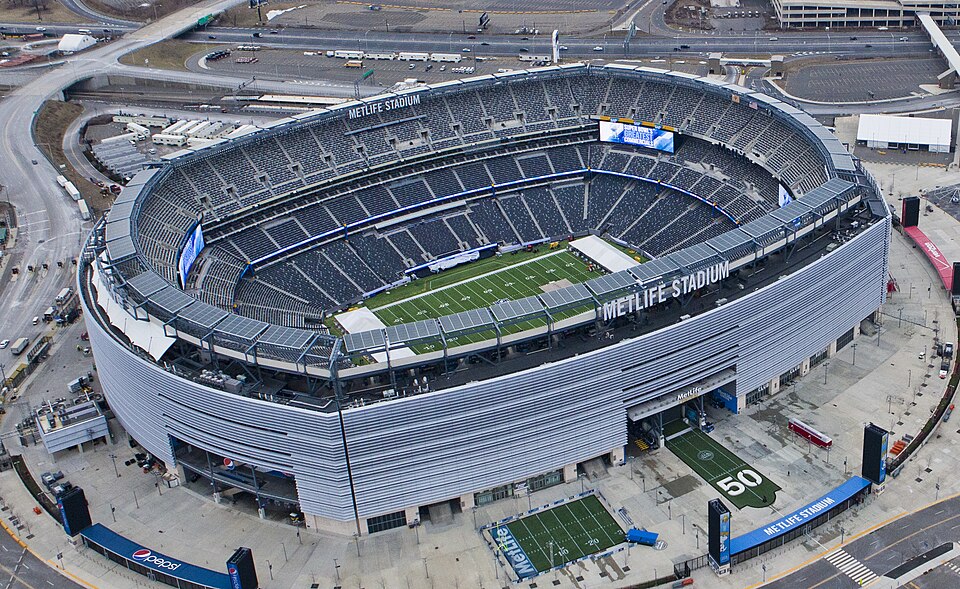
MetLife Stadium in East Rutherford, New Jersey is the home of the New York Giants and New York Jets. If you’re searching for NYC football tickets, NFL tickets NYC, NFL tickets New York, football tickets NYC, or American football tickets New York, the first decision is which team’s home game fits your dates and budget. The stadium and game-day logistics are shared; the schedules, opponents, team identity and ticket markets are different.
This is the broad New York-area NFL hub. It helps you compare Giants and Jets football, choose a home game, understand MetLife Stadium, and plan transit, parking and tailgating. Team-specific ticket intent belongs on the dedicated Giants and Jets pages, while detailed seat-selection intent belongs on the MetLife Stadium seating guide.
NYC Football Tickets: Giants vs. Jets NFL Games
NYC football tickets is the broad commercial-intent query for visitors who know they want an NFL game near New York but have not yet chosen the Giants or Jets. Both teams play at MetLife Stadium in East Rutherford, so the cleanest way to shop is to compare the two home schedules first, then move to the team page for the exact matchup and ticket type.
The broad hub should not compete with those team pages for searches such as “New York Giants tickets” or “New York Jets tickets.” Instead, this page answers the earlier decision: which New York-area NFL game should I attend, and what do I need to know before I buy?
Generic “New York football” searches can overlap with New York City FC. This guide is specifically about American football and NFL games — the Giants and Jets at MetLife Stadium.
Quick Chooser: Start Here
For a first NFL visit, start with the matchup, kickoff time, weather window and seat options rather than assuming one team is automatically the better choice. Both teams use the same stadium and core game-day logistics.
Tailgating is one of the defining features of the MetLife game-day experience for both the Giants and Jets. The parking lots open approximately three hours before kickoff. Tailgating is not a feature you need to choose a team for — it happens across the lots regardless of who’s playing.
Ticket prices change by opponent, date, kickoff time and demand. Compare Giants and Jets home games that fit your trip rather than assuming one team is always cheaper.
NFL games at MetLife run 3+ hours and end late. For families with younger children, afternoon start times in September and early October — before cold weather sets in — are the most manageable option. Check the specific game time before booking; prime-time games can end after 11pm.
MetLife Stadium hosted the 2026 FIFA World Cup Final, where Spain beat Argentina 1–0 after extra time. It is now historical context for the venue, not an upcoming ticket option.
Parking at MetLife requires a pre-purchased pass for preferred lots — arriving without one directs you to off-site cash or credit parking at $65. The lots open three hours before kickoff. Traffic exiting the stadium is historically slow; building in 60–90 minutes post-game is realistic planning.
Giants vs Jets: The Honest Comparison
Both teams play in the same stadium, which means the game-day logistics — transit, tailgating, parking, arrival time — are identical regardless of which team you’re seeing. Searches for giants vs jets tickets, jets giants tickets, giants and jets tickets, or jets v giants tickets are really asking the difference between jets and giants as franchises, not which ticket is cheaper — the choice is about team identity, fan culture, and what kind of football narrative you want to follow in 2026. New york football game tickets searches show up for both teams equally, since the phrase itself doesn’t specify a side. (One dated note: jets giants preseason tickets was a real search when the two teams met in preseason on August 28 — that game has already been played, so it’s not something to plan a trip around now.) And no, do the giants ever play the jets is a fair question: they don’t meet in the 2026 regular season, so this isn’t a head-to-head pick — it’s two separate home schedules to compare for your dates.
New York is unusual in having two NFL teams sharing one building — a detail behind a lot of “3 nfl teams in new york” confusion (there are two, the Giants and Jets; the third search hit is usually someone conflating the Bills or Patriots as regional teams). Neither team is objectively “the New York team” the way, say, the Cowboys are Dallas’s team — the difference between New York Giants and Jets is entirely about which era, fan base, and price point fits your visit.
When a Giants game fits your trip
The Giants are in their first season under head coach John Harbaugh, who was named to the job on January 20, 2026. For ticket planning, the useful distinction is the Giants’ NFC schedule and home matchups rather than broad judgments about which New York team is “better.” Use the Giants ticket guide for the current schedule, matchup demand, ticket types and MetLife planning specific to Giants home games.
When a Jets game fits your trip
The Jets are in year two under head coach Aaron Glenn. Their AFC East schedule creates a different set of home opponents and ticket-demand patterns from the Giants. Use the Jets ticket guide for the current schedule, Patriots/Bills/Dolphins matchups, ticket types and MetLife planning specific to Jets home games.
MetLife Stadium: What You Need to Know
MetLife Stadium opened in 2010 as one of the most expensive stadiums ever built — the Giants and Jets each contributed half the $1.6 billion construction cost with no public funding. It holds 82,500 for football and soccer, making it the third-largest NFL stadium by capacity. The exterior LED panels that wrap the building change color between blue (Giants games) and green (Jets games) — the most visible reminder that this is a two-tenant facility even as you approach on the highway.
The stadium sits in the Meadowlands Sports Complex in East Rutherford, New Jersey, adjacent to the former site of Giants Stadium, the American Dream entertainment mall, and the Meadowlands Racetrack. It is 8 miles west of Midtown Manhattan and not directly accessible by New York City subway — a detail that trips up more visitors than any other aspect of planning a MetLife game day.
The New York City subway does NOT serve MetLife Stadium. There is no subway line that crosses into New Jersey. Getting to MetLife from Manhattan requires NJ Transit trains from Penn Station to Secaucus Junction, then a transfer to a shuttle train to Meadowlands Station — or a bus from Port Authority Bus Terminal. Plan the transit before you go, not when you arrive at Penn Station. The full transit guide is below.
The seating and stadium experience
MetLife is a large, open-air stadium — meaning weather matters. November games in New Jersey can be cold and windy in ways that an autumn afternoon game in September doesn’t prepare you for. Dress accordingly and check the forecast before you go. The stadium’s lower level between the 30-yard lines offers the closest, most engaged experience; upper deck sideline sections provide the full field view at a meaningful price discount. End zone sections are the least expensive and work well for fans who want to be in the building for the atmosphere rather than the optimal tactical view. The stadium’s wide concourses are comfortable and the food options have improved since opening.
MetLife Stadium’s 2026 FIFA World Cup Legacy
During the tournament, MetLife operated under the FIFA name “New York New Jersey Stadium” and hosted eight World Cup matches. The run culminated on July 19, 2026, when Spain defeated Argentina 1–0 after extra time in the Final.
The tournament matters to this football hub as venue history, but it is no longer a current ticket-planning branch. For visitors planning a Giants or Jets game now, the relevant information is the NFL schedule, MetLife ticket options, parking, transit, tailgating and seating.
World Cup 2026 NYC archive and tournament guide →
Getting to MetLife Stadium
By NJ Transit train — the recommended option
For most visitors staying in Manhattan, NJ Transit is the right way to get to MetLife Stadium. Take any NJ Transit train from Penn Station (located at 32nd Street between 7th and 8th Avenues) to Secaucus Junction, then transfer to a special shuttle train to Meadowlands Station, located steps from MetLife’s southeast gate. Travel time between Secaucus Junction and Meadowlands Station is approximately 10 minutes. NJ Transit operates Meadowlands Rail Service for events with anticipated attendance above 50,000, with trains departing Secaucus a few hours before kickoff and continuing for a couple hours after the final whistle. Note that you must have a ticket to board the return train from Meadowlands to Secaucus — buy it before you travel.
NJ Transit strongly recommends purchasing your return ticket in advance via the NJ Transit Mobile App before the game rather than at the station after. Post-game queues at Meadowlands Station can be significant for large events. Having your return ticket ready means you board faster and avoid the ticket window line when 50,000+ people are all trying to do the same thing at once.
By bus from Port Authority
Coach USA operates the 351 Meadowlands Express bus from the Port Authority Bus Terminal in Manhattan directly to MetLife Stadium. Service begins 2.5 hours before kickoff and runs until 30 minutes after the game starts, with approximately 1 hour of service after the game concludes. Drop-off and pick-up is in Lot K near the Quest Diagnostics Performance Center. Buses take the same routes as most drivers and encounter similar traffic conditions — convenient for visitors already at Port Authority, but not significantly faster than the train for most Manhattan visitors.
By car
If you’re driving from New Jersey or prefer to drive from Manhattan, the primary route involves the New Jersey Turnpike (I-95), exiting at Route 3 and heading west. Pre-purchasing a parking pass is essential — arriving without one directs you to the off-site cash or credit parking lot at 20 Murray Hill Parkway, which runs $65 per the official MetLife Stadium site. Preferred on-site parking requires a pass purchased in advance. Plan to arrive at least 2 hours before kickoff for tailgating, or 90 minutes minimum to find parking and walk to the gate. Post-game traffic is one of the most common complaints about the MetLife experience — fans have reported waits of up to 90 minutes to exit the parking lots after major games. This is not hypothetical; it’s a documented pattern at MetLife going back to the stadium’s opening.
Tailgating at MetLife Stadium
Tailgating is a genuine and significant part of attending a Giants or Jets game at MetLife — more so than at many other NFL venues because the stadium’s suburban New Jersey location makes the parking lot experience a central part of the day rather than an afterthought. The lots open approximately three hours before kickoff, and a substantial portion of the crowd arrives during that window rather than closer to game time.
The tailgate experience is best when you arrive early enough to set up, eat, and experience the pre-game atmosphere rather than rushing from the parking lot to the gate. Three hours before kickoff is the standard for a proper tailgate. Both teams host official party zones on the west side of the stadium — opposite the NJ Transit station — with live music and family activities before games.
Arriving by train doesn’t mean missing the pre-game energy. The stadium’s party zones on the west side are accessible regardless of how you arrive. Taking the train and arriving 90 minutes before kickoff still gives you time to walk the concourse, explore the tailgate adjacent to the stadium, and be in your seat for warmups. You just won’t be in the parking lot grilling.
Seating & Stadium Planning
For football, lower bowl sideline sections between the 30-yard lines on each side give you the clearest view of the most important parts of the field — the line of scrimmage, red zone plays, and the full arc of passes. These sections carry the highest prices for good reason. The 50-yard line sections are the premium of the premium; sections in the 25–35-yard-line range offer similar sight lines at a meaningful discount.
Upper deck sideline sections — particularly between the 30-yard lines — provide a full-field view that the lower bowl can’t match. Football is a sport where seeing the entire formation, the receiver routes, and the defensive coverage matters. The elevation of the upper deck actually helps the tactical view of the game. For value-conscious visitors who want to follow the game rather than just be close to it, upper deck sideline is a smart choice.
End zone seats are the least expensive at MetLife and for good reason — you’re looking at the game from behind one of the two end zones, which means you see plays developing at your end clearly and plays at the opposite end as distant shapes. For fans who want to be in the stadium for the energy and don’t need optimal sight lines, end zone sections work. For anyone who wants to watch the game strategically, they don’t.
The NFL season in the New York area runs from September through January, and MetLife is fully exposed to the elements. A September afternoon game can be genuinely pleasant. A December night game in New Jersey can mean sub-freezing temperatures with wind. Check the forecast before any MetLife game and dress for the conditions. The upper deck is more exposed to wind than the lower bowl; end zone sections at field level can be warmer in cold weather because they’re sheltered by the stadium walls on their sides.
Featured NYC Football Guides
Frequently Asked Questions
Compare the Giants and Jets home schedules for the dates you will be in the New York area, then compare opponent, kickoff time, weather, seat location and current ticket price. Both teams play at MetLife Stadium, so transit, parking and most venue logistics are the same.
Giants and Jets home schedules are separate — check the dedicated Giants guide and Jets guide above for each team’s full 2026 home schedule, dates, and opponents. Since neither team plays the other in 2026, comparing both schedules side by side for the dates you’re in the city is the fastest way to pick a game.
Start with your travel dates and compare the two home schedules. Then look at the opponent, kickoff time, current ticket price and seat inventory. The stadium experience and core logistics are shared because both teams play at MetLife Stadium; the dedicated Giants and Jets pages handle the team-specific ticket decision.
Take NJ Transit from Penn Station (32nd Street and 7th/8th Avenues) to Secaucus Junction, then transfer to a shuttle train to Meadowlands Station, which is steps from MetLife’s southeast gate. Travel time from Secaucus Junction to Meadowlands is about 10 minutes. Buy your return ticket in advance via the NJ Transit Mobile App to avoid post-game queues. The NYC subway does not serve MetLife — there is no subway service to New Jersey.
Yes — for NFL Giants and Jets games, tailgating in the parking lots is permitted and a core part of the game-day experience. Lots open approximately 3 hours before kickoff. However, tailgating is completely prohibited for all 8 FIFA World Cup matches at MetLife in summer 2026, including the Final on July 19. These are two entirely separate policies.
For most visitors staying in Manhattan, NJ Transit is the better choice — faster on arrival, avoids parking costs ($65 at the official off-site lot), and the post-game train ride is faster than sitting in traffic that can take 60–90 minutes to clear. Driving makes more sense if you’re coming from New Jersey, prefer to tailgate with your own setup, or are traveling with a large group where the parking cost is shared. Pre-purchase your parking pass if driving — arriving without one sends you to the off-site cash or credit lot.
For tailgating, arrive 2.5 to 3 hours before kickoff — lots open 3 hours before the game and the best tailgate experience requires arriving while the parking lots still have energy and space. If you’re taking the train and not tailgating, arriving 60–75 minutes before kickoff is comfortable for most games. For high-demand games, give yourself an extra 15–20 minutes for security.
Lower bowl sideline sections between the 30-yard lines provide the best football experience — close to the action with clear sight lines to the full field. Upper deck sideline sections between the 30-yard lines are the best value — elevated enough to see the full tactical picture of the game at a significant price discount from the lower bowl. Avoid end zone sections if following the game matters to you; choose them if you want the cheapest ticket and the loudest section for certain crowd moments.
Use this hub to compare the two teams and MetLife logistics, then move to the dedicated Giants or Jets ticket guide for current home games, matchup-specific demand, ticket types and schedule details. Broad NYC football ticket intent belongs here; team-specific ticket intent belongs on the team pages.
Plan the Day, Not Just the Ticket
MetLife Stadium is the shared home of the Giants and Jets, so a good New York football day starts by choosing the right game and then handling the logistics before you arrive: ticket, seat, train or parking strategy, arrival time and tailgating plan.
Use this hub for the broad NYC football decision. The Giants and Jets guides handle team-specific tickets and schedules, the MetLife Stadium guide handles the building and game-day logistics, and the MetLife seating guide handles chart, view and section-level decisions.