

How to Get to Webster Hall
Subway routes, rideshare logic, arrival timing, and everything you need to make the trip as smooth as the night itself.
Webster Hall sits at 125 East 11th Street in the East Village — which puts it in one of the more transit-accessible pockets of lower Manhattan. Two subway stations are within a five-minute walk, with service from the 4, 5, 6, N, Q, R, W, and L lines running through them. Getting here, for most people, is not the hard part. The harder part is getting the arrival strategy right — knowing which station to use depending on where you’re coming from, whether rideshare actually makes the night easier or just costs more and adds friction, and how much time to build in if the night matters to you beyond just showing up.
This guide is organized around real trip types rather than a generic transport mode dump. The subway answer for someone coming from Midtown is different from the one for someone coming in from Brooklyn. Rideshare has its place, but it’s not always the smooth solution it looks like on paper. And if you care about floor position at the Grand Ballroom, arrival timing is part of the transportation plan whether you think of it that way or not.
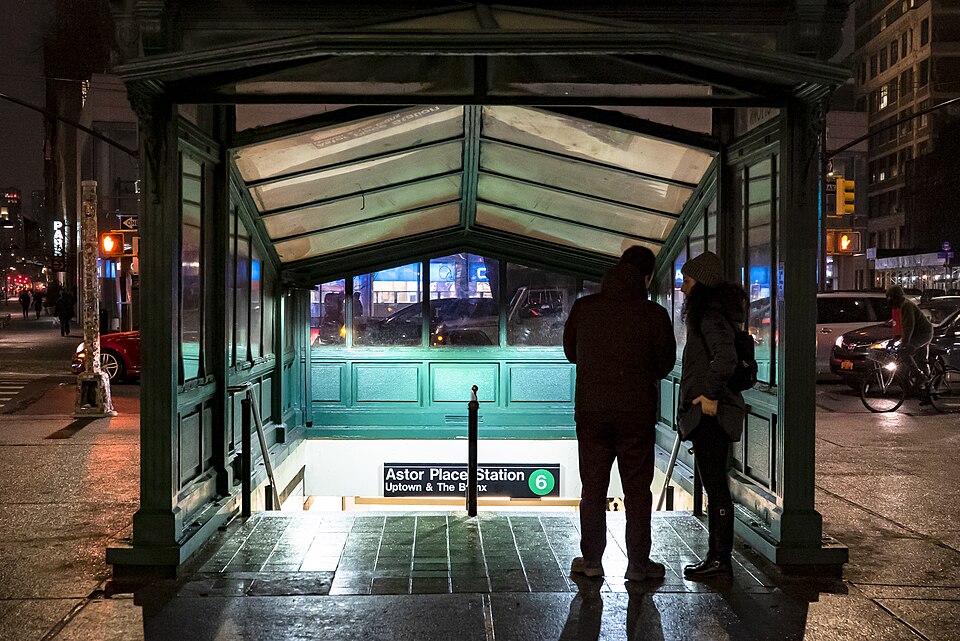
Astor Place at night, the kind of downtown subway arrival that makes getting to Webster Hall feel manageable for a concert night.
The Quick Take — Best Way to Get to Webster Hall
How Arrival to Webster Hall Actually Works
Webster Hall is at 125 East 11th Street, between Third and Fourth Avenues in the East Village. That address matters because it tells you something useful: you’re not arriving at a stadium with a dedicated transit stop or a Times Square venue surrounded by tourist infrastructure. You’re arriving at a neighborhood venue in one of the best-served transit corridors in lower Manhattan.
The two stations to know are 14th Street–Union Square and Astor Place. Union Square — served by the 4, 5, 6, N, Q, R, W, and L trains — is the more useful of the two for most trips because it’s the convergence point for lines coming from Midtown, Brooklyn, and Queens. Astor Place, served by the 6, is a clean option if you’re already on that line and want to avoid the Union Square transfer complexity. Both are about a five-minute walk to the venue.
Webster Hall is halfway down the block on the north side of the street. The walk is flat, well-lit, and takes about five minutes at a comfortable pace. It’s through a residential stretch of the East Village, not a commercial strip, so there’s not much to get turned around by — just walk south and look for the marquee.
This venue is also less pressure-packed on arrival than a larger arena or theater complex. There’s no single choke point, no mass of people converging on one entrance from one direction, no parking lot traffic to fight. The crowd at Webster Hall tends to arrive on its own schedule, which is both a feature and something to understand if you care about where you end up in the room. More on that in the timing section below.
Best Ways to Get to Webster Hall — By Trip Type
The right subway approach depends more on where you’re starting than on some universal correct answer. Here’s how the trip actually works depending on where you’re coming from.
If you’re starting from Grand Central (42nd St) or the 50s along Lexington Avenue, the 4 or 5 express train gets you to 14th St–Union Square in one direct ride with no transfers. It’s three or four stops, takes under ten minutes on the train, and drops you at the station most useful for the walk to Webster Hall. The 6 local runs the same corridor and is the right call if you want Astor Place instead. Either way, the Lex line is the most efficient path from Midtown to this neighborhood.
From Times Square (42nd St–7th Ave), the N, Q, R, or W trains run directly to 14th St–Union Square in two stops. The ride takes about five minutes and puts you at the same Union Square station as the Lex line riders. If you’re staying in the Theater District or near Penn Station, this is the natural approach — no transfers, simple route, easy walk at the other end.
Brooklyn riders have solid options. The L train from Williamsburg (Bedford Ave) runs directly to 14th St–Union Square and continues east to 3rd Avenue, which is essentially the block the venue is on. Depending on your exact entry point on the L, you could exit at the 3rd Ave stop on the L and be a very short walk from the door. From further south in Brooklyn — Prospect Heights, Carroll Gardens, Park Slope — the N, Q, or R to DeKalb or Atlantic, then north to Union Sq, is the standard approach. Either works well. Verify current L train service before heading out, as track work can shift schedules on weekends.
From Astoria or Jackson Heights, the most common routing is the 7 train to Times Square, then south on the N, Q, R, or W to 14th St. From Forest Hills or Jamaica, the E or F to 34th St or 23rd St followed by a walk or a short subway hop south also works. Queens routing tends to involve at least one transfer, so give yourself a bit more time than the Manhattan-based rider. The overall trip is manageable — just don’t assume it will be as fast as a straight Lex line run from Midtown.
The standard NJ Transit approach is Penn Station to Manhattan, then the N, Q, R, or W from 34th St–Herald Square down to 14th St–Union Square. That subway leg is two stops and takes about five minutes. Total trip time from the Jersey side varies widely by origin, but once you’re on the subway, it’s as clean as any other Midtown rider. PATH from Hoboken or Newark to 14th St (6th Ave) is also worth considering — the PATH station at 14th St is on the west side of Union Square, and it’s about a ten-minute walk east to Webster Hall, but the ride itself is fast and avoids Penn Station entirely.
If you’re in SoHo, NoHo, the West Village, or anywhere in the immediate downtown area, the subway may not be worth boarding. Webster Hall is walkable from much of lower Manhattan’s central residential zone — 15 minutes from the Hudson River parks, 10 minutes from NYU territory, a few minutes from the rest of the East Village. A Citi Bike is also a clean option if you’re comfortable with it — there are docks nearby on 4th Avenue and around Union Square.
Subway vs Rideshare vs Driving
This is worth being direct about, because the “just Uber there” logic that works fine for a midtown arena or a weekend in the suburbs gets more complicated in the East Village at show time.
Fast, predictable, no surge pricing, no traffic. The Union Square corridor is one of the most reliable in the system — multiple lines, frequent service, good late-night coverage. For most people coming from Manhattan, Brooklyn, or New Jersey, this is the right default.
Makes sense if you’re traveling from far Brooklyn with a group, heading back late when the subway feels inconvenient, or navigating a multi-stop night with luggage or logistics that make transit awkward. For the trip in from most locations, rideshare adds cost and sometimes adds time due to downtown traffic patterns near the venue.
The East Village has limited street parking and the garages near Webster Hall fill up fast on show nights. If you’re coming from Connecticut, Long Island, or New Jersey and driving into Manhattan anyway, parking in advance near Union Square can work. But the drive itself — especially on weekend evenings — adds friction that the subway simply doesn’t. See the parking section below.
Rideshare seems like the frictionless choice until you’re sitting in a car on 14th Street at 8:30 on a Friday night. The Union Square area is one of the busier surface-traffic corridors in lower Manhattan, and the pickup/dropoff options near Webster Hall’s block can be awkward depending on demand. Subway gets you to the neighborhood faster and more predictably in most scenarios, and the walk from the station is easy. Save rideshare for the return trip when the timing is more flexible and you have more control over when you leave.
Arrival Timing — When to Get There and Why It Matters
Webster Hall is a general admission floor venue — the Grand Ballroom (capacity 1,500), the Marlin Room (600), and The Studio (400) all operate without assigned seats for most shows. That means arrival timing is part of the logistics in a way it isn’t at a Broadway show or a reserved-seat concert. If you care about where you end up in the room, transit planning and arrival timing are the same decision.
If floor position matters to you
Arrive early — which, depending on the show, means arriving at or shortly after doors rather than at show time. For a sold-out Grand Ballroom show with a popular opener, the difference between arriving at doors and arriving 45 minutes later can mean the difference between standing where you want and standing in the back. Build that into your transportation plan by adding 15–20 minutes of buffer to your transit estimate, not just accounting for travel time to the front door.
If dinner before the show is part of the plan
The East Village and the blocks around Union Square have solid pre-show dining options within easy walking distance of the venue. If dinner is on the agenda, account for travel time to the restaurant first, then factor in the walk to Webster Hall. A restaurant on or near the L train corridor can double as a transit staging point — eat near Bedford Ave or Union Square, then walk or take a short train hop to 11th Street. See our restaurants near Webster Hall guide for specific picks.
If the opener doesn’t matter and you’re coming from far out
If you’re traveling from deeper Brooklyn, Queens, or New Jersey and the opener is not your priority, you have more scheduling flexibility — but don’t cut it so close that travel friction turns into show friction. Give yourself enough runway that a train delay or a delayed dinner doesn’t mean arriving stressed. Thirty minutes of buffer is a reasonable standard from most outer-borough or New Jersey origins.
Check doors vs. show time before you leave
Verify the doors and show times for your specific event on the Webster Hall site before building your plan. Door times at Webster Hall can vary significantly depending on the type of event and whether there are support acts — don’t assume a standard 8:00 PM show time applies to your night without checking.
Getting Back After the Show
The return trip deserves its own thought because the logic shifts after a show. Subway is still the most practical option for most people, but the variables are different — you’re dealing with post-show crowd timing, later hours, and potentially more spontaneous decisions about where the night goes from here.
Subway after a show
Union Square is a well-served late-night station and the 4, 5, 6, N, Q, R, W, and L trains all continue running after midnight on most nights. For most riders heading back to Midtown, Brooklyn, or Queens, the subway remains the cleanest and most predictable option even at 11 PM or midnight. Check the MTA schedule for your specific line on your show night, as weekend service patterns occasionally differ from weekday service.
When rideshare makes more sense on the way back
If your hotel is in a neighborhood that’s awkward to reach by late-night subway, if you’re traveling with a group that’s splitting toward multiple destinations, or if the subway requires multiple transfers at midnight, rideshare is a reasonable call for the return. One note: rideshare demand around East Village venues can spike immediately after a show ends, particularly for large events at the Grand Ballroom. If pricing surges, walking a few blocks toward Union Square proper before booking often helps both availability and pricing.
If the night is continuing
The East Village has plenty of bars and late-night spots within walking distance of Webster Hall. If you’re planning to keep the night going, you’re in a good neighborhood for it — and that may affect how much you care about the immediate return trip. Plan your last subway or rideshare around when you actually plan to leave rather than when the show ends.
Driving and Parking — What to Know
Driving to Webster Hall is possible, but rarely the path of least resistance. The East Village is a residential neighborhood with limited street parking and significant competition for spots on weekend evenings. That said, there are several parking garages within a few blocks of the venue that can work if you plan ahead.
Garages in the area include options on East 11th Street itself, near 4th Avenue and 9th Street, and several blocks on East 9th Street between 2nd and 3rd Avenues. Prices and availability fluctuate on show nights. Pre-booking through a parking app or garage directly is the more reliable approach than arriving and hoping for a spot. Verify current garage availability before driving in — parking options can change.
If you’re driving in from Long Island, Connecticut, or New Jersey and parking is unavoidable, allow extra time to find a garage on show nights and consider building dinner into the area so the parking cost is worth the evening. For most Manhattan and Brooklyn residents, the subway is simply a better use of time and money.
For more detail on parking options near the venue, see the parking near Webster Hall guide.
Build the Full Night Around Webster Hall
Transportation planning and night-out planning are the same thing when you’re doing it well. The neighborhoods around Webster Hall — East Village, NoHo, Union Square, the blocks immediately west — have enough restaurant density that dinner before the show can be coordinated with a transit approach rather than treated separately. The right restaurant can also be the right staging point for the subway or a pre-show walk to the venue.
If an overnight stay is part of the plan, hotels near Union Square and in the surrounding downtown corridor put you within easy walking distance of the venue without needing to think about transit at all. See the hotels near Webster Hall guide for positioning and options.
For the full venue picture — the rooms, what shows it hosts, what to expect inside — the Webster Hall venue guide is the right starting point. And if tickets are still on the agenda, check current availability before the night gets further away.
Frequently Asked Questions
For most people, the subway to 14th Street–Union Square is the best way to get to Webster Hall. The 4, 5, 6, N, Q, R, W, and L trains all serve that station, and the walk to the venue from there takes about five minutes. The 6 train to Astor Place is a clean alternative if it’s more direct from where you’re starting.
Two stations are roughly equidistant at about a five-minute walk: 14th Street–Union Square (4, 5, 6, N, Q, R, W, L) and Astor Place (6 train). Union Square is more useful for riders coming from Midtown, Brooklyn, or Queens because of the number of lines that serve it. Astor Place works well if you’re already on the 6 or coming from the Village.
Yes. The 4 or 5 express from Grand Central (42nd St) is a direct ride to 14th St–Union Square — three or four stops, under ten minutes on the train. From Times Square, the N, Q, R, or W south is two stops and similarly quick. Midtown is one of the more straightforward trip origins for this venue.
You can, but it’s rarely the most convenient approach. Street parking in the East Village on show nights is limited and competitive. There are parking garages within a few blocks, but they fill quickly and prices vary. If driving is necessary, pre-book parking and account for extra time. For most people coming from within the city, the subway is faster and less stressful. See the parking near Webster Hall guide for garage-specific details.
It depends on your situation. Rideshare works well for the return trip when subway timing feels inconvenient, or if you’re traveling in a group from far Brooklyn. For the trip in from most Manhattan or inner-Brooklyn origins, subway is usually faster and doesn’t surge price. The East Village’s downtown location means traffic on show nights can make rideshare slower than it looks on the map.
It depends on the show and how much floor position matters to you. Webster Hall is a general admission venue, so arriving at or shortly after doors gives you more flexibility about where you end up in the room. For a sold-out show where you care about being close to the stage, arriving at doors is worth it. For a night where your priority is more casual, arriving 30–45 minutes after doors is usually fine. Verify doors and show times on the official Webster Hall site before your visit.
Generally, yes. Union Square is a well-served late-night subway hub, and the 4, 5, 6, N, Q, R, W, and L all continue running after midnight. For Midtown riders heading back to hotels, or Brooklyn riders on the L or N/Q/R, the return trip is straightforward. If rideshare demand surges immediately after the show, walking toward Union Square before booking can help with both availability and pricing.
The Smartest Webster Hall Transport Plan
The best way to get to Webster Hall is, for most people, the way that keeps the night simple. That usually means subway first — in through Union Square or Astor Place, five-minute walk to the venue, enough time built in to not feel rushed. Rideshare has its place, particularly for the return or for specific situations where transit is awkward, but it’s not the default improvement it can be at venues that are harder to reach by train.
The venue is well-positioned for a downtown Manhattan night built around dinner nearby, an early enough arrival to land where you want in the room, and a flexible exit. If you build the transportation plan around that sequence rather than treating it as an afterthought, the evening tends to go better from the first train to the last song.
For everything else about the venue itself, the Webster Hall venue guide covers the rooms, what to expect, and how to plan around the different spaces inside the building.
Build the Whole East Village Concert Night
Webster Hall is one of those NYC venues where transit is easy, but timing still matters. Use these guides to connect Union Square subway strategy, general-admission arrival timing, pre-show food, nearby hotels, parking, last-minute tickets, and the late-night exit.
Webster Hall Venue Guide
Use the main venue guide for the Grand Ballroom, Marlin Room, Studio, layout, show types, arrival feel, and what to expect inside the building.
Open Venue Guide Parking + RideshareParking Near Webster Hall
Driving is rarely the cleanest first choice here, but this guide helps with garages, street-parking reality, and when a car actually makes sense.
Open Parking GuideWebster Hall Essentials
Venue · Food · HotelsWebster Hall Venue Guide
Rooms, layout, GA strategy, East Village context, and how the venue works for different types of shows.
Restaurants Near Webster Hall
Pre-show dinner, quick bites, drinks, and walkable East Village / Union Square options before doors.
Hotels Near Webster Hall
Stay close enough to make the subway optional and the late-night return much easier.
Parking Near Webster Hall
Garage planning, East Village parking reality, rideshare alternatives, and when driving is worth it.
NYC Concert Venues Guide
Compare Webster Hall with other NYC rooms by neighborhood, layout, size, transit, and night-out feel.
NYC Transportation Guides
Subway, rideshare, parking, walking, and late-night return planning for NYC nights out.
Choose the Right Arrival Plan
Subway · Rideshare · GA TimingPick the Right Train
Midtown, Brooklyn, Queens, New Jersey, and downtown starts all have different clean routes into Union Square or Astor Place.
Subway vs Rideshare vs Driving
Subway is usually the smartest call, rideshare has specific uses, and driving is rarely the clean first choice.
Arrive for the Room You Want
Webster Hall is usually general admission, so transportation timing affects where you end up inside.
Plan the Late-Night Exit
Union Square is useful late, but rideshare can make sense if your hotel route is awkward after midnight.
Driving and Parking Reality
Street parking is rough, garages need planning, and subway usually beats the car from inside the city.
Webster Hall Questions
Closest subway, Midtown routes, rideshare, driving, arrival timing, and post-show return answers.
Concert Night Support
Tickets · Venues · Full NightWhen to Buy Concert Tickets
Use this for timing strategy, sold-out shows, opener logic, and when to lock in for a Webster Hall night.
How to Find Last-Minute Concert Tickets
Useful when a Webster Hall show is close, sold out, or turning into a spontaneous East Village night.
NYC Concert Venues Guide
See where Webster Hall fits alongside Bowery Ballroom, Brooklyn Steel, Terminal 5, Beacon, MSG, and more.