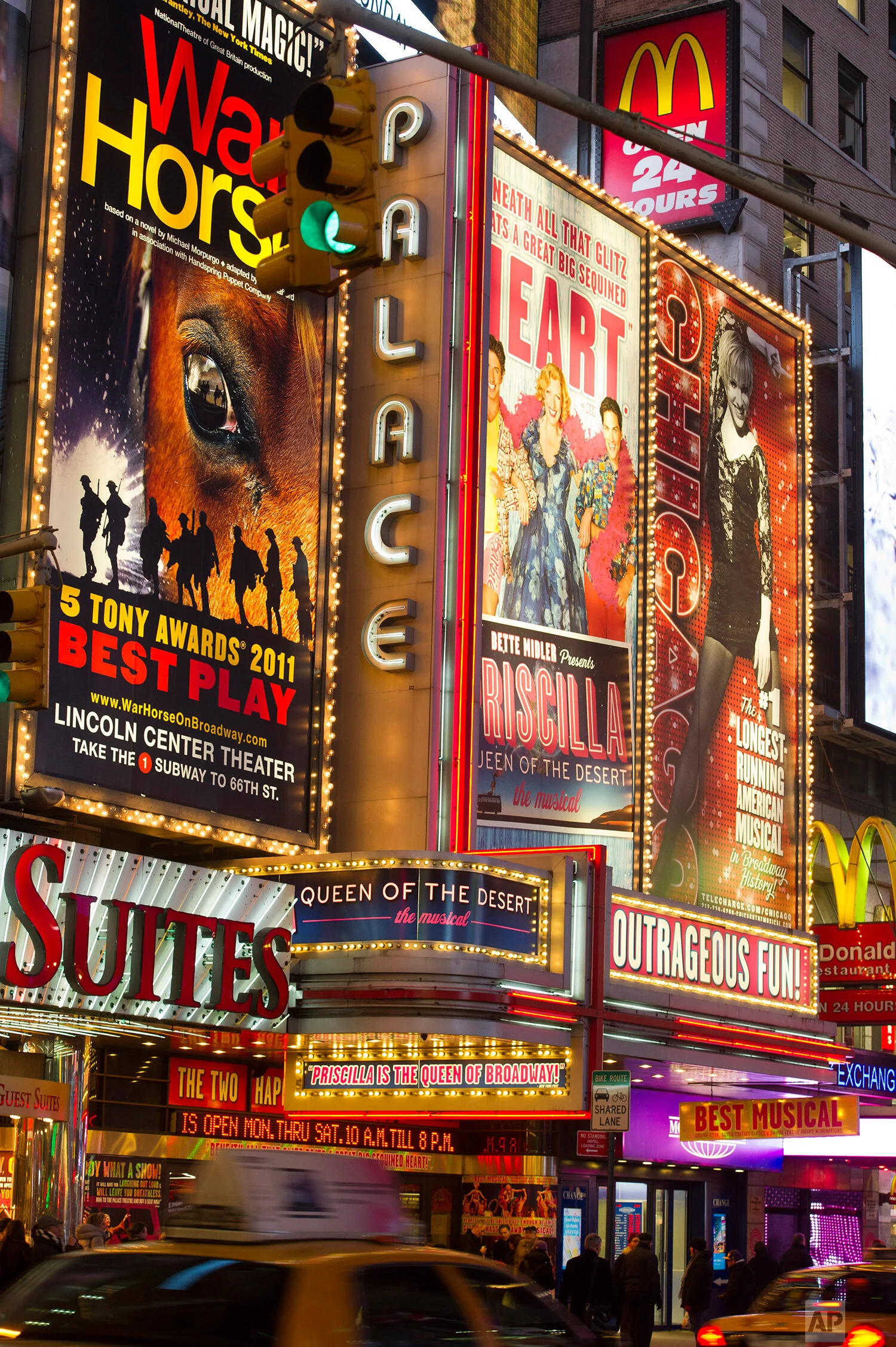

Broadway in NYC:
Shows, Theaters & Ticket Tips
Choose the right show, find the right seat, and make a great night of it — from someone who actually knows the difference.
Broadway in NYC is one of the great live entertainment experiences in the world — but it’s not automatic. A bad seat, a mismatch between the show and your group, a rushed dinner, a theater that’s harder to navigate than expected: these things happen when people book without much information. Stage & Street exists because better planning leads to a better night, and because most Broadway coverage stops at “here are the shows” without helping you figure out what any of it actually means for your specific trip.
This guide is the hub for everything Broadway on Stage & Street. Use it to find show guides, understand the theaters, learn how tickets actually work, and plan the kind of evening you’ll want to do again.
Guides and recommendations for productions across Broadway — organized by type of visitor, season, and what the show actually delivers.
Browse Shows →Venue guides that go beyond just the address — seating layouts, sight lines, neighborhood context, and what to know before you book.
Explore Venues →When to book, where to sit, how to think about price vs. value, lottery tips, rush programs, and how to avoid the usual mistakes.
See Resources →Smaller productions, distinctive venues, and an often-overlooked alternative that’s sometimes the smarter choice for the right kind of theatergoer.
Explore Off-Broadway →Choosing the Right Broadway Show
The Broadway calendar at any given time has around 35 to 40 shows running, which sounds like a lot of choice until you realize how different they are from each other — in scale, tone, audience fit, and what kind of experience they actually deliver. A family with kids and a couple looking for a sophisticated date night and a solo theater fan comparing productions are shopping for completely different things, even if they’re all technically “going to Broadway.”
The most useful question to ask first isn’t “what’s the most popular show right now?” It’s: who’s in your group, what kind of night are you after, and how much does it matter that the show itself be exceptional versus simply enjoyable? Long-running hits like Wicked, Hamilton, and The Lion King are proven crowd-pleasers that rarely disappoint. But newer productions, star-driven revivals, and limited-run plays often offer something more memorable if the fit is right.
Spring 2026 is one of the stronger Broadway in NYC seasons in recent years — with Nathan Lane and Laurie Metcalf in Death of a Salesman, Adrien Brody and Tessa Thompson making their Broadway debuts in The Fear of 13, Ayo Edebiri and Don Cheadle in Proof, and the arrival of the wildly reimagined Cats: The Jellicle Ball. See our full spring guide for this season’s picks.
What kind of show are you looking for?
These are the shows people mean when they picture Broadway. Massive productions, iconic songs, the full theatrical experience. Almost never a wrong choice for a first visit.
For visitors who want something more substantial — great writing, strong performances, and the kind of night that stays with you. Spring 2026 has an unusually strong lineup here.
Broadway can also be raucously entertaining without being heavy. These are the shows that make people genuinely laugh out loud and leave feeling great.
Not every Broadway show works for younger audiences. These two are reliably excellent for families — visually spectacular, age-appropriate, and paced well for kids.
Browse all Broadway show guides →
See our Spring 2026 Broadway picks →
Understanding Broadway’s Theaters
There are 41 Broadway theaters in New York City, most of them clustered in a roughly ten-block stretch of Midtown Manhattan between 42nd and 53rd Streets, running from 6th Avenue to 8th Avenue. They vary enormously — in size, in character, in how the seating works, and in what it’s like to spend two and a half hours inside one.
Some theaters are intimate enough that even the back of the orchestra feels close to the stage. Others are cavernous and vertical, with a mezzanine that can feel miles away. Some have excellent sight lines from a wide range of seats. Others have columns, steep angles, or quirks that make certain sections a significantly better or worse experience than the ticket price suggests. Knowing something about the specific theater before you book is one of the most underused advantages a visitor has.
A few things worth knowing before you book
A sweeping spectacle musical like The Lion King at the Minskoff or Wicked at the Gershwin needs a large house. A more intimate play can feel lost in the same space but extraordinary in a smaller one. The theater and the show should work together — and for most productions, they do. Our venue guides break down what to expect from each theater specifically.
Most Broadway theaters are within a few blocks of each other, but not all. Studio 54, the Roundabout’s Todd Haimes Theatre, and a handful of others sit slightly outside the core cluster. If you’re planning dinner before the show, knowing exactly where the theater is can shape your whole evening.
The difference between a good and a great seat varies by theater. In some houses, center orchestra rows D through L are exceptional. In others, the front mezzanine center beats the orchestra for both sight lines and sound. Our venue guides are built to help you make that call for the specific theater you’re booking.
Explore all Broadway theater guides →
How Broadway Tickets Actually Work
Broadway ticketing is more complicated than it looks, and more navigable than it feels when you’re staring at a SeatGeek listing trying to figure out if $189 for a mezzanine seat is reasonable or ridiculous. The short answer is: it depends on the show, the theater, the section, and when you’re booking. The longer answer is what our resources section is built to explain.
The basics, quickly
Buying directly through a show’s official site or Telecharge/Ticketmaster avoids the secondary market markups that can double face value prices on popular shows. For sold-out performances, the secondary market is sometimes the only option — but it’s never the first place to look.
The TKTS booth in Times Square (and the app) offers same-day discounts of up to 50% on a rotating selection of shows with available seats. You won’t find Hamilton there on a Saturday night, but you might find excellent seats to strong shows you hadn’t considered. It’s a great option for flexible visitors who don’t have their heart set on one specific title.
Most Broadway shows run digital lotteries for a handful of front-row seats at heavily discounted prices — often $40 to $50 for seats that sell for multiples of that at face value. They’re not guaranteed, but they’re worth entering for any show you want to see. Check each show’s official site or the TodayTix app for details.
Star-driven plays and limited engagements — the kind of shows that define a Broadway season — sell out fast once reviews land and word spreads. If you’re curious about something with a real closing date, booking early gets you better seats at better prices. This is one of the few areas where the conventional wisdom is simply correct.
See all Broadway ticket and planning resources →
How to get last-minute Broadway tickets →
Planning the Full Evening
Broadway is at its best when the show is the center of a real night out — not just a two-hour event you squeeze in before catching the subway back. The theater district sits in the heart of Midtown, surrounded by options for dinner, drinks, and dessert that range from excellent to deeply mediocre. The difference between a great night and a rushed one is almost always a little bit of planning.
A few things that make the evening work
Pre-show dinner. Hell’s Kitchen — the neighborhood just west of the theater district along 9th and 10th Avenues — has the best concentration of pre-theater dining in the city. It’s a short walk from most Broadway houses, less expensive than the immediate Times Square area, and full of restaurants that understand the 6:00 dinner, 8:00 curtain rhythm. Avoid sitting down anywhere at 7:00 for an 8:00 show unless you know the restaurant well.
Timing.** Most Broadway shows run between two hours and two hours and forty-five minutes, including an intermission. Build that into your evening. If you’re seeing a show that runs long (check before you go), factor in getting back to your hotel or catching a train.
After the show. The theater district empties fast after curtain. If you want a drink or late bite, having a plan — even a loose one — is worth it. The blocks immediately around Times Square can feel chaotic post-show. A couple of blocks toward 9th Avenue or down toward 46th Street tends to be calmer.
Theater District neighborhood guide →
Best pre-theater dinner in NYC →
If This Is Your First Time on Broadway
A first Broadway experience done right is one of the best things you can do in New York. Done wrong — wrong show, bad seats, no context for what you’re watching — it can feel expensive and confusing. Here’s what actually matters if you’re going for the first time.
Pick a show, not a ticket price. The biggest mistake first-timers make is booking whatever seems most available or affordable rather than thinking about what they’ll actually enjoy. Broadway is a wide spectrum — from children’s spectacles to serious drama to campy comedy. Start with what your group likes watching, then find the Broadway version of that.
Don’t overthink the seat. Anywhere in the orchestra or front mezzanine at a well-maintained Broadway house is a good seat. The extreme sides of the orchestra (past seats marked “obstructed view”) and the very back of the upper balcony are worth avoiding for a first visit. Everything in between is generally fine.
Go in without too many expectations. The shows that surprise people most are the ones they went into lightly. Let the production do its job.
Our Broadway show guides are organized by type of visitor — first-timers, families, couples, returning fans, and visitors with just one show slot. Start there and you’ll have a shortlist in ten minutes.
Best Broadway shows for first-time visitors →
Broadway vs. Off-Broadway: what’s the actual difference? →
Start Here, Go Anywhere
Broadway in New York City is worth doing — and worth doing well. The difference between a great theater night and a forgettable one almost always comes down to a handful of decisions made before you ever walk through the door: the right show for your group, a theater you understand, a ticket that doesn’t require rationalizing, and a plan for the evening around it.
Stage & Street is built to make those decisions easier. Use the show guides, the venue pages, the ticket resources, and the neighborhood planning tools — and if you’re not sure where to start, the section links above will point you in the right direction.